Why Does Hair Removal Timing Directly Affect Your Self-Tan?
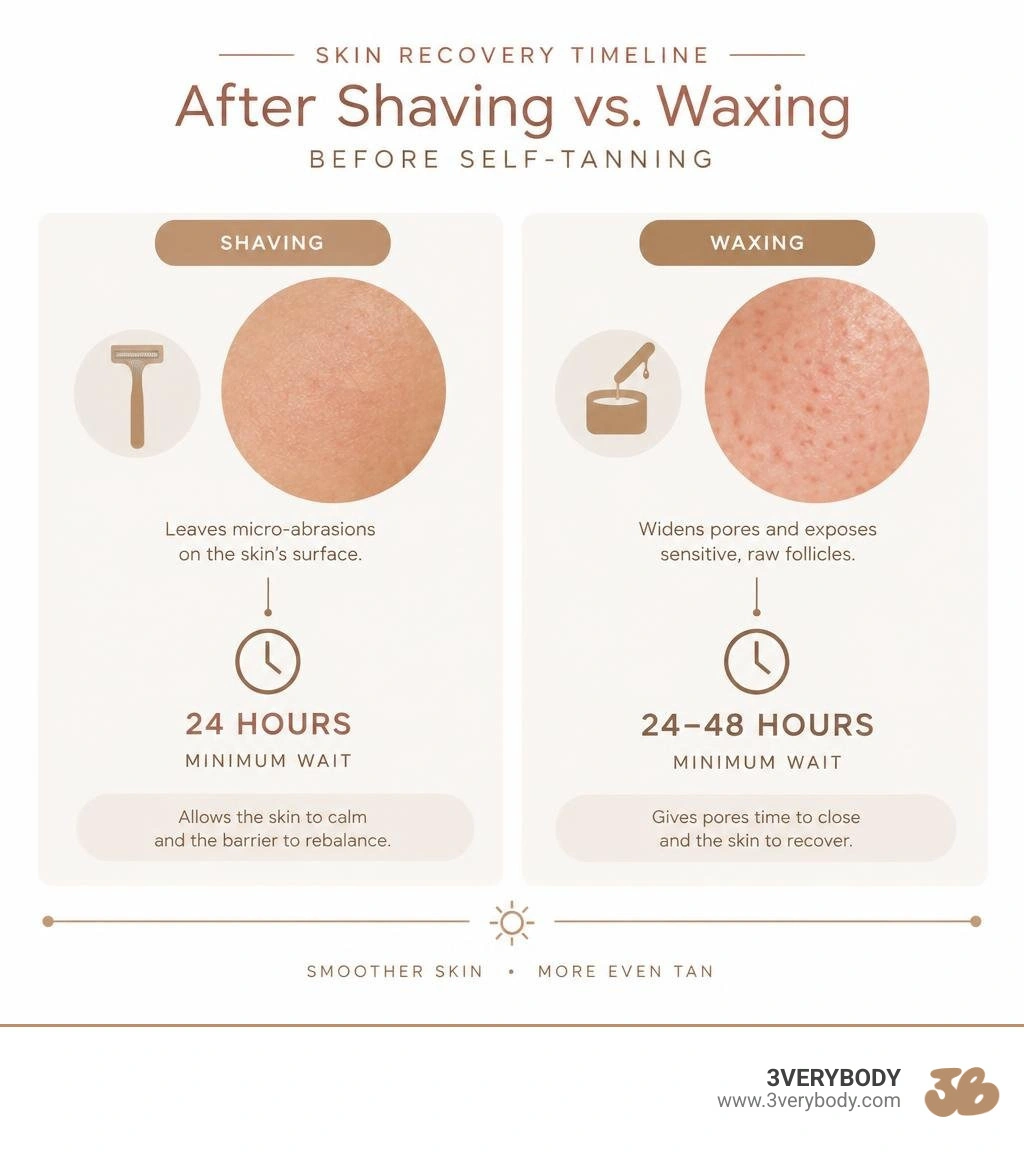
To get an even finish, timing your hair removal matters just as much as your application technique. The direct rule is straightforward: wait at least 24 hours after shaving and 24 to 48 hours after waxing before applying self-tanner.
Understanding the biology behind this waiting period makes it easy to follow. Self-tanning products rely on dihydroxyacetone (DHA), an active ingredient derived from plant sources that interacts with the dead cells in your stratum corneum—the outermost layer of your skin. DHA binds with amino acids in these surface cells to produce temporary pigment.
When you remove body hair, you disturb that outer surface:
- Shaving acts as a physical exfoliant, scraping away top layers and leaving micro-abrasions on the skin.
- Waxing and sugaring pull the hair out directly from the root, widening pores and exposing sensitive, raw follicles.
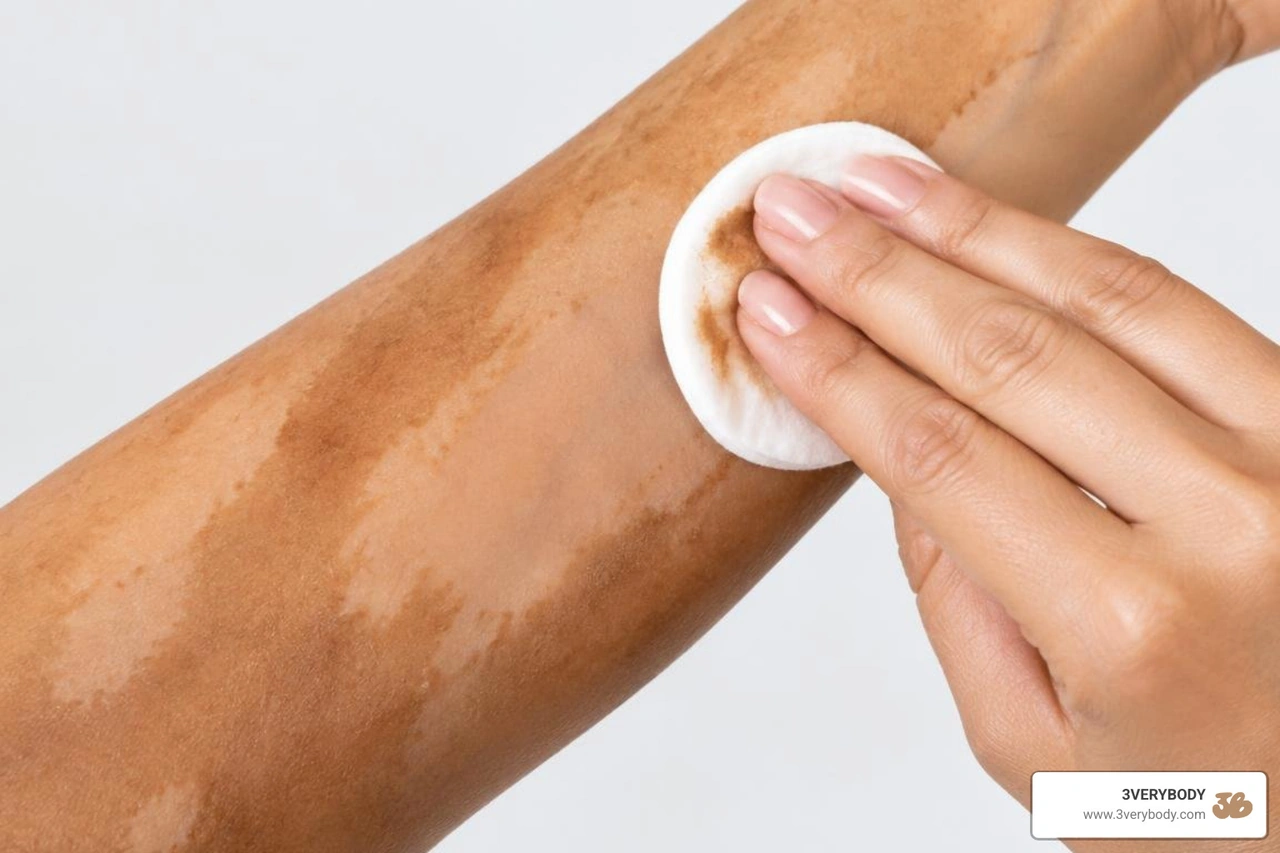
If you apply self-tanner immediately after grooming, DHA settles deeply into dilated, irritated pores rather than resting evenly across flat surface cells. This concentration causes color pooling—tiny dark spots that resemble the seeds on a strawberry.
Taking the time to learn how to prep skin properly gives your pores time to close and allows your natural lipid barrier to rebalance, providing a calm, uniform canvas for your sunless tan.
How Long Should You Wait to Apply Self-Tanner After Shaving, Waxing, or Laser?
Every hair removal method creates a different level of skin disruption. The more invasive the hair removal method, the longer your recovery window should be before introducing DHA.
| Hair Removal Method | Recommended Wait Time | Skin Sensitivity Level | Primary Concern |
|---|---|---|---|
| Shaving | 24 hours | Mild to Moderate | Razor burn, moisture strip residue, color pooling |
| Waxing / Sugaring | 24 to 48 hours | Moderate to High | Deep open pores, redness, severe dark follicle dots |
| Depilatory Creams | 48 to 72 hours | High | Chemical barrier breakdown, patchy DHA uptake |
| At-Home IPL | 48 hours | Moderate | Heat sensitivity, altered skin surface hydration |
| Laser Hair Removal | 5 to 7 days | Very High | Hyperpigmentation risk, interference with future treatments |
Shaving Timing and Best Practices
Always wait 24 hours after shaving before applying self-tanner. While shaving primarily removes hair above the surface, the razor blade provides light physical exfoliation. This leaves your skin fresh but temporarily vulnerable.
Additionally, modern razor blades often feature conditioning lubrication strips. These strips leave an invisible residue on your legs that blocks DHA from absorbing evenly, which can lead to streaking. When deciding whether to shave or wax before self-tanning, consider that shaving is simpler to schedule because of its shorter 24-hour turnaround.
For the cleanest shave:
- Use a fresh, sharp razor to avoid dragging and micro-cuts.
- Shave in the direction of hair growth using a gentle, non-irritating shave gel.
- Apply a lightweight, fragrance-free lotion immediately post-shave to soothe the barrier.
- Stop using heavy body moisturizers 12 hours before applying your tanner so your skin is clean and receptive.
Waxing and Sugaring Recovery Windows
Waxing and sugaring pull the hair shaft completely out of the follicle bulb. Because of this deeper trauma, wait 24 to 48 hours before tanning. If your skin is prone to redness or sensitivity, wait the full 48 hours.
Waxing must always happen before you apply self-tanner, never after. If you wax over an existing sunless glow, the wax will lift away the top layer of skin cells, taking your color with it and leaving light patches.
Prep by understanding the importance of exfoliation in self-tanning routines. For best results, exfoliate your body 24 to 48 hours before your waxing appointment, not immediately after. Once you are waxed, let your skin rest without any manual scrubs until after your tan has developed.
Laser Hair Removal, IPL, and Depilatory Creams
- Professional Laser Hair Removal: Wait a minimum of 5 to 7 days after a laser session before applying self-tanner. Applying DHA to laser-treated skin too early can cause contact irritation and hyperpigmentation. Furthermore, you must ensure your skin is completely free of self-tanner for at least 2 weeks before your next laser appointment, as residual surface pigment can absorb laser energy and lead to accidental burns.
- At-Home IPL: Give yourself at least a 48-hour buffer after using an IPL device before applying self-tanner or exposing skin to heat.
- Depilatory Creams: Chemical hair removers use alkaline chemicals to dissolve hair proteins. This disrupts the stratum corneum and leaves a chemical film that alters skin pH. Wait 48 to 72 hours after using hair removal creams before applying self-tanner.
What Happens If You Apply Self-Tanner Too Soon After Hair Removal?

Applying self-tanner immediately after shaving or waxing leads to common aesthetic and comfort issues:
- The "Strawberry Legs" Effect: When pores are freshly opened, DHA settles into the tiny indentations. As the DHA processes, the pores turn several shades darker than the surrounding skin, creating a speckled appearance.
- Patchiness and Premature Fading: Freshly shaved or waxed skin does not shed evenly. A tan applied over compromised skin will begin flaking off in uneven patches within a couple of days.
- Stinging and Contact Irritation: Open pores and micro-cuts allow tanning agents and preservatives to penetrate past the outermost protective layer, leading to redness, itching, and temporary burning.
It is worth noting that unnatural orange tones usually happen from overapplication, dry skin, poor prep, or choosing a shade too deep for your starting skin tone rather than the formula itself. Keeping up with tips for avoiding common self-tanning mistakes helps ensure you bypass these pitfalls.
Understanding how to avoid streaks or patchiness always starts with giving your skin enough time to recover after hair removal.
What Is the Ideal Pre-Event Timeline for Hair Removal and Tanning?
Planning for a wedding, vacation, or photoshoot? Use this simple 4-day prep timeline to coordinate your grooming and tanning routines for smooth, natural-looking results:
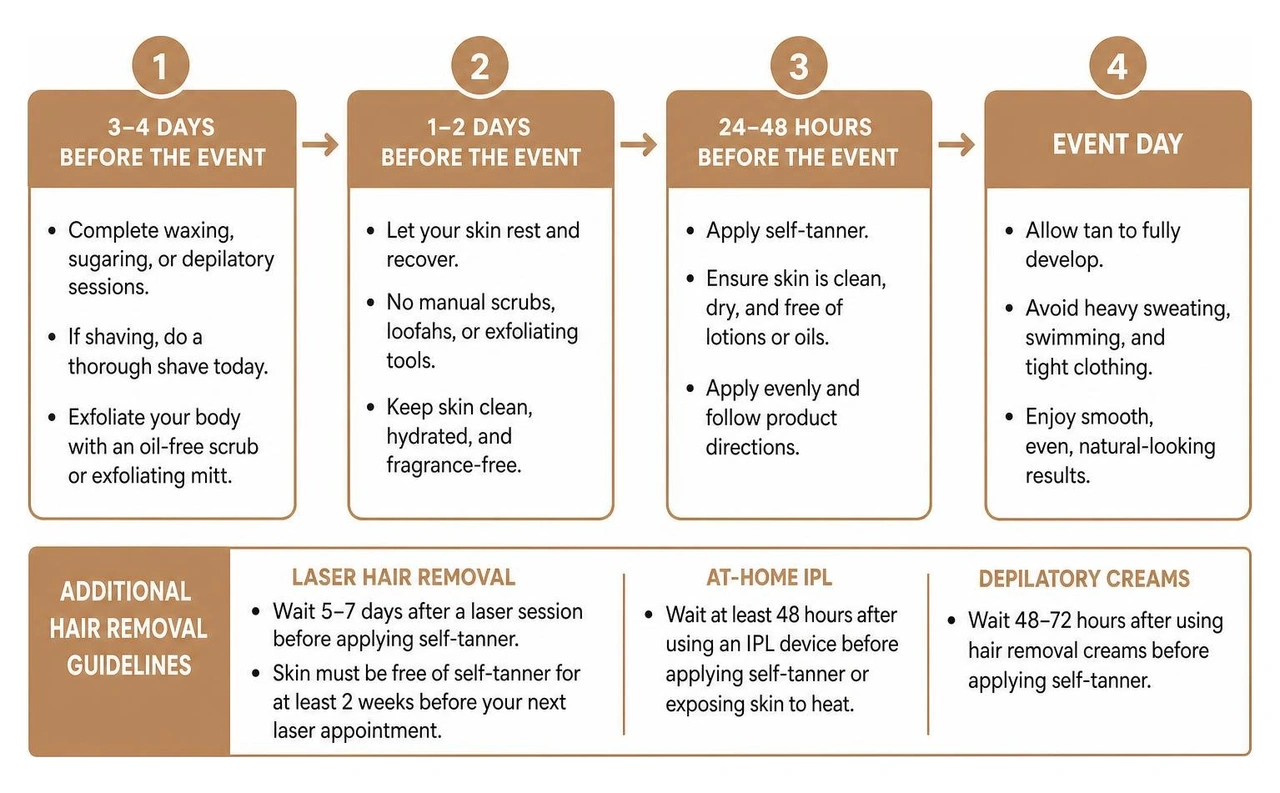
3 to 4 Days Before the Event
- Complete all professional waxing, sugaring, or depilatory sessions.
- If you prefer shaving, do a thorough initial shave today.
- Buff away dead skin cells across your body by learning how to exfoliate properly with an oil-free scrub or exfoliating mitt.
2 Days Before the Event
- Allow your skin barrier to settle.
- Keep your skin lightly hydrated with a gentle, oil-free moisturizer.
- Read up on whether to exfoliate before using self-tanner on the day of application (the short answer: stick to gentle exfoliation 24 hours prior rather than right before).
1 Day (24 Hours) Before the Event
- Take a lukewarm shower without using heavy, oil-based body washes.
- Lightly moisturize only dry zones: elbows, knees, heels, wrists, and knuckles.
- Apply Life Proof Tan (Tinted Tanning Water) using The Mitt. Spritz the water onto the double-sided mitt and glide it across the skin in long, sweeping strokes. We choose water-light formulas over traditional mousse because a thinner layer blends cleaner, dries faster, and looks natural from very fair to deep skin. Our formula is quick-drying (touch-dry in a few minutes), sweat-resistant, and transfer-resistant, making application simple and mess-free.
Day of the Event
- After your color develops, take a quick lukewarm rinse without using harsh soaps. Check how long to wait before showering after self-tanning to confirm your timing.
- Pat dry gently with a towel and moisturize to support a natural-looking fade that lasts about a week with proper care.
How Can You Fix Uneven Spots or Strawberry Skin If You Tanned Too Early?
If you applied self-tanner too soon and ended up with dark follicle dots or uneven color, you can smooth out the finish with a few simple steps:
- Take a Warm Shower: Let the warm water soften the outer skin layer for 5 to 10 minutes.
- Use Gentle Physical Exfoliation: Take a damp washcloth or gentle exfoliating mitt and buff the speckled areas in small circular motions. This lifts away the excess DHA sitting inside the pores without stripping the surrounding color entirely.
- Soothe Irritation: Apply a lightweight, fragrance-free lotion containing aloe vera or cucumber extract to calm sensitive follicles.
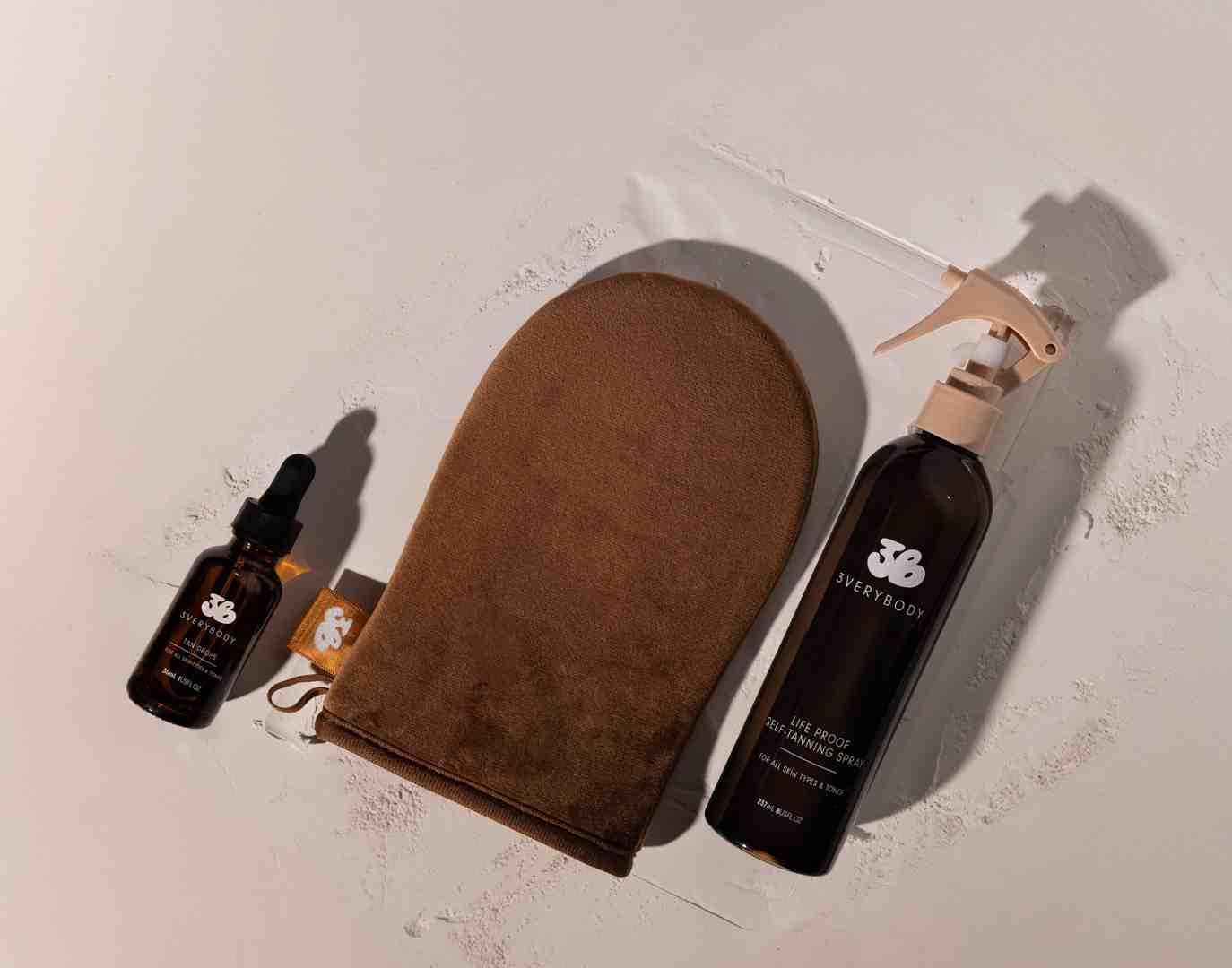
- Blend Out Lighter Patches: If gentle buffing leaves slight unevenness, mix a few drops of Tanning Drops into your regular daily body moisturizer. This allows you to build custom, subtle color over the lighter zones without applying a heavy second layer.
Reviewing best practices for prepping skin before self-tanning will help you avoid similar issues in the future. For additional techniques, explore our practical self-tanner application tips and our full guide on how to self-tan for beginners.
What Are the Most Common Questions About Hair Removal and Self-Tanning?
Can I shave my legs on the same day I plan to apply self-tanner?
It is best to avoid same-day shaving. Shaving immediately before tanning leaves pores open and can cause razor burn, leading to dark spots and irritation. If you are in a rush and must shave the same day, shave with cool water at least 3 to 4 hours before application, finish with a cold water rinse to help pores contract, and use a lightweight, quick-drying formula.
Will waxing or shaving remove an existing self-tan?
Waxing will immediately strip away your self-tan because it removes the top layer of dead skin cells where the pigment resides. Shaving also acts as a mild exfoliant and will lighten your tan slightly with each pass. If you need to shave while maintaining a tan, use a fresh blade, plenty of shave cream, and very light pressure.
When is the best time to exfoliate relative to shaving and waxing?
You should always exfoliate before self-tanning about 24 hours prior to hair removal, rather than immediately afterward. Exfoliating right after waxing or shaving can over-sensitize the skin barrier. For a step-by-step breakdown of how to coordinate your entire schedule, visit our self-tanner routine ultimate guide and check out our blogs and tips hub.
Ready to Build Your Seamless Self-Tanning Routine?
Getting an even, streak-free sunless tan comes down to patience and proper timing. Remember the core rule: give your skin 24 hours after shaving and 24 to 48 hours after waxing before applying your product. This brief pause allows pores to settle, prevents color pooling, and protects your skin barrier.
If you are looking for an easy, foolproof way to glow at home, explore the 3VERYBODY Shop. Our woman-owned, creator-approved collection is vegan, cruelty-free, and designed for every skin type and tone:
- Life Proof Tan: Our sweat-resistant, transfer-resistant Tinted Tanning Water enriched with argan oil, cucumber oil, caffeine, and guarana extract.
- Tanning Drops: Customizable, lightweight drops formulated with rosehip oil and cucumber extract to mix with your favorite daily face or body moisturizer.
- The Mitt: Our double-sided, washable applicator designed for even control.
- The Kit: The complete setup featuring our core formulas and tools for an easy, natural-looking finish at home. Learn more about application steps on our how-to page.