What a Good Self Tanner Routine Actually Looks Like
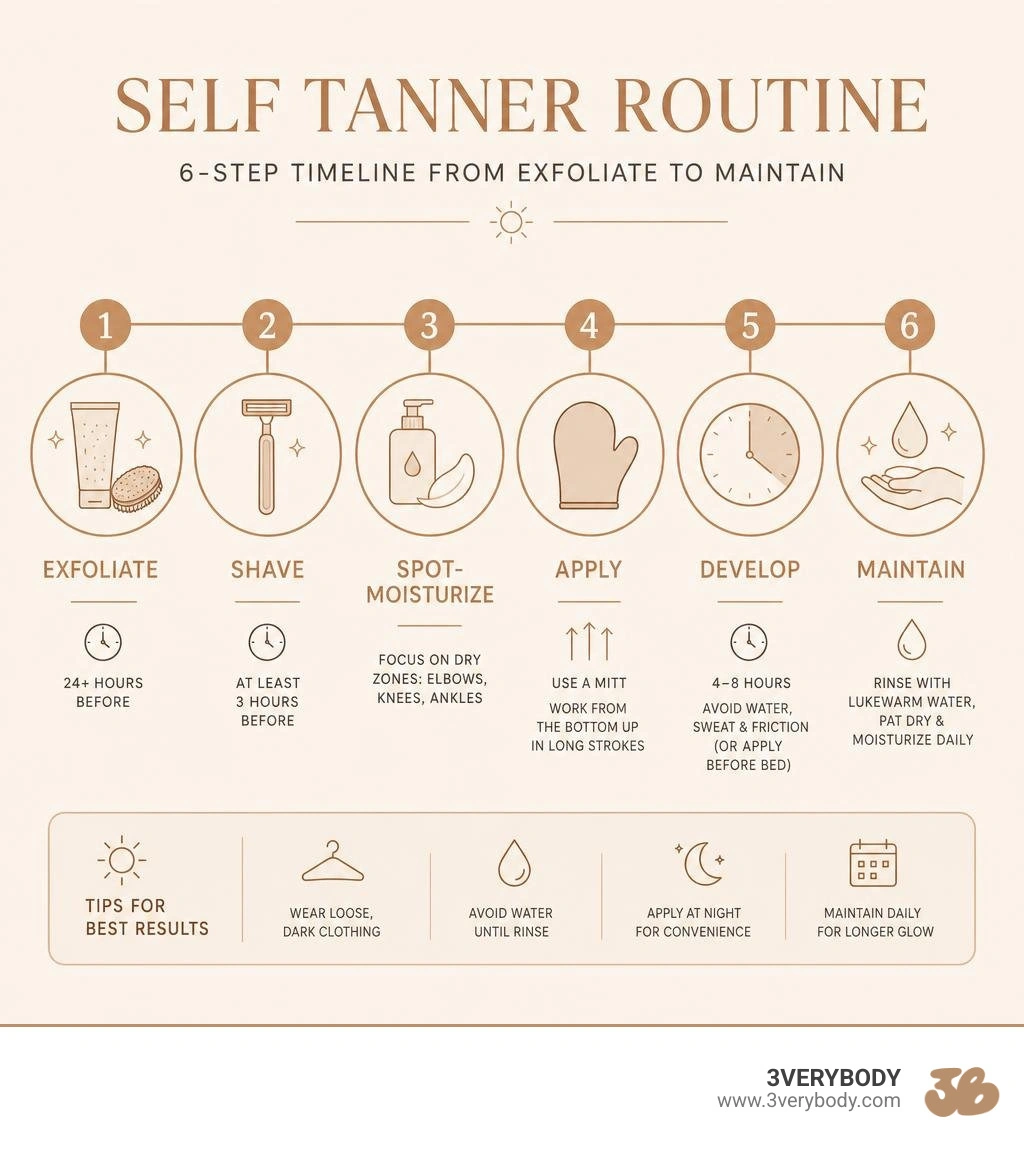
A solid self tanner routine comes down to six steps — and most of the work happens before you open the bottle.
Quick answer: self tanner routine at a glance
- Exfoliate — Use an oil-free scrub at least 24 hours before tanning
- Shave — At least 3 hours before applying; never after
- Spot-moisturize — Apply a light, oil-free lotion to dry zones (elbows, knees, ankles)
- Apply — Use a mitt and work from the bottom up in long strokes
- Develop — Avoid water, sweat, and friction for 4–8 hours (or apply before bed)
- Maintain — Rinse with lukewarm water, pat dry, and moisturize daily
That's it. No complicated steps, no expensive salon visits.
Self-tanning works because of a sugar-derived ingredient called DHA, which reacts with the amino acids in your skin's surface to create a temporary bronze color. It's not a dye — it's a chemical reaction. And that's exactly why prep matters so much. Uneven skin texture means uneven color, no matter how good the product is.
If you've ever ended up with patchy or orange results, it's usually because of skipped prep steps. This guide walks you through everything: prep, application, face tanning, aftercare, and how to fix it when something goes sideways.
I'm Emmy Bre, founder of 3VERYBODY, and I spent over a decade testing nearly every self-tanner on the market before building my own self tanner routine that works on every skin tone, without the orange, the stickiness, or the guesswork. Everything in this guide is based on what I actually learned through that process.
Why Skin Prep is 80% of the Battle
If you have ever applied self-tanner only to end up with dark patches on your knees or splotches on your ankles, the culprit was likely your preparation. Learning How to Prep Skin is the most important part of the entire process.
Because DHA binds to the dead cells on your skin's outermost layer, any areas with built-up, dry skin will absorb more product and develop a much darker color. This is why we need to create a smooth, even surface before applying any color.
When considering Should You Exfoliate Before Using Self Tanner, the answer is always yes. However, timing is everything. You want to complete your deep exfoliation and hair removal well in advance of your actual application. According to experts in How to Prep Skin for Self-Tanning: Avoid Patchy Results | BlushPicks, rushing this window is where most people run into trouble.
Shaving and Exfoliating the Right Way
To get the best results, aim to shave and exfoliate 24 hours before you plan to tan. If you are in a rush, complete these steps at least 3 hours before application.
Here is why: when you shave, your hair follicles are left open. If you apply a tanning product immediately afterward, the formula can settle into those tiny openings, creating dark, dotted patterns often called "strawberry skin." Giving your skin a 3-hour window allows those follicles to close and any irritation to calm down.
When you learn How to Exfoliate Properly, stick to an oil-free scrub or an exfoliating mitt. Many traditional body scrubs contain heavy oils that leave a slick film on your skin. That film acts as a barrier, preventing the self-tanner from absorbing evenly. At the very end of your shower, rinse your body with cold water to help close your pores before you step out and pat dry.
Spot-Moisturizing Dry Zones
A common question is, Should You Moisturize Before Self Tanning? The answer is yes, but only in specific spots.
Do not apply body lotion all over your skin right before tanning, as this will dilute the formula and cause streaks. Instead, use a lightweight, oil-free moisturizer as a barrier cream on your body's natural dry zones. These include:
- Elbows
- Knees
- Ankles and heels
- Wrists and knuckles
- The hairline and eyebrows (especially if you have very light hair)
Applying a small amount of lotion to these areas helps slow down the absorption of the DHA, keeping these spots from turning too dark.
How to Build a Foolproof Self Tanner Routine
Once your skin is clean, dry, and prepped, it is time to choose your formula. At 3VERYBODY, we prefer water-light formulas over heavy creams. A thinner, water-light layer simply blends cleaner, dries faster, and looks natural across every skin tone from very fair to deep.
We designed our products to be quick-drying and transfer-resistant, making the application process much more comfortable. Here is a quick look at how our two main formulas compare to help you decide which fits best into your routine:
| Feature | Life Proof Tan | Tanning Drops |
|---|---|---|
| Best For | Full-body, active lifestyles, quick application | Customizing face and body glow with moisturizer |
| Texture | Water-light, quick-drying spray | Lightweight liquid concentrate |
| Key Ingredients | Argan oil, cucumber oil, caffeine, guarana | Rosehip oil, cucumber extract |
| Benefits | Sweat-resistant, transfer-resistant, non-orange | Customizable depth, hydrating feel |
| Application Method | Spritz onto mitt, sweep over skin | Mix 2–12 drops into your daily lotion |
Step-by-Step: Your Day-Of Self Tanner Routine
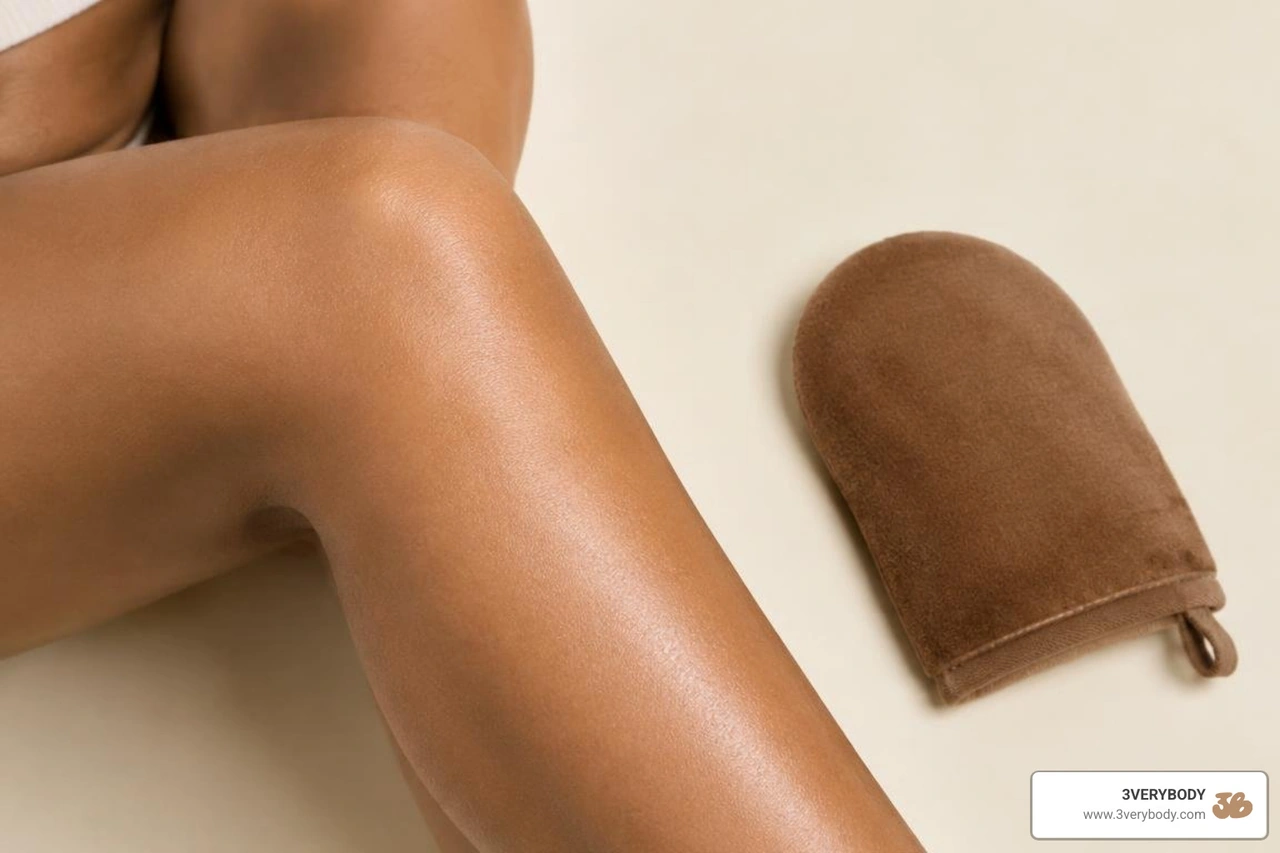
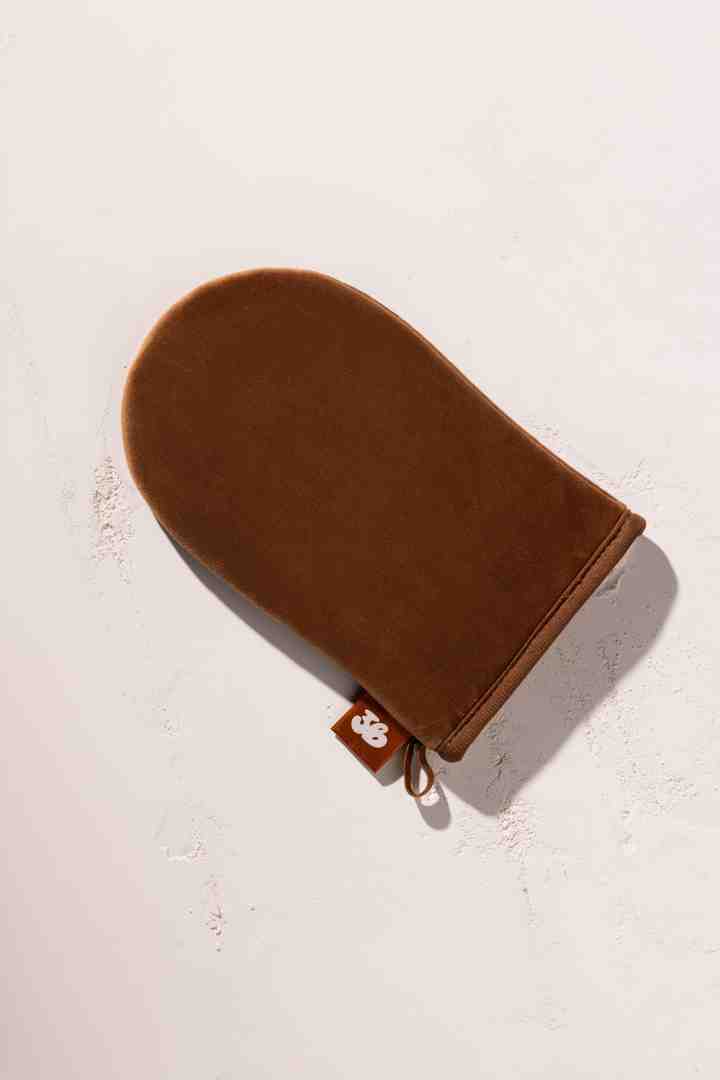
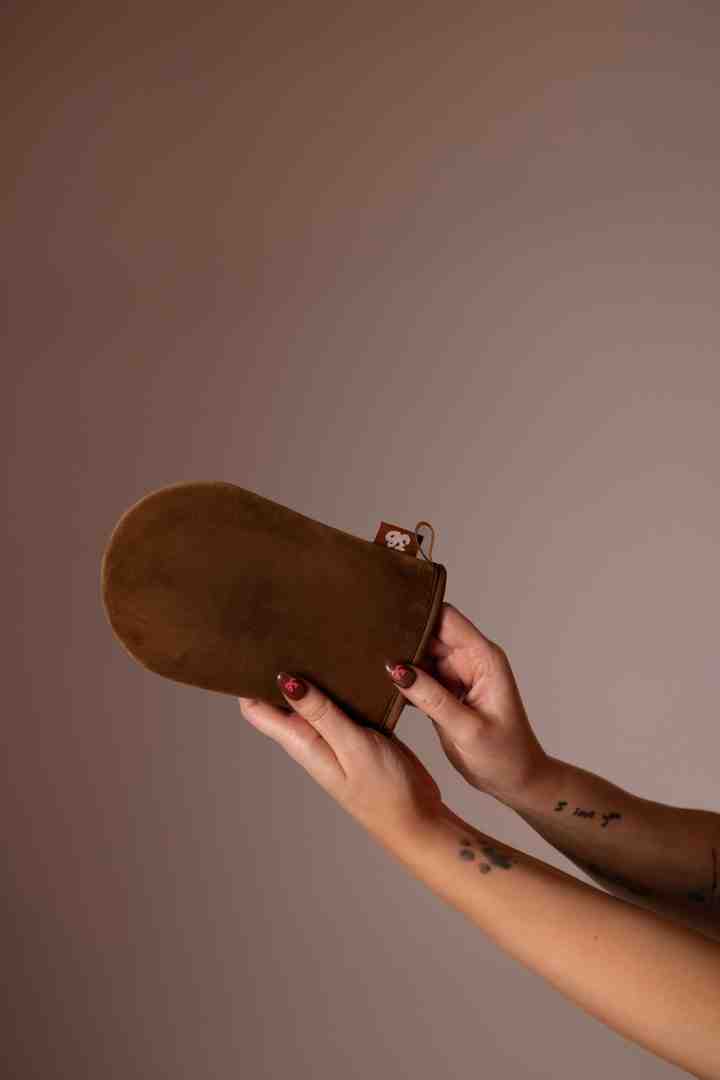
When you are ready to apply, using the right tools is essential. If you are wondering, Do I Need to Use a Tanning Mitt to Apply Self Tanner, the answer is a resounding yes. A high-quality, double-sided mitt like The Mitt gives you even control and prevents your palms from absorbing the product.
For a seamless finish, we recommend following the application order used by professionals, as detailed in How to Self-Tan at Home and Get Professional-Looking Results | Allure:
- Start from the bottom: Work from your ankles upward. This prevents the product from creasing on your stomach or wrists when you bend over to reach your legs.
- Apply in long strokes: Spritz our Life Proof Tan directly onto The Mitt. Sweep the mitt over your skin in long, upward motions, finishing with gentle circular patterns to blend.
- Use a light touch on joints: When you reach your knees and elbows, bend them slightly to stretch the skin, and use only the leftover product on your mitt.
- Save hands and feet for last: Never apply fresh product directly to your hands or feet. Instead, use the clean side of the mitt or the very small amount of residue left over to gently sweep over the tops of your feet and the backs of your hands, blending outward toward your fingers and toes.
Face Tanning with Drops
To keep your facial glow synchronized with your body, use a dedicated formula. Our Tanning Drops are designed specifically to be mixed with your existing skincare. If you are learning How to Apply Self Tanning Drops, the process is simple:
- Dispense your usual amount of daily face moisturizer into your palm.
- Add 2 to 4 drops of Tanning Drops for a subtle radiance, or up to 6–8 drops for a deeper bronze.
- Mix them together thoroughly in your hands.
- Apply evenly to your face and neck, blending carefully into your hairline, over your ears, and down toward your collarbones.
- Wash your hands with soap immediately afterward to avoid color developing on your palms.
Post-Application Care and Maintenance
After you have applied your self-tanner, the development phase begins. This is when the DHA goes to work. To keep your color even, wear loose, dark clothing while the tan sets. Tight waistbands, sports bras, or denim can rub against the developing color and cause uneven patches.
How to Maintain Your Self Tanner Routine
Knowing How Long Should I Wait to Shower After Applying Self Tanner is crucial. For our Life Proof Tan, let the color develop for 4 to 8 hours before rinsing.
When it is time for your first shower, keep it simple:
- Rinse with lukewarm water only — avoid harsh soaps, heavy scrubbing, and hot showers during your first rinse.
- You will see some color wash down the drain; this is just the temporary guide color, not your actual tan fading.
- Gently pat your skin dry with a towel instead of rubbing.
- Once dry, apply a light, water-based moisturizer to support a Moisturize After Self Tan hydrating feel.
Emmy's Tip: If you live in a warm climate or tend to sweat in your sleep, dust a little baby powder into high-friction areas like the inner elbows, behind the knees, and under the arms after your application. This helps absorb excess moisture and reduces friction while your color develops.
Rinsing and Extending Your Color
If you are wondering, How Long Does Self Tanner Last, a quality sunless tan typically lasts about a week with proper care.
To learn How Can I Make My Self Tan Last Longer and ensure an even fade, keep these tips from The Best Self-Tan Routine According To Pros & Editors | mindbodygreen in mind:
- Hydrate daily: Keeping your skin hydrated is key. When looking at Does Moisturising Help Fake Tan Last Longer, the answer is a clear yes. Moisturizing daily prevents dry skin cells from shedding too quickly, which is what causes a tan to look patchy.
- Avoid harsh cleansers: Use gentle, sulfate-free body washes. Avoid heavy scrubbing, long hot baths, and chlorine.
- Use gentle top-ups: For more details on maintaining your color, check out our Ultimate Fake Tan Tips Longer guide. You can easily extend your color by mixing a few Tanning Drops into your body lotion every few days.
Troubleshooting Common Mistakes
Even with the best preparation, mistakes can happen. If you notice an uneven area or a streak, don't worry — you do not have to scrub your skin raw to fix it.
If you need to know How to Fix Patchy Tan quickly, try this gentle kitchen remedy: mix a tablespoon of baking soda with a splash of baby oil to create a paste. Apply it to the dark or streaky area, let it sit for 5 minutes, and then gently buff it away with a warm washcloth in the shower. This helps lift the stubborn color without stripping the rest of your tan.
To prevent these issues next time, read our guide on How to Avoid Streaks or Patchiness When Applying Self Tanner. Orange tones are typically caused by overapplication, dry skin, poor prep, or choosing a shade that is too dark for your starting skin tone.
Finally, if you applied your tanner without a mitt and ended up with stained palms, check out our tips on How to Get Fake Tan Off Hands to clean them up quickly.
Frequently Asked Questions About Sunless Tanning
Will self-tanner stain my clothes or sheets?
This is one of the most common concerns. Many traditional products stay tacky for hours, leading to stains. If you want to know Will Self Tanner Stain My Clothes or Sheets, it largely depends on the formula you choose.
Using a transfer-resistant, quick-drying formula helps minimize this risk. If you are looking for Which Self Tanner Dries Quickly and Wont Transfer to Sheets, our Life Proof Tan is designed to be touch-dry in a few minutes, so you can get dressed without a sticky feeling. For more details on protecting your linens, read our Non Transferring Self Tanner Guide 2026. As an extra precaution, we always recommend wearing loose, dark cotton pajamas while your tan develops overnight.
Will swimming or sweating affect my self-tan?
Yes, water and heavy sweat can impact how your tan develops and how long it lasts. If you are wondering, Will Swimming or Sweating Affect My Self Tan, the rule is simple: avoid water, heavy workouts, and swimming entirely during the 4–8 hour development window.
Once your tan has fully developed and you have completed your first rinse, you can return to your normal active lifestyle. If you swim regularly, be aware that chlorine and saltwater can dry out your skin, causing your tan to fade more quickly. For active routines, check out our Best Self Tanner Guide for Swimmers 2026 and read about What Self Tanner Wont Sweat Off to keep your color looking fresh.
Do I still need to wear sunscreen with a self-tan?
Yes, absolutely. A self-tan is purely cosmetic and does not provide any UV protection. Even if your skin looks bronzed, it is still vulnerable to sun damage. Always apply a broad-spectrum daily sunscreen with an SPF of 30 or higher before spending time outdoors to protect your skin's health.
Conclusion
Mastering your self tanner routine does not require professional spray-tan equipment or complicated steps. By taking the time to prep your skin, choosing water-light, quick-drying formulas, and keeping your skin hydrated, you can easily achieve an even, comfortable bronze at home.
If you are ready to simplify your routine, The Kit from 3VERYBODY brings together everything you need — including our Life Proof Tan, Tanning Drops, and The Mitt — for an easy application designed to help reduce streaking. We design our products with inclusivity in mind, making a subtle radiance accessible for every skin tone and type.