Can You Apply a Second Coat of Self Tanner on the Same Day?
Yes, applying a second coat of self-tanner on the same day is possible, but understanding how the formula interacts with your skin is critical before adding another layer. The active ingredient in sunless tanners, dihydroxyacetone (DHA), works by reacting with the amino acids present in the stratum corneum—the outermost layer of dead skin cells. To understand how this reaction creates color, it helps to learn how do self-tanners work.
When you apply a second layer, you are supplying additional DHA to those same surface cells. If you reapply too quickly while the first coat is still settling or damp, the product can pool in open pores or dry patches, leading to an oversaturated, muddy finish. This is why following clear guidelines on Can You Apply Self-Tanner Twice in One Day? - GCELT is so important.
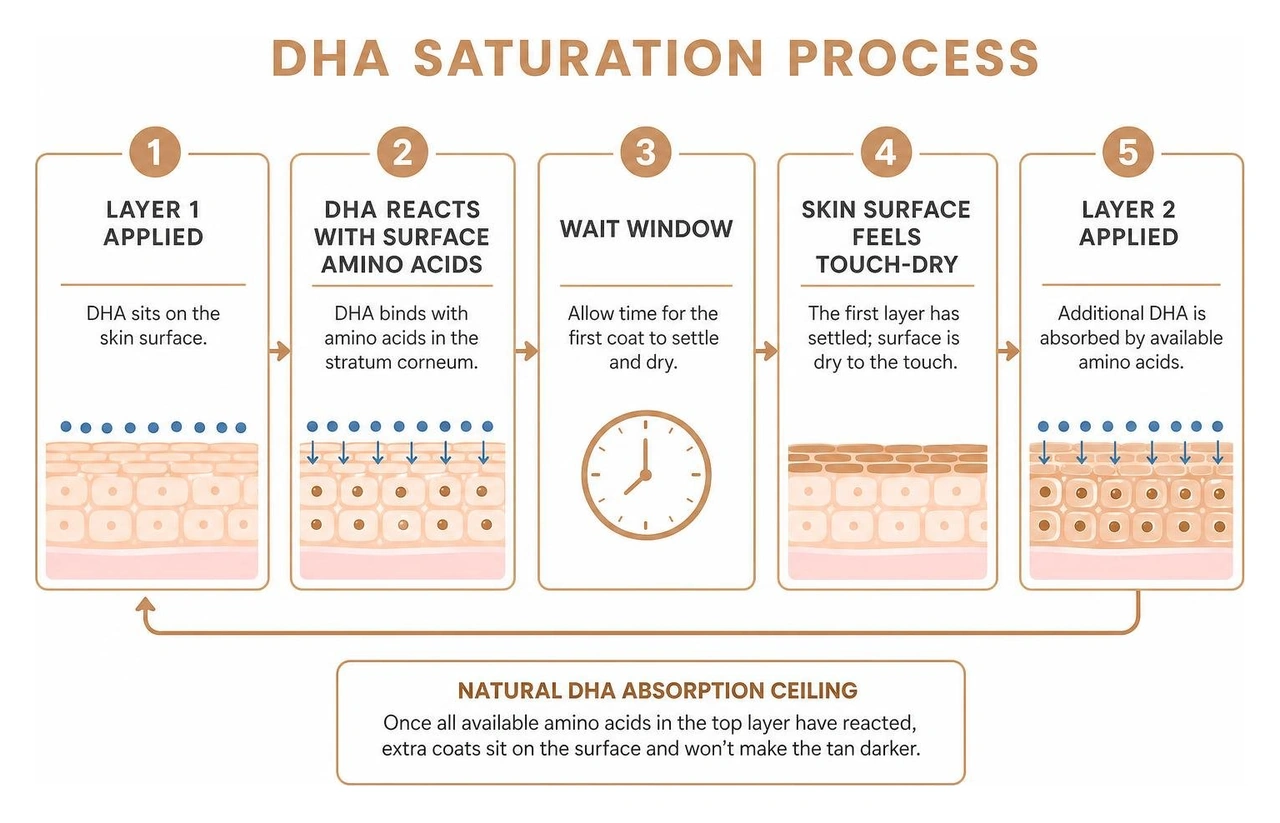
Experienced self-tanners who know their skin's hydration levels and absorption limits often benefit most from same-day layering, particularly when preparing for a specific event. However, your skin has a natural DHA absorption ceiling. Once all available amino acids in the top layer of skin have reacted, adding extra coats will not make the tan any darker—it will simply sit on top of the skin, increasing the likelihood of uneven fading.
How Long Should You Wait Between Layers of Self Tanner?
The amount of time you should wait between coats depends on your schedule and the specific routine you prefer. There are two standard approaches to same-day layering:
- Option A: Rapid Touch-Dry Layering (30 to 60 minutes): This method involves applying your first coat, waiting 30 to 60 minutes until the skin feels touch-dry in a few minutes, and immediately buffing on a second thin layer. This works best when using lightweight, non-sticky formulas that absorb cleanly without leaving heavy residue.
- Option B: Full Development Layering (4 to 8 hours): With this method, you apply your base coat, allow it to set for 4 to 8 hours, and then take a quick lukewarm rinse before applying coat number two. Knowing how long should i wait to shower after applying self-tanner ensures you do not wash away underdeveloped pigment before adding your next coat.
Formula consistency plays a significant role in how quickly you can reapply. Liquid waters and serum drops absorb into the skin much faster than heavy cream lotions, which require longer drying windows. For a clearer picture of how formulas behave, explore whats the difference between instant self-tanners and gradual tanners.
| Layering Method | Wait Window | Requires Intermediate Shower? | Best For |
|---|---|---|---|
| Rapid Touch-Dry | 30–60 Minutes | No | Quick turnarounds, lightweight water formulas |
| Full Development | 4–8 Hours | Yes (lukewarm rinse only) | Deep event bronze, guide-color formulas |
What Is the Best Technique for Layering Self Tanner Without Streaks?
Building color safely requires precision and methodical prep. Following structured self-tanner application tips helps ensure both layers blend smoothly into the skin.
Step 1: Prepping Skin 24 Hours in Advance
Thorough preparation is non-negotiable when planning a double application. You should always exfoliate before self-tan at least 24 hours prior to your session. This clears away loose, dead skin cells and balances your skin surface. Lightly moisturize naturally dry areas—such as elbows, knees, ankles, and wrists—several hours before tanning so they do not over-absorb product.
Step 2: Applying the First Base Layer
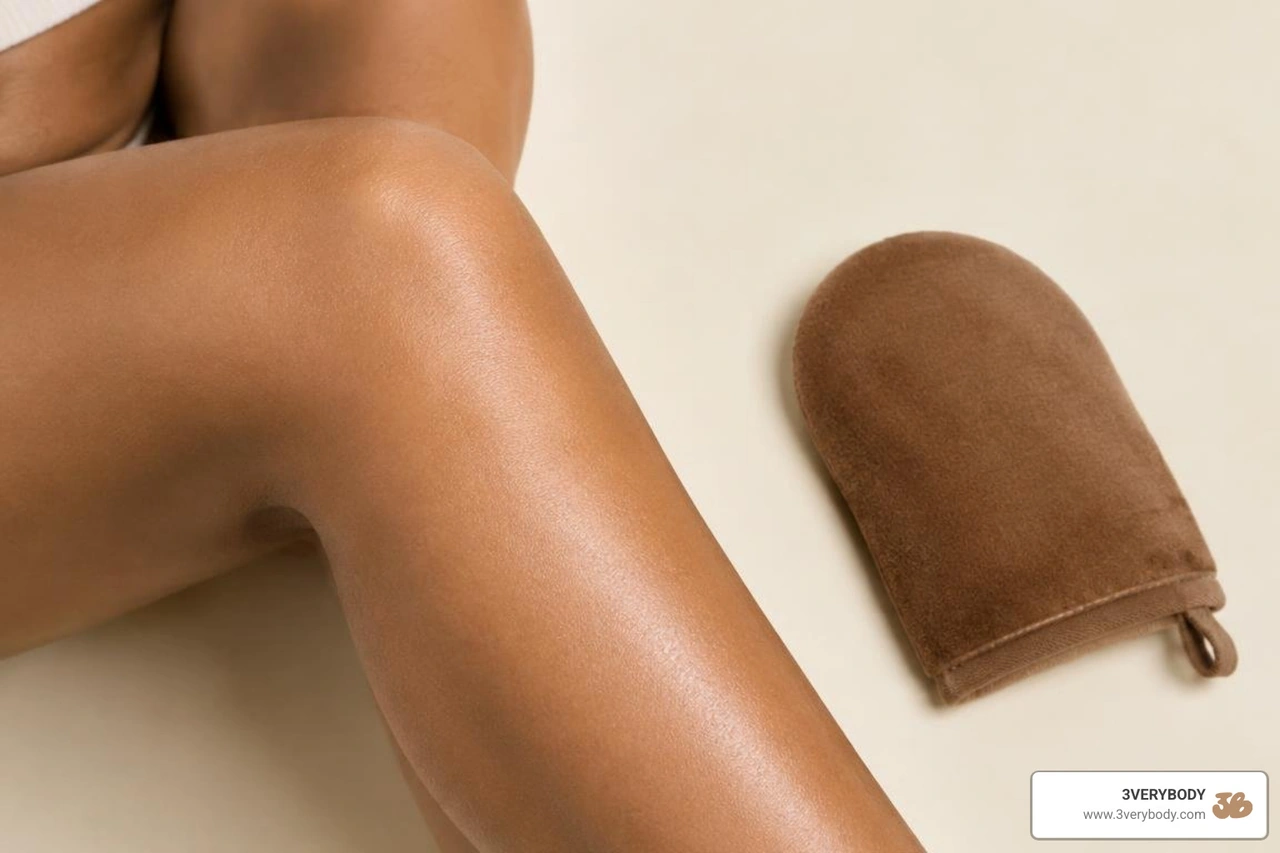
Apply your first coat using long, sweeping upward motions. We always recommend using dedicated application tools rather than bare hands. If you wonder do i need to use a tanning mitt to apply self-tanner, the answer is yes: an applicator tool prevents stained palms and ensures smooth distribution.
We designed The Mitt to be double-sided, washable, and crafted specifically for even control. Ensure complete, saturated coverage section by section before moving on.
Step 3: Timing and Buffing the Second Coat
Allow the first coat to sit until it is touch-dry in a few minutes. When applying the second coat, sweep a lighter amount across main body areas.
To keep high-absorption areas looking natural, leave your hands and feet for last, blending residual product using the clean side of The Mitt. For your face, avoid layering heavy body products; instead, follow dedicated advice on how to apply self-tanning drops to customize facial warmth independently.
How Does Formula Selection Affect Same-Day Double Layering?
The texture of your chosen tanning product dictates how successfully it will layer. Heavy lotions and thick creams often contain high oil concentrations that sit on top of the skin, making a second application feel tacky or greasy.
By contrast, water-light liquids absorb smoothly into the upper epidermis, allowing you to layer without feeling heavy or tacky on the skin. Understanding these mechanics is similar to evaluating whether Can You Layer Spray Tans?—lightweight, finely dispersed liquid layers build cleaner color depth than dense, heavy products.
Achieving Water-Light Color Depth with Life Proof Tan
We specifically formulated Life Proof Tan to solve the heavy, sticky feeling traditional tanners can leave behind. It is a water-light, quick-drying, sweat-resistant, transfer-resistant, and non-orange tinted tanning water designed to support buildable, streak-free color.
Enriched with argan oil, cucumber oil, caffeine, and guarana extract, it nourishes the skin while delivering customizable depth. It is vegan, cruelty-free, and free from parabens and sulfates. Our focus remains strictly on high-performing at-home waters and drops.
Customizing Glow Levels with Tanning Drops
For targeted facial warmth or subtle body building, our Tanning Drops offer complete flexibility. They are a lightweight, quick-drying liquid enriched with rosehip oil and cucumber extract that allow you to customize your radiance level drop by drop. They are vegan and free from parabens, palm oil, and sulfates, making them ideal for mixing into your favorite daily oil-free moisturizer.
Preventing Unwanted Orange Undertones
A common concern with double coating is ending up with an artificial orange tone. It is important to realize that orange hues are not caused by chemical flaws in tanning ingredients; rather, orange tones happen from overapplication, dry skin, poor prep, or choosing a shade too deep for your starting skin tone. Choosing a lightweight, quick-drying formula helps reduce streakiness and supports a balanced, natural-looking finish across both coats.
What Should You Do If Your Layered Tan Looks Patchy or Uneven?
If you notice product pooling or dark spots after applying your second coat, act quickly before the pigment sets completely. Knowing how to fix patchy tan early prevents long-term unevenness.
Review these essential troubleshooting steps for managing application issues:
- Gently Buff High Spots: Take a damp, clean microfiber cloth or the clean side of The Mitt and gently buff around dark edges or joint creases to blend excess product into surrounding skin.
- Review Common Mistakes: Review expert guidelines on Tips for Avoiding Common Self-Tanning Mistakes to identify whether dry patches or uneven blending caused the issue.
- Hydrate Lightly: Keep skin hydrated between coats by applying a light, oil-free moisturizer to transition zones. Read up on how to properly moisturize after self-tan without breaking down active DHA.
- Manage Sweat and Friction: Dust a small amount of baby powder in high-sweat areas (like inner elbows or under armpits) to absorb moisture and reduce friction while color sets.
- Avoid Harsh Washing: Stay away from hot showers, heavy scrubbing, and aggressive cleansers, which can cause patchy lifting and premature fading.
Frequently Asked Questions About Layering Self Tanner
Will adding a second coat of self tanner make my tan darker?
Yes, adding a second coat supplies additional DHA to react with surface skin cells, deepening your overall color. However, keep in mind that once your skin reaches its natural DHA saturation limit, adding further coats will not darken your skin any more and can lead to uneven wear.
Should you rinse off the first coat of self tanner before applying a second coat?
It depends on the window you select. If you are doing rapid touch-dry layering within 30 to 60 minutes, a rinse is unnecessary. However, if you let the first layer set for 4 to 8 hours, taking a quick lukewarm rinse (without soap) to wash away surface bronzer guides creates a clean canvas for your second application.
Can you apply self tanner two days in a row instead of the same day?
Yes, and waiting 24 hours is often the safest choice for beginners. Giving your base layer a full day to develop allows you to see the exact final color in daylight before deciding if you need additional warmth.
What Are the Key Takeaways for Same-Day Self Tanner Layering?
Layering self-tanner on the same day is an effective way to achieve a rich, custom bronze when done with patience and the right tools. Remember these core principles:
- Respect the Drying Window: Wait at least 30 to 60 minutes for rapid touch-dry layering, or 4 to 8 hours if you prefer to rinse between coats.
- Prioritize Skin Prep: Exfoliate 24 hours beforehand and keep dry spots lightly hydrated to avoid uneven absorption.
- Use the Right Applicators: Always apply liquid formulas using a controlled applicator tool. The Mitt offers double-sided, washable control for seamless coverage.
- Choose Lightweight Formulas: Water-light formulas absorb cleanly without tacky residue, helping reduce streaks and build-up.
For a seamless at-home routine, check out The Kit—our complete system featuring Life Proof Tan, Tanning Drops, and The Mitt designed to give every skin tone an effortless, custom bronze.