Why a Patchy Tan Happens — and How to Fix It Without Starting Over
If you need to how to fix patchy tan results right now, here's the short answer:
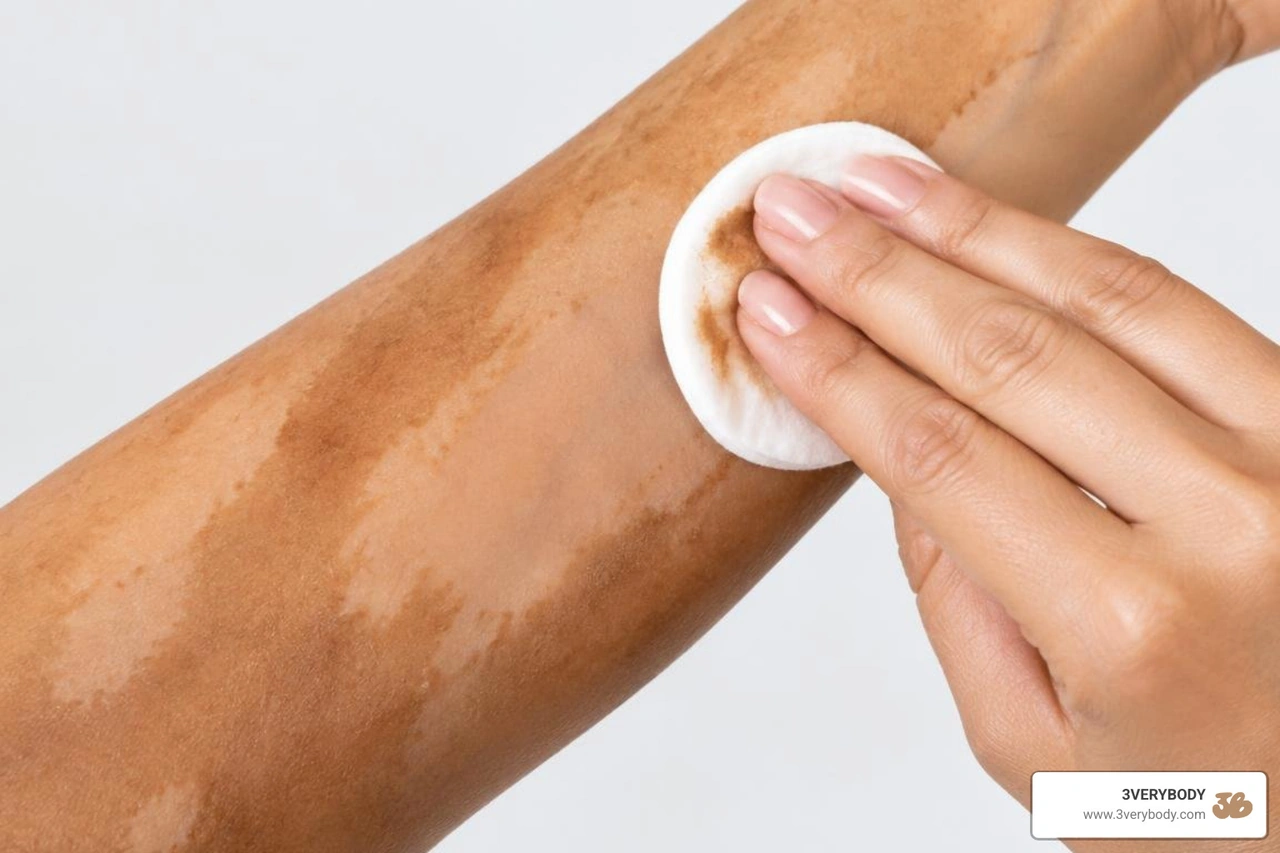
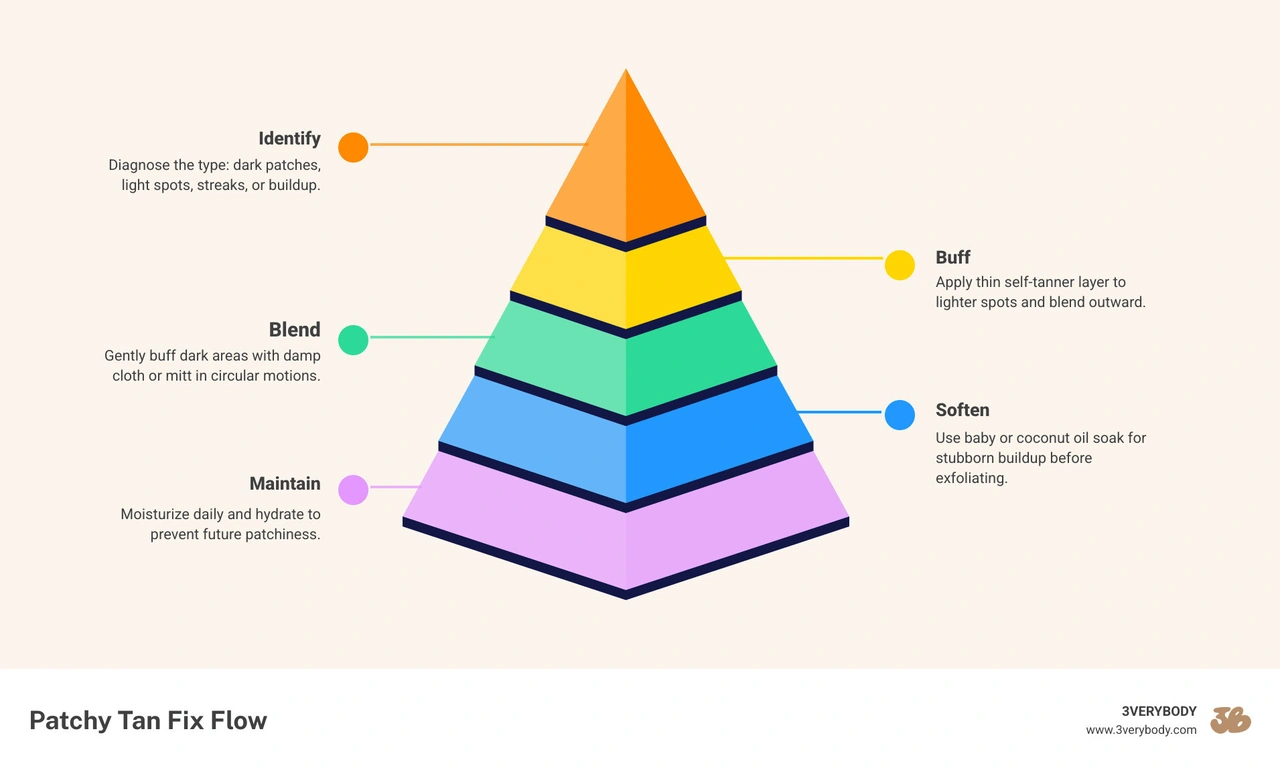
- Dark patches: Buff gently with a damp cloth or exfoliating mitt in small circular motions.
- Light or missed spots: Apply a thin layer of self-tanner with your mitt and blend outward into surrounding skin.
- Streaks: Dampen your mitt and buff the streaky area, then reapply a thin pass to even the tone.
- Stubborn buildup: Soak the area in baby oil or coconut oil for 10–15 minutes, then exfoliate gently.
- Need a fast fix before going out: Layer a wash-off tinted bronzer over the uneven area and blend edges.
You did the prep. You applied carefully. You waited. And now you're looking in the mirror at ankles that are twice as dark as your calves, knees that look like a different person, and a mysterious streak on your wrist that definitely wasn't part of the plan.
Sound familiar? You're not alone — and it's almost never your fault.
Patchy tan is incredibly common, and it happens because self-tanner reacts with the outermost layer of your skin — a layer that isn't the same thickness or dryness everywhere. Dry zones grab more pigment. Dead skin buildup holds color longer. The result? Uneven, blotchy, frustrating color that can feel impossible to fix.
The good news: most patchy tans are fixable without starting over. A targeted approach — buff, blend, or lightly exfoliate — sorts out roughly 80% of cases in under 30 minutes.
I'm Emmy Bre, founder of 3VERYBODY, and after a decade of testing nearly every self-tanner on the market before building our own streak-free, non-orange formula, I've personally dealt with every version of how to fix patchy tan you can imagine. This guide covers everything I've learned — fast fixes, prevention, and the exact techniques that actually work.
How to Fix Patchy Tan Fast: First Figure Out What Kind of Patchiness You Have
Before you grab the scrub, figure out the pattern first. Not all patchiness needs the same fix. In 2026, more people are choosing water-light formulas like our Life Proof Tan because a thinner layer blends cleaner, dries faster, and looks natural from very fair to deep skin. But even with a streak-free spray or mist, patchiness can still happen if your skin is dry, textured, or not fully prepped.
The most common reasons a tan turns patchy or streaky
Self-tanner uses DHA (Dihydroxyacetone) to react with the amino acids in dead skin cells. If those cells are uneven, the result is uneven too.
- Dead Skin Buildup: High-friction areas like knees and elbows shed differently, which can leave pale circles or rough fading.
- Dry Zones: Thicker, drier skin on ankles and heels grabs more color and can turn darker than the rest of your body.
- Product Residue: Leftover deodorant, perfume, sunscreen, or lotion can block the tan and leave light spots.
- Environmental Factors: Sweat, water, or tight clothing during development can shift product and create streaks.
Is it better to blend, buff, or remove the tan completely?
We use a simple 50 Percent Rule: if more than half your body is blotchy, or the color is clearly off, start fresh. If the issue is a few streaks, dark joints, or a missed patch, spot-fixing is usually enough and much kinder to your skin barrier.
Aggressive scrubbing can leave skin raw and make the next application grab even worse. If you just need your tan even and natural-looking fast, targeted blending is usually the better move.
Quick Fixes for Minor Patchy Tan Without Removing Everything
If you have a few missed spots or one darker area after your rinse, don't start over yet. Most patchy tan issues can be fixed with a small, controlled touch-up.
How to fix darker patches without making them worse
For spots that developed too dark, the goal is to soften the edge and lift a little color without over-scrubbing.
- The Damp Cloth Method: Use a warm, damp washcloth and buff the area gently in small circles.
- The Oil Soak: For stubborn buildup, apply baby oil or coconut oil for 10 minutes, then wipe and buff lightly.
- The Mitt Blend: Use the clean side of a tanning mitt to soften the edges so the patch blends into the rest of your tan.
For a deeper dive into these steps, check out this How to Fix Patchy Self Tan Fast (Simple 3-Step Routine That Works) - My Glow Routine .
How to fix lighter or missed spots with a safe reapplication
If you missed a small area, use less product than you think you need. Thin layers look more natural and help avoid a dark ring.
- Use a Makeup Brush: For small spots like wrists, ankles, or the back of the calf, use a dense brush for precision.
- Spritz Lightly: Spritz a tiny bit of 3VERYBODY Life Proof Tinted Tanning Water onto the brush or mitt.
- Blend Outward: Start in the center of the pale patch and feather outward into the surrounding skin.
- Let It Dry: Give it a few minutes to dry before getting dressed.
Our water-light, quick-dry formula is designed to stay non-orange, non-sticky, and sweat/transfer-resistant while still being easy to blend. Learn more about How to Avoid Streaks or Patchiness When Applying Self Tanner and how to get a Self Tan Without Streaks every time.
The fastest cosmetic fix when you need to leave the house soon
If you need a same-day save, use body makeup. A wash-off bronzing body tint can blur the uneven area until you have time to do a proper fix. Blend the edges well, let it dry fully, and treat it as a temporary cover rather than a tanning step.
Gentle Exfoliation Methods That Even Out a Patchy Tan
Exfoliation helps, but overdoing it can make patchiness worse. The goal is to loosen uneven color without damaging your skin barrier.
| Method | Best For | Effort Level |
|---|---|---|
| Buffing | Small streaks or slightly dark joints | Low |
| Exfoliating | Stubborn buildup or old tan fading | Medium |
| Reapplying | Pale patches or missed spots | High |
Best gentle exfoliation methods for stubborn patches
Think gentle, not aggressive.
- AHA/BHA Acids: Lactic or glycolic acid can help loosen the tinted surface cells. Apply to the patch, wait a few minutes, then rinse.
- The 3-Step Routine: Take a warm shower for 5 to 10 minutes, use a soft exfoliating mitt with light pressure, then follow with a ceramide-rich moisturizer.
- Oil First: If the patch is extra dark, start with an oil soak before buffing.
Consistency matters. Very dark spots may need 2 to 3 days of gentle evening-out rather than one intense scrub session. Read more on The Importance of Exfoliation in Self Tanning Routines and How to Exfoliate Properly.
DIY methods to use carefully and what to skip on sensitive skin
A lot of DIY tan-removal advice is harsher than it needs to be.
- Skip: Lemon juice, rough baking soda pastes, and harsh hair removal cream shortcuts. They can irritate skin, cause microtears, and leave the next tan looking worse.
- Try instead: A gentle oil-based scrub or a soft mitt with warm water.
If your skin is sensitive, slow and steady wins. Protect the barrier first, then reapply tan in thin layers once the area is smooth again.
How to Fix Patchy Tan on Knees, Elbows, Ankles, and Legs
These are the high-risk zones. The skin is thicker, drier, and more textured, so it grabs more pigment and fades less evenly.
How to fix patchy tan on knees, elbows, and ankles
The fix here is usually less product and more moisture.
- Targeted Moisturizer: Apply a light, oil-free lotion before touching up these areas so new color goes on softer.
- The One Swipe Rule: When using our Life Proof Tinted Tanning Water, spritz onto your 3VERYBODY Tanning Mitt and use just one light pass over knees and elbows.
- The Clean Side Blend: Flip to the clean side of the mitt and buff the area right away to remove excess product from lines and folds.
This is exactly why our double-sided, washable mitt matters. It gives you more control and helps keep the finish streak-free. Check our guides on why you must Exfoliate Before Self Tan and the best way to Moisturize After Self Tan.
How to fix patchy tan on legs when they look lighter than the rest of your body
Legs can resist color because the skin is thicker and often drier.
- Dry Brush First: Before showering, dry brush gently to lift flakes and smooth the surface.
- Second Pass Later: If your legs always run lighter, do a second light pass 24 hours later.
- Use Long Strokes: Spritz your mitt, smooth in long upward strokes, then finish with small circles where needed.
Our tinted tanning water is water-light and quick-dry, so layering in thin passes looks more natural than one heavy coat.
How to fix hands and feet that went too dark
Hands and feet need the least product and the most blending.
- Use Micellar Water: Sweep it over knuckles, cuticles, wrists, or the tops of feet to lift excess color gently.
- Blend With Leftover Product: Next time, leave hands and feet for last and use whatever is left on the mitt.
- Use the Claw Hand Position: This helps you reach between knuckles without product pooling.
For more help, read How to Get Fake Tan Off Hands.
Prevent Patchy Tan Next Time With Better Prep, Hydration, and Aftercare
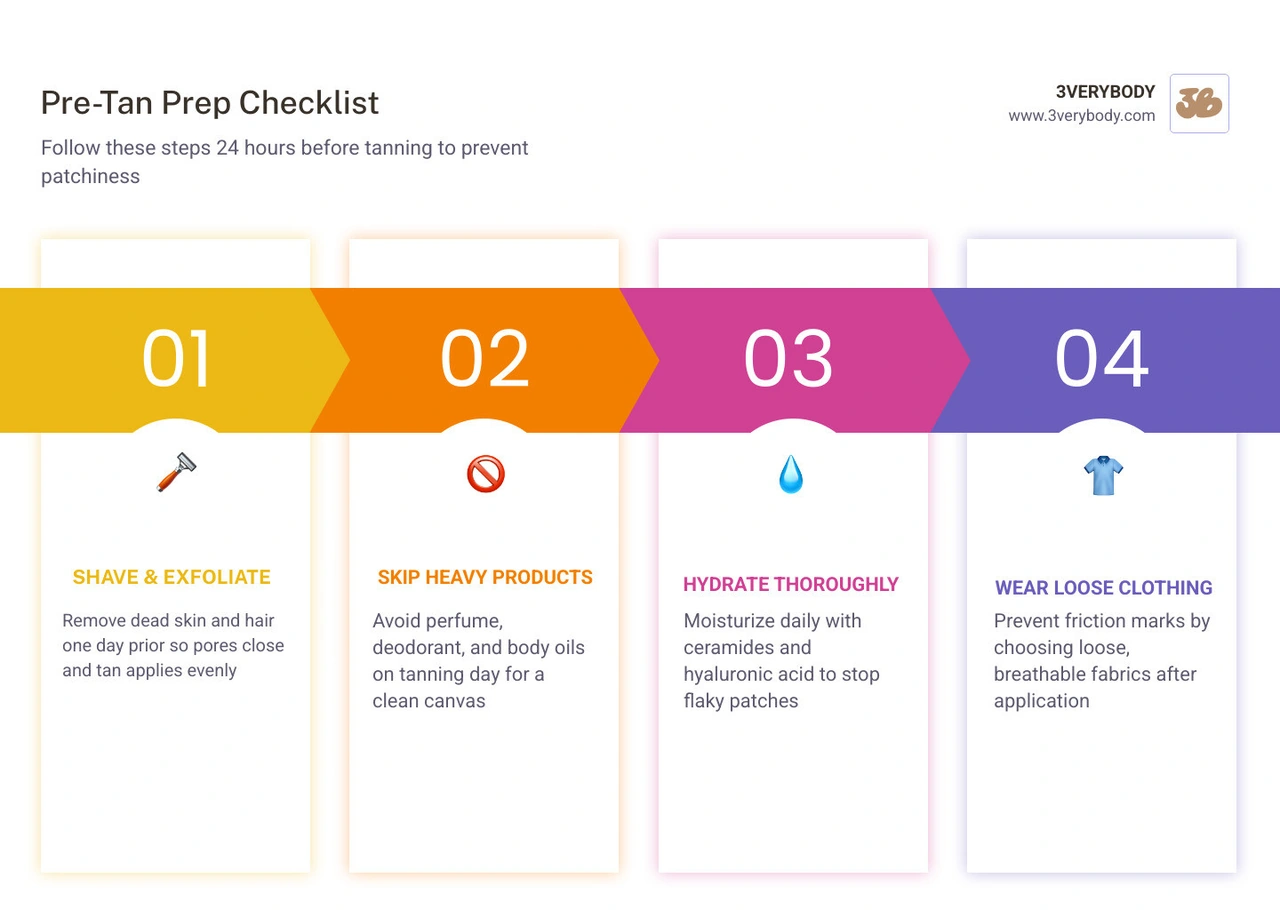
Prevention is easier than fixing a patchy tan later. If you want a non-orange, streak-free result, most of the work happens before and after application.
Prep your skin the day before, not right before
- The 24-Hour Rule: Shave and exfoliate about 24 hours before tanning.
- Start Clean: On tanning day, skip deodorant, perfume, sunscreen, and heavy body oils where you plan to tan.
- Use the Right Method: Spritz 3VERYBODY Life Proof Tinted Tanning Water onto the Tanning Mitt, smooth in long strokes with gentle circles, and leave hands and feet for last.
For more, read our Tips for Avoiding Common Self Tanning Mistakes and find out what makes a truly Non Streaky Self Tanner.
Why hydration is the difference between even fade and patchy fade
A good tan fades with your skin. A patchy tan usually fades with your dry spots.
- Moisturize Daily: Use a moisturizer morning and night.
- Look for Barrier Support: Ceramides and hyaluronic acid help keep skin smooth and even.
- Focus on Dry Zones: Give extra attention to elbows, knees, ankles, and wrists.
Our Ultimate Moisturize Self Tan Guide explains exactly which ingredients to look for to keep your Moisturize After Self Tan routine effective.
During development: what to avoid so your tan stays even
The first several hours matter most.
- Stay Cool: Avoid workouts, heat, and heavy sweating.
- Wear Loose Clothes: Loose, dark clothing helps prevent rubbing and transfer while your tan sets.
- Rinse Smart: Do your first rinse with lukewarm water, pat dry, and moisturize after.
Our formulas are quick-dry, sheet-safe, and sweat/transfer-resistant, but giving your tan a calm development window still makes a big difference.
Frequently Asked Questions About How to Fix Patchy Tan
How long should you wait before reapplying self-tanner to lighter patches?
Wait until after your first rinse so the full color has time to show up. In most cases, 24 hours after your first application is the best time for a second light pass.
Can moisturizer help fix a patchy tan, or does it make it fade faster?
Moisturizer helps more than it hurts. It softens dry areas, supports an even fade, and can dilute color slightly during touch-ups so patches blend better. Just avoid heavy oils right before applying tan.
Why does patchy tan keep happening even when you apply carefully?
Usually it comes down to skin texture, prep, or friction. Dry patches, leftover deodorant, sweat, and tight clothes can all interfere with the finish. The tool matters too. A clean, double-sided mitt gives you more control than using your hands alone, especially with a water-light spray or mist like our Life Proof Tan.
Conclusion
At 3VERYBODY, we make at-home self-tanning simple: Life Proof Tinted Tanning Water, customizable Tanning Drops, our double-sided Tanning Mitt, and the full 3VERYBODY Kit for salon-quality results at home.
Everything is built to give you a natural-looking glow without the usual tradeoffs. Our formulas are water-light, quick-dry, sweat/transfer-resistant, non-sticky, and never orange. Life Proof Tan is enriched with argan oil, cucumber oil, caffeine, and guarana extract, and it's vegan, cruelty-free, and free from parabens and sulfates. Our Tanning Drops mix into moisturizer, serum, or oil and feature rosehip oil and cucumber extract.
We're woman-owned, inclusivity-first, and creator-approved, including by HopeScope. If you're wondering what is the best self tanner for pale or fair skin, start there.
Next time you spot a streak, keep it simple: spritz your mitt, blend in long strokes, use the clean side on hands and feet, let it dry a few minutes, wear loose clothes, rinse later with lukewarm water, and moisturize daily. That's the easiest path to an even, streak-free glow.