Can You Put Self Tanner on Tattoos?
Yes, you can use self tanner on tattoos once they are fully healed. It colors the top layer of skin, not the ink beneath it. Dark tattoos usually look much the same, but white, pastel, and other light ink may look warmer or a little dimmer until the tan fades, usually in about a week. To keep light details bright, wipe fresh tanner off them with a damp cotton swab and gently blend the edge. Never tan over a tattoo that is still healing.
For an even finish, moisturize the night before rather than right before tanning. Spray Life Proof Tan onto the Tanning Mitt over a sink, never straight onto skin. Blend in circles from your legs upward, leaving your hands for last and using the dry side of the Tanning Mitt on them. Find more practical advice on self-tanning on 3VERYBODY's blog.
How Self Tanner Interacts With Tattoo Ink in Your Skin
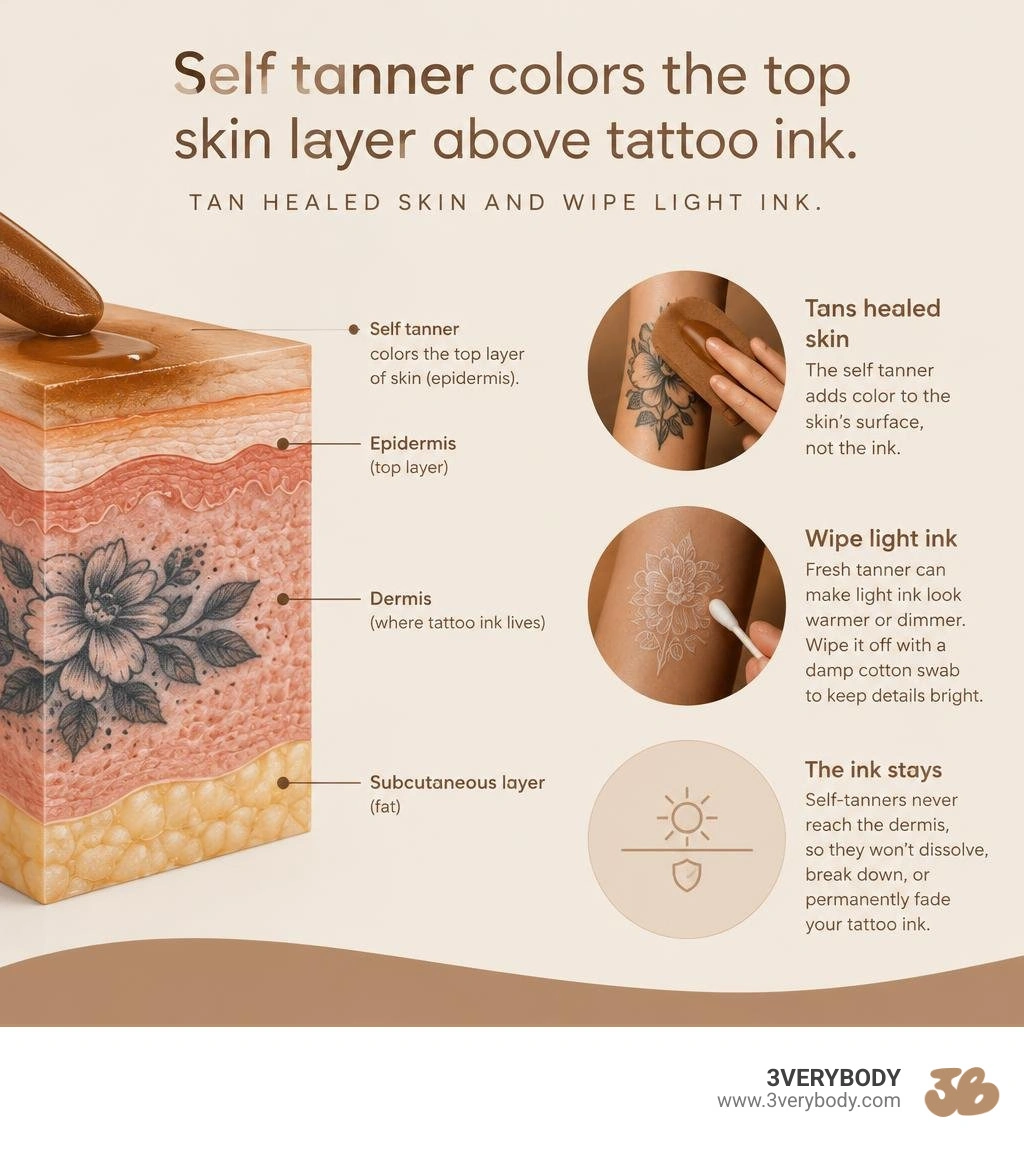
To understand why sunless tanner behaves the way it does over your body art, you need to look at skin anatomy. Your skin has multiple layers. When you get a tattoo, the needle deposits ink deep into the dermis. This stable layer of skin holds the pigment in place for the long haul.
Self tanner works on the outermost surface layer of your skin, known as the epidermis (specifically the stratum corneum). Your tattoo ink sits deeper, so the tanner doesn't change the ink itself.
What changes is simply the tinted lens of skin resting over the art. A sunless tan adds a temporary bronzed tone to the dead surface cells. This alters the contrast between your bare skin and the ink. As your skin naturally sheds over about a week, that surface color fades and your tattoo looks the way it did before.
How Dihydroxyacetone Affects the Surface Layer
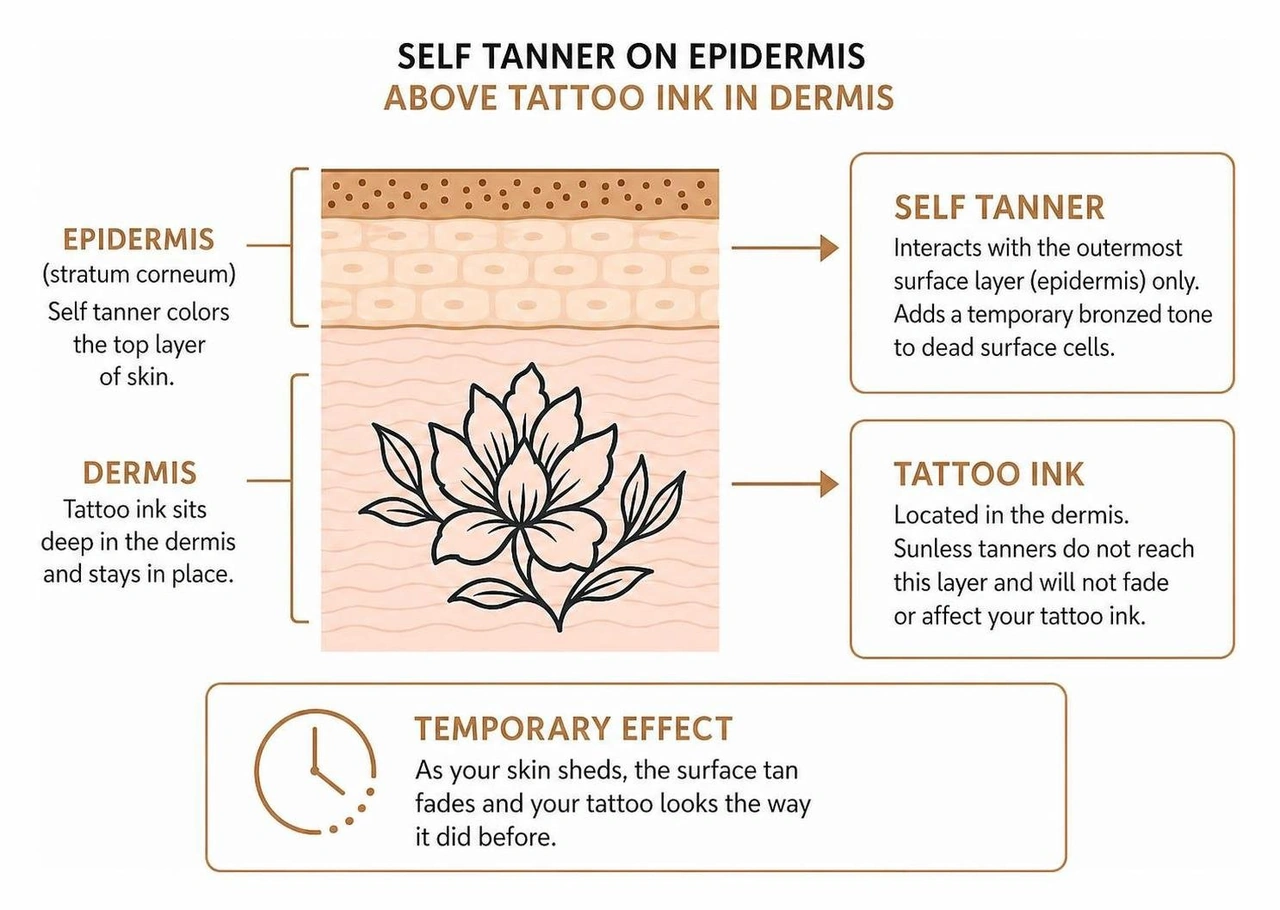
The active ingredient in sunless tanners is dihydroxyacetone, commonly called DHA. DHA is a sugar-based ingredient.
When you apply a sunless product, DHA reacts with the amino acids in the dead protein cells of your stratum corneum. This chemical reaction creates melanoidins, which are brown pigments that mimic a natural sun-kissed look.
Because this reaction is confined to shedding surface cells, it doesn't change the tattoo pigment in the dermis below. However, because it lays a warm, golden-brown wash over the skin, it can temporarily shift how certain colors appear to the naked eye.
What Happens When You Put Self Tanner on Tattoos of Different Colors
Different ink shades react visually in distinct ways when covered by a layer of self-tanner:
| Tattoo Ink Type | Visual Effect of Self Tanner | Best Practice Tip |
|---|---|---|
| Black & Grey Wash | Minimal change; dark linework remains bold and visible | Apply evenly over ink; no special barrier needed |
| Rich Colors (Red, Blue, Green) | Slightly warmer appearance; minor reduction in contrast | Lightly buff over the area with a plush mitt |
| Pastels & Light Inks | Can look temporarily muted, tinted, or slightly muddy | Wipe away fresh tanner with a damp cotton swab |
| White Ink | Can look warm beige or slightly yellow until the tan fades | Carefully clean all product off white highlights right after application |
| Fine Line Work | Lines can look slightly softer against darker skin | Keep skin hydrated ahead of time to help stop product from pooling in skin texture |
Blackwork and bold traditional pieces tolerate sunless tanner easily. Rich black pigment shows right through the sheer top layer of tan. On the other hand, pastel pinks, baby blues, and pure white highlights act like a light canvas. When you place a sheer brown tint over white ink, it looks warm or slightly yellow until that surface tan washes off.
Why Timing Matters for Healed and Fresh Ink
Healed tattoos and fresh tattoos need very different care.
Why You Must Never Put Self Tanner on Tattoos That Are Still Healing
A fresh tattoo is broken skin that is still healing. Keep self tanner and other cosmetic products off it until it is fully healed.
Wait until the skin has completely closed, finished peeling, and fully recovered before using sunless products. If you have sensitive skin or your piece is still glossy, itchy, or raised, give it extra healing time. Always follow your tattoo artist's specific aftercare instructions, and ask your tattoo artist or a doctor if you are unsure whether your tattoo is fully healed.
What to Do Before Laser Tattoo Removal Sessions
If you're getting laser tattoo removal, ask your provider how long to skip self tanner before each session, and follow their instructions.
How to Apply Self Tanner on Tattoos for an Even-Looking Finish
Tanning over tattooed skin is simple. With the right prep and a couple of simple tools, you can get a seamless, bronzed finish that keeps your ink looking sharp.
Prepping and Blending Around Detailed Body Art
Great results start the day before you tan. Follow these steps to get your skin ready for an even application:
- Exfoliate the day before: Slough away dead skin cells to help self tan without streaks. Shave at least 3 hours before tanning if needed.
- Moisturize ahead of time: Avoid applying heavy body lotion immediately before your tanner, as it creates an uneven barrier. Instead, hydrate your skin the night before or earlier in the day. If you have dry patches around your elbows or knees, smooth on a very light layer of lotion and let it sink in fully before starting.
- Use the right application method: Never spray tanning mist directly onto your skin. Spray Life Proof Tan directly onto the Tanning Mitt over your bathroom sink. Sweep the Tanning Mitt across your skin in smooth, circular motions. Start at your ankles and work your way up your body. Do your hands and feet last, using only the dry side of the Tanning Mitt.
- Try customizable drops for custom depth: If you want total control over your shade around intricate tattoos, use Tanning Drops. Mix 2 to 4 drops into your moisturizer for your face, or 4 to 6 drops per body part.
- Protect your ink from the sun: Self tanner is not sunscreen. Keep your tattoos vibrant by applying broad-spectrum sunscreen whenever you step outside.
For more detailed walkthroughs, read our how to self tan for beginners guide.
The Damp Swab Trick for Vibrant Highlights
If your tattoo features delicate white linework, pastel shading, or intricate light details, use this tip from our team to keep those areas bright:
- Keep a small bowl of clean water and a few cotton swabs (Q-tips) nearby while applying your tan.
- Immediately after blending Life Proof Tan with the Tanning Mitt over your tattooed area, take a slightly damp Q-tip and gently trace over the white ink, pastel fills, or small light highlights.
- This lifts the fresh DHA off those light sections before it has time to develop and tint the skin.
- Softly feather the edges right around the design with your finger or the dry side of the Tanning Mitt. This helps you avoid harsh, pale halo lines around your ink while keeping the highlights crisp.
- Wait at least 1 hour before taking a quick, lukewarm rinse without soaps or scrubs, or sleep in your tan overnight for best results.
Frequently Asked Questions About Tattoos and Self Tan
Will fake tan permanently change colored or white ink?
No. Sunless tanners only dye the dead, shedding cells of your epidermis. Your tattoo ink rests deep in the dermis below. Any warmth or dulling on white or pastel ink is temporary and fades as your skin sheds, in about a week.
How long after getting a tattoo can you use self tanner?
You should wait until the tattoo is fully healed before applying any sunless tanning products. The skin must be completely healed, free of scabs, and no longer peeling or shiny. A healing tattoo is broken skin, so keep tanner off it until it's fully healed. Ask your tattoo artist or a doctor if you are unsure.
What should you do if tanner pools over tattoo lines?
If you applied too much product and notice dark buildup settling into textured skin or fine lines, act quickly. Take a damp cotton swab or washcloth and lightly blot the area before the color sets. If the tan has already developed, gently buff the spot with a mild, oil-free scrub during your next shower to even out the tone.
Conclusion
You can have a deep, natural-looking tan and keep your tattoos looking sharp. Self tanner works on the surface layer of your skin, so it doesn't change the ink in your dermis. As long as your tattoos are fully healed, sunless tanning is an easy way to get an all-over bronze without sun exposure.
For a smooth, mess-free routine that gives you complete control around your ink, apply Life Proof Tan using the plush, double-sided Tanning Mitt. This combination helps you blend evenly from legs to arms while keeping your favorite tattoo details clean and defined.
This post is general info, not medical advice. If you have a skin condition or you're unsure, talk to your dermatologist or doctor before trying a new product.