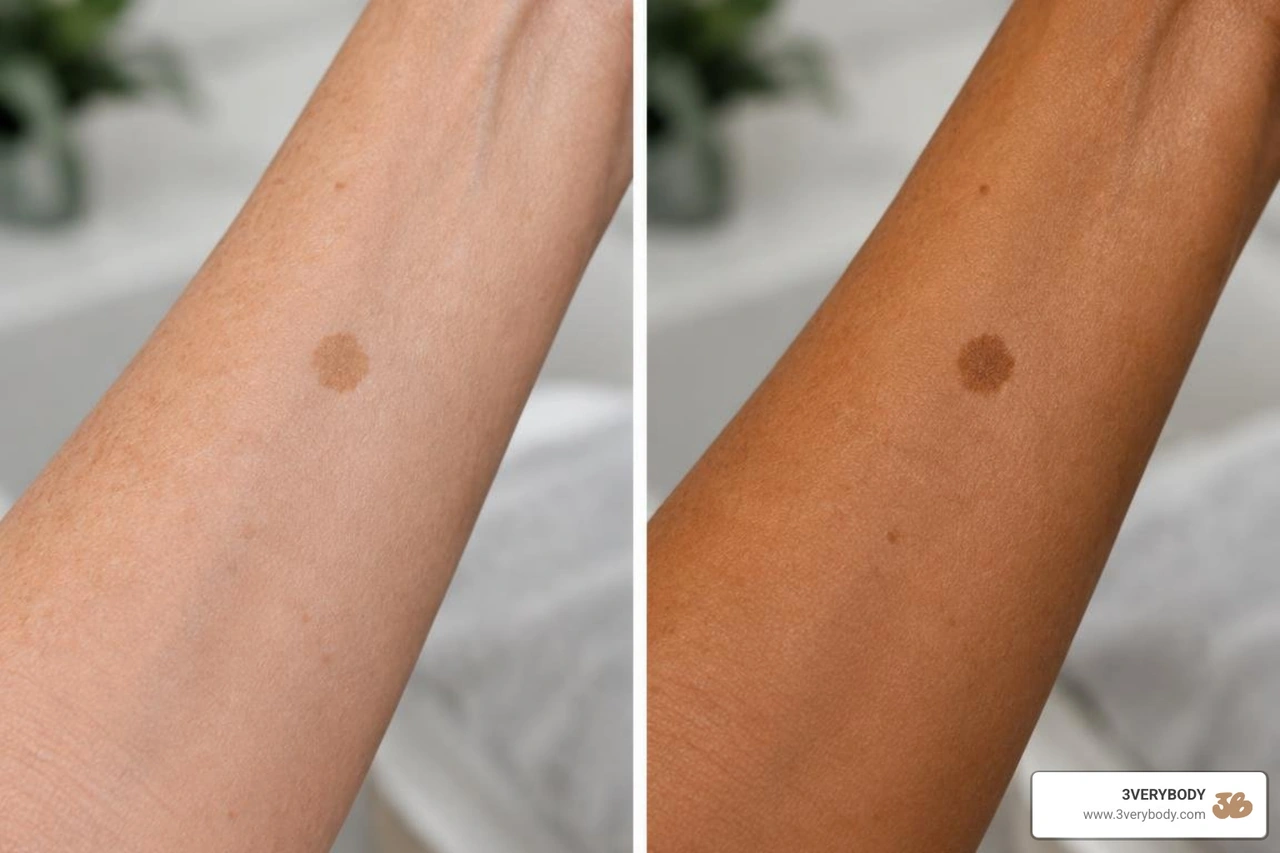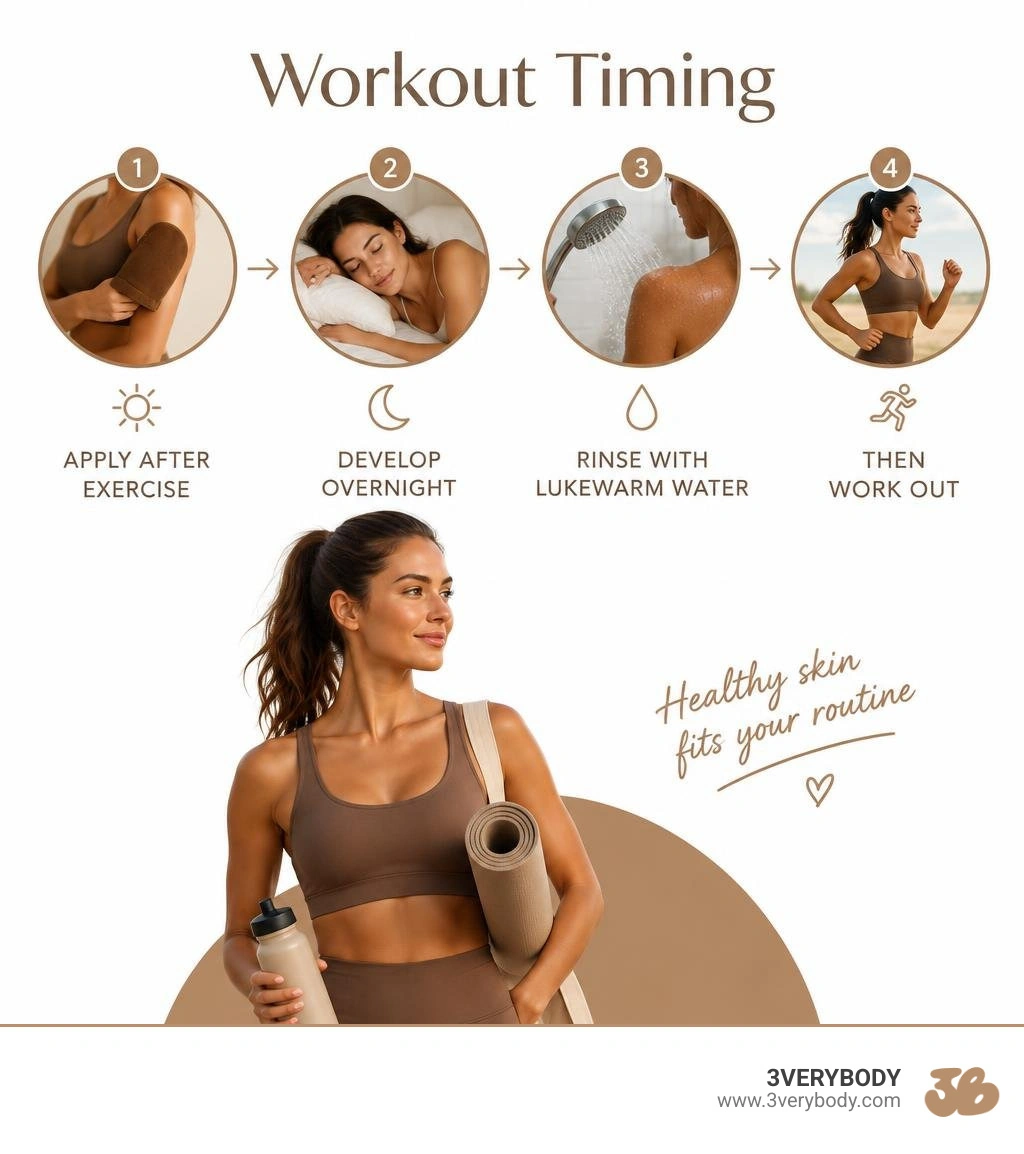
Knowing When Your Tan Needs a Touch Up or a Full Reset
A 3VERYBODY tan lasts about a week, and you can top up a fading tan in between, but only if it is fading evenly. If your tan is flaking or patchy, it is better to fully exfoliate and start fresh from square one. To touch up a fading self tan without visible lines, lightly buff only the spots that have lightened, such as hands, feet, elbows, knees, ankles, wrists, and inner arms. Then apply a sheer layer of product, feathering the edges into the surrounding color. For a quick, controlled refresh, mix two to four drops of Tanning Drops into your face moisturizer or four to six drops per body part into body lotion. If you prefer a spray, apply Life Proof Tan to Tanning Mitt and blend in circular motions, using the dry side to soften transitions.
Your skin sheds its top layer of dead cells all the time. DHA, the active ingredient in self tanner, colors that top layer, so as those cells shed through the week, your color slowly lifts away.
Hands, feet, elbows, knees, ankles, wrists and inner arms usually fade first because they rub against clothes, sheets and shoes and get washed more often. That's why you might see lighter spots around your joints midway through the week while your legs and torso still look even.
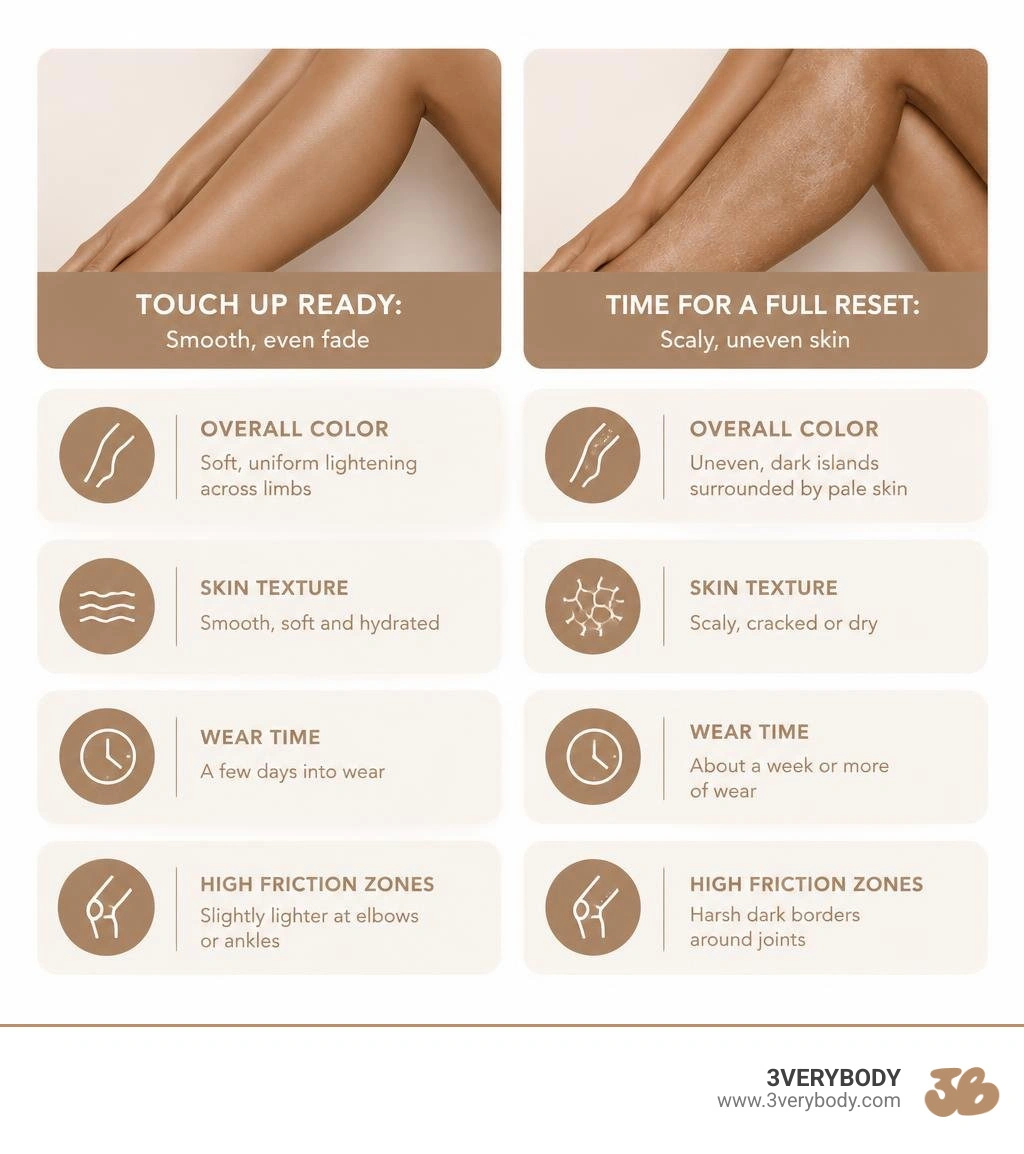
Before reaching for your tanning bottles, take a look in good natural lighting to see if your skin needs a quick, targeted refresh or a complete reset.
| Skin Sign | Touch Up Ready | Time for a Full Reset |
|---|---|---|
| Overall Color | Soft, uniform lightening across limbs | Uneven, dark islands surrounded by pale skin |
| Skin Texture | Smooth, soft, and hydrated | Scaly, cracked, or dry |
| Wear Time | A few days into wear | About a week or more of wear |
| High Friction Zones | Slightly lighter at elbows or ankles | Harsh dark borders around joints |
How to Touch Up a Fading Self Tan Versus Fixing Patchy Application
It helps to separate true fading from early application mistakes. An application error usually shows up right after your first rinse as harsh streaks, missed spots, or grabby dark patches. If you are dealing with early application mistakes from uneven spreading, check our guide to fix patchy tan for immediate corrections.
A naturally fading tan looks completely different. It starts soft and even, only losing depth gradually over several days of normal wear. You can easily refresh an even fade without stripping away your base color.
Signs It Is Time to Exfoliate and Start Over
Layering fresh tanner over an old, cracked layer will not restore a smooth finish. If your skin looks scaly, patchy, or displays an alligator skin texture, old product has built up deep inside dry crevices. Adding more DHA on top of dead skin cells only darkens those cracked borders, creating an uneven look.
When your tan reaches this stage at the end of its cycle, learn how to get old self tanner off before putting on a new coat. A 3VERYBODY tan lasts about a week with proper care. Once it fades and reaches this stage, the application process starts fresh from square one. Exfoliate the remaining pigment away with a warm soak and an oil-free scrub, hydrate your skin, and start over for a fresh, balanced glow.
Step by Step Guide: How to Touch Up a Fading Self Tan
When your tan is fading evenly, a targeted refresh brings back balance without creating hard lines or unnatural build-up.
Light Prep for High Friction Fade Zones
Do not scrub your entire body with a heavy abrasive when you only need a minor top-up. A full-body scrub will lift the good base tan that you want to keep.
- Take a warm shower to soften the outer layer of skin without using drying cleansers or harsh body washes.
- Use a soft, damp washcloth to lightly buff high-friction areas such as hands, feet, knees, elbows, ankles, and inner arms where dead skin collects.
- Skip lotion right before you apply. Moisturize the night before or earlier in the day, and if a spot is extra dry, use only a very light layer and let it sink in fully before tanning.
Step by Step: How to Touch Up a Fading Self Tan with Tanning Drops
For flexible, controlled top-ups, our Tanning Drops mix directly into your favorite daily moisturizer, serum, or oil. These vegan, paraben-free, palm oil-free, and sulfate-free drops offer customizable color, quick-drying performance, and a lightweight feel across both face and body.
- Face and Neck: Mix two to four drops with your standard face moisturizer in the palm of your hand.
- Body Parts: Mix four to six drops per body part into your everyday body lotion.
- Application: Smooth the mixture over your skin in sweeping circular motions. Blend slightly past the faded zone into areas with existing color so there are no stark stop-and-start points. Wash your hands thoroughly with soap right after application.
Blending Missed Spots and Pale Areas with a Second Layer
If you prefer using our Life Proof Tan spray, which is sweat-resistant, quick-drying, and packed with argan, avocado, rosehip, and jojoba oils plus guarana for a super dark, natural-looking finish, a light second layer can even out pale spots and harsh lines. Review the timing rules on whether you can put a second coat of self tanner on the same day before starting.
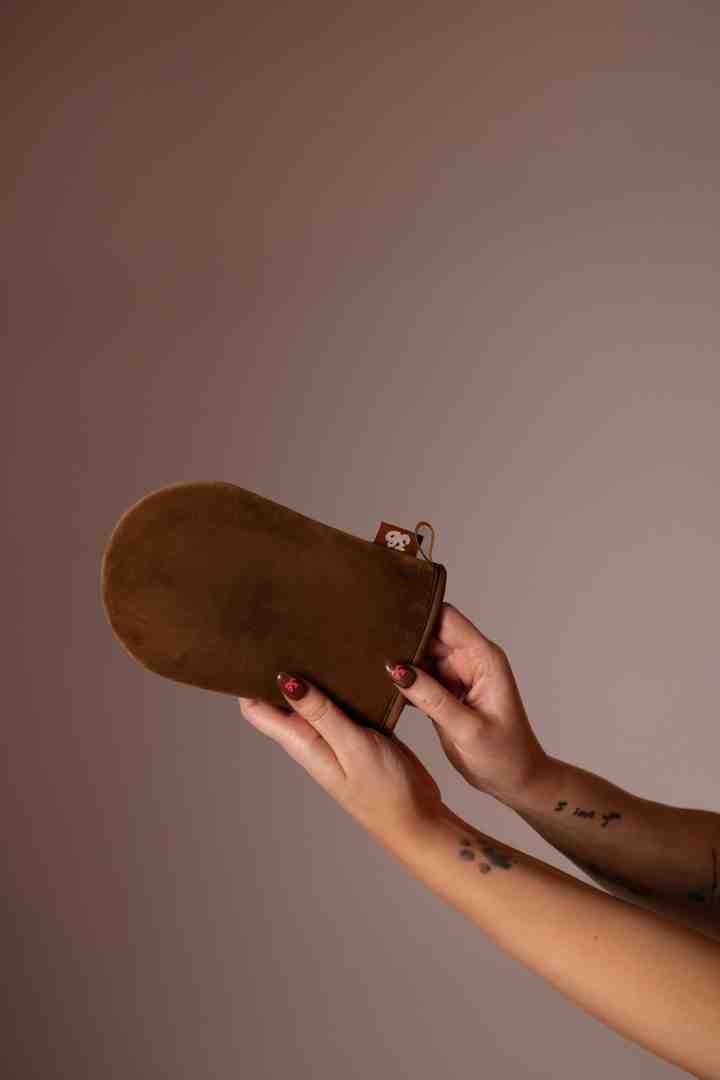
- Spray Life Proof Tan onto the Tanning Mitt over a sink, never straight onto skin. The mitt is plush and double-sided for even control.
- Apply in circular motions beginning with the legs and moving upward across the body.
- Use far less product than you would for a full initial coat, feathering outward past the pale zone or harsh lines to soften transitions.
- Flip to the clean, dry side of the mitt to buff the outer edges, blurring any visible guide lines.
How to Refresh Tricky Problem Areas Like Hands and Feet
Hands and feet fade much faster than the rest of the body due to frequent handwashing, sanitizers, and shoe friction. Touching them up requires a very delicate technique so they blend seamlessly into your wrists and ankles.
- Leave Hands and Feet for Last: Never spray fresh product directly onto these delicate areas. Do your hands last and blend them with the dry side of the mitt using only what's left on it.
- Flex Knuckles and Toes: Bend your fingers into a claw shape and point your toes downward while sweeping over them. This smooths out skin creases so pigment does not pool inside joint lines.
- Use Barrier Lotion Strategically: Dab a tiny bit of lotion between your fingers, along the sides of your palms, around wrists, and over your heels to prevent dark edges.
- Clean the Details: Right after you apply, wipe a damp Q-tip over light-colored tattoos, dark spots, cuticles and fingernails so everything stays crisp.
Daily Habits to Keep Your Fading Tan Smooth and Long Lasting
Good aftercare keeps your skin shedding uniformly, which extends wear and helps support an even fade throughout the entire week. Following the ultimate fake tan tips to make it last longer will keep your glow smooth from start to finish.
- Take Lukewarm Showers: Hot water strips natural moisture from your barrier, leading to premature flaking and patchy breakdown.
- Pat Dry Gently: Avoid rubbing aggressively with heavy bath towels. Pat skin dry with a soft towel to protect your bronzed top layer.
- Moisturize Daily: Hydrated skin holds onto its surface layer longer. Apply a lightweight moisturizer morning and night to provide a continuous hydrating feel.
- Skip Harsh Treatments: Avoid swimming pools, saunas, long hot soaks, and AHA or BHA chemical exfoliants until you are ready for a full reset.
Frequently Asked Questions About Touching Up a Fading Tan
How often should you touch up a self tan?
A 3VERYBODY tan lasts about a week with proper care. A light top-up is best done midway through the week, right when high-friction zones begin to soften and lighten. Touching up once midway through the week keeps your shade consistent without creating heavy product buildup. Once the full week concludes and wear becomes uneven, start fresh from square one.
Can you put self tanner over an existing tan without it turning orange?
Yes, as long as your skin is smooth and well hydrated. Orange tones usually come from overapplication, dry skin, poor prep, or choosing a shade too deep for your starting skin tone. To keep color even, lightly buff dry zones, use a sheer layer and avoid stacking heavy coats.
What is the quickest way to blend harsh touch up lines?
If you notice a sharp edge while applying, immediately use the dry side of the mitt to buff the border in small circular motions. For lines that have already begun developing, press a warm, damp washcloth over the line for a minute to soften the top layer of pigment, then lightly buff outward with a tiny dab of lightweight moisturizer.
Conclusion
Knowing how to touch up a fading self tan gives you an even, natural-looking finish without having to scrub down and restart every few days. By keeping skin hydrated, lightly buffing high-friction zones, and feathering your top-up with Tanning Mitt, you can easily maintain your sun-kissed color all week long.
When you need a quick mid-week top-up, mix our Tanning Drops directly into your favorite moisturizer. When your tan finally reaches the end of its weekly cycle, start fresh from square one with Life Proof Tan for a quick-drying, sweat-resistant, non-orange glow. For the complete at-home setup, 3VERYBODY Kit brings it all together with Life Proof Tan, Tanning Drops, Tanning Mitt, and a premium black drying towel. Explore our tanning tips and blogs to find more routine guides, and visit our shop to pick up your essentials.