How Many Days Before Your Wedding Should You Self Tan?
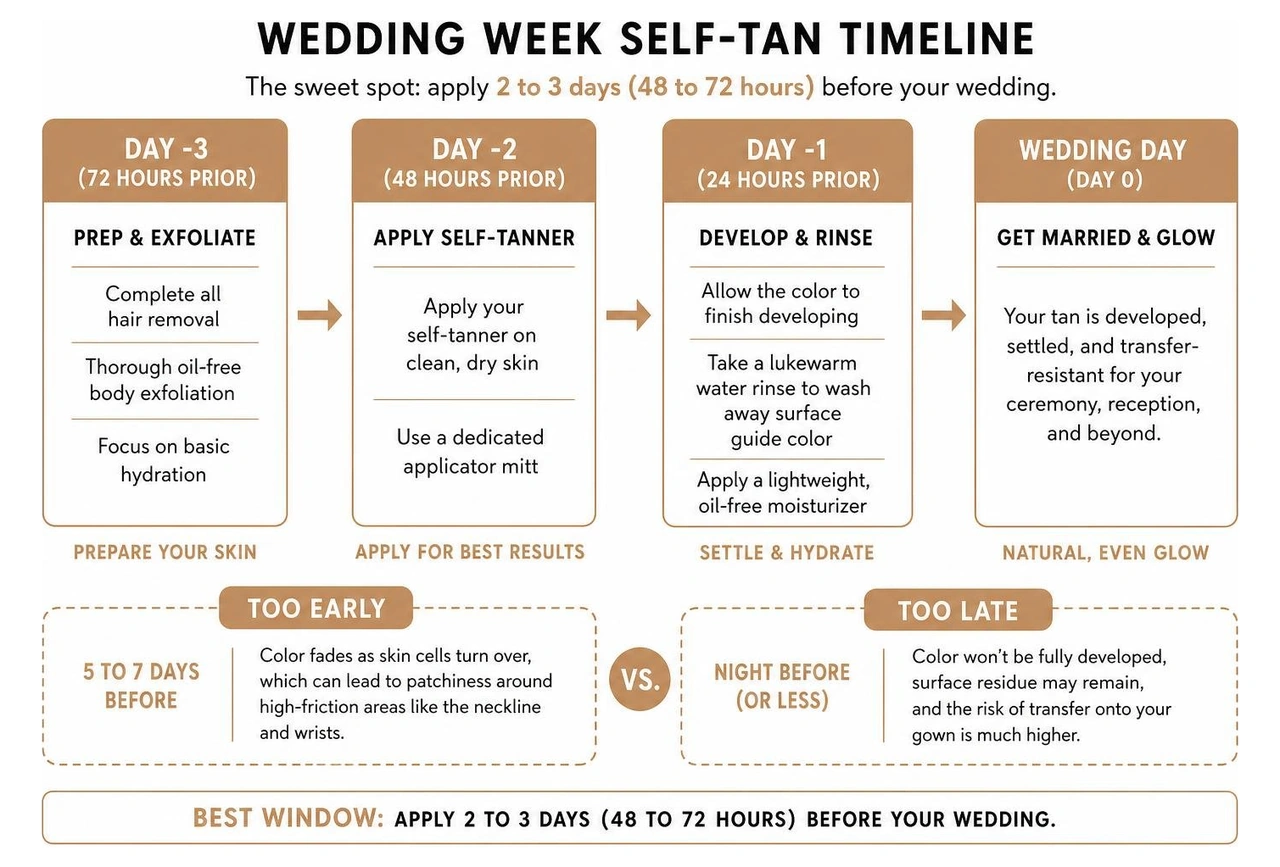
The short answer is clear: apply your self-tanner 2 to 3 days (48 to 72 hours) before your wedding.
This 48-to-72-hour window is the bridal sweet spot. It gives your shade time to develop, settle, and soften into an even, radiant finish while drastically reducing the chance of guide color rubbing off onto delicate fabrics.
Self-tanning works through a biological process. The active ingredient, dihydroxyacetone (DHA), reacts with the amino acids in dead skin cells on the top layer of your skin. This reaction develops over 24 to 48 hours. Knowing how long fake tan lasts on skin helps you plan your timing: because the color typically lasts about a week with proper care, applying it 2 to 3 days prior ensures your bronze looks even and fresh through the rehearsal dinner, the ceremony, the reception, and your honeymoon departure.
Tanning too early carries real risks. If you tan 5 to 7 days before the ceremony, your body's natural skin cell turnover will start breaking down the color, which can create subtle patchiness around high-friction areas like the neckline and wrists before you even cut the cake.
On the other hand, tanning the night before is equally risky. The color will not have finished its full development cycle, you will not have rinsed away all surface residue, and the chance of transfer onto a white or ivory gown spikes dramatically.
The Day-by-Day Wedding Week Countdown
- Day -3 (72 hours prior): Complete all hair removal, do a thorough oil-free body exfoliation, and focus on basic hydration.
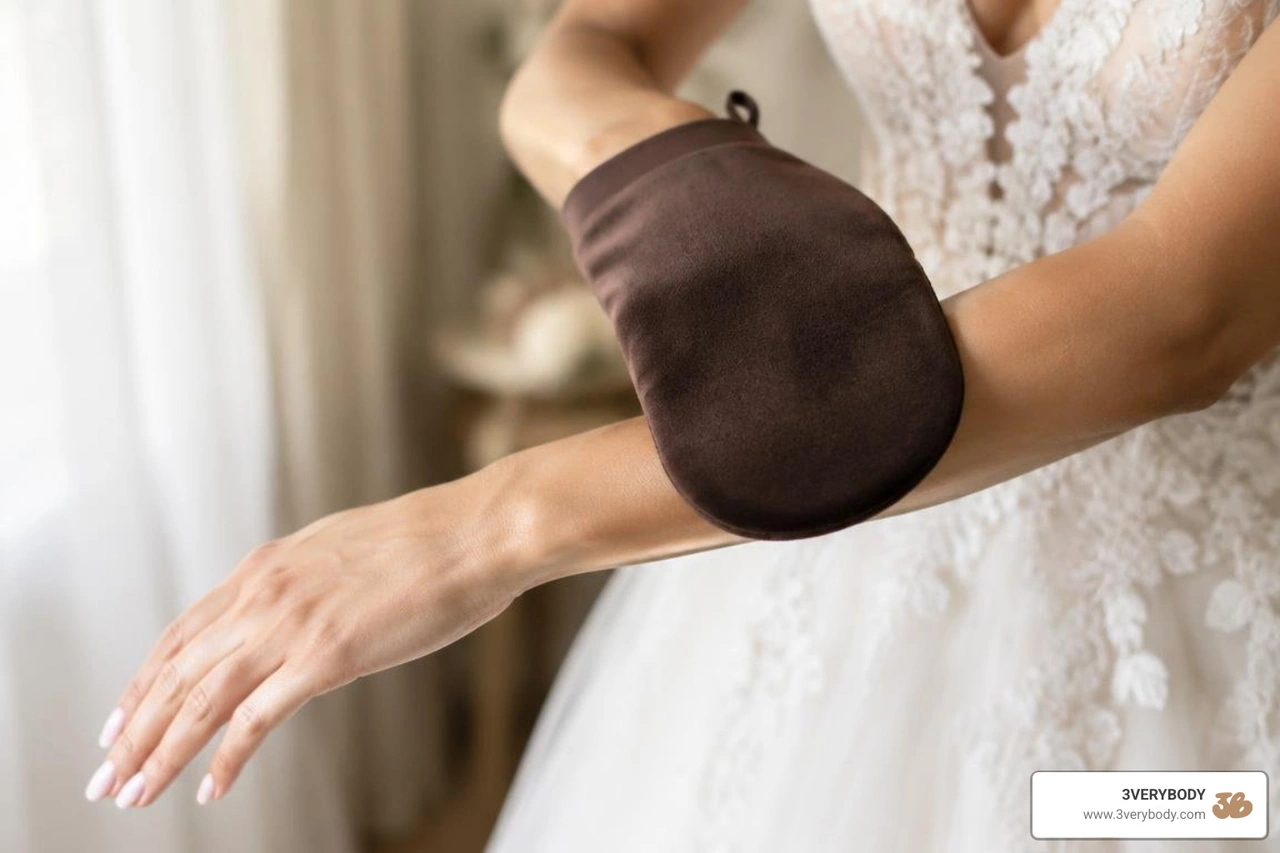
- Day -2 (48 hours prior): Apply your self-tanner on clean, dry skin using a dedicated applicator mitt.
- Day -1 (24 hours prior): Allow the color to finish developing, take a lukewarm water rinse to wash away surface guide color, and apply a lightweight, oil-free moisturizer.
- Wedding Day (0 hours): Wake up with touch-dry, settled color that sits smoothly beneath bridal makeup and white fabric.
Why Is a Pre-Wedding Trial Tan Essential for Brides?
A pre-wedding trial tan is essential for any bride planning to self-tan for the big day. Skipping the trial increases the risk of unexpected patchiness, uneven fading, or an unnatural shade.
Skin sensitivities can vary, so starting with a 24-hour patch test well before the main event ensures your skin responds well to the formulation. Beyond checking for irritation, a trial allows you to see how your tan looks across different lighting environments: soft morning window light, dim reception hall bulbs, and direct flash photography.
Flash photography tends to amplify warmth. For weddings, we always suggest choosing a subtle shade—typically one level lighter than what you might wear on a beach holiday.
Scheduling your trial run to align with your hair and makeup trials or a dress fitting gives you a clear preview of how your skin tone coordinates with your overall bridal palette.
| Timeline Milestone | Primary Objective | Key Action |
|---|---|---|
| 6 Weeks Out | Sensitivity Check | Perform a 24-hour patch test on a small area |
| 3 to 4 Weeks Out | Full Trial Run | Apply full-body tan on Thursday/Friday to mimic wedding timing |
| 2 Weeks Out | Fade & Tone Review | Evaluate how the shade settled and adjust application technique |
How Far in Advance Should You Schedule Your Trial?
- 6 Weeks Out: Complete a 24-hour patch test on a discrete patch of skin to confirm tolerance.
- 3 to 4 Weeks Out: Do a full-body trial application. Applying it on a Thursday or Friday lets you observe how the color develops over the weekend, replicating your actual wedding schedule.
- 2 Weeks Out: Take note of how long a self tan lasts on your specific skin type and evaluate how it fades. This gives you time to fine-tune your routine or lighten the application if needed.
How Should You Prepare Your Skin for a Bridal Self-Tan?
A smooth bridal glow comes down to proper skin prep. Taking time to follow the best practices for prepping your skin before applying self tanner ensures an even base.
Hair removal should always happen 24 to 48 hours before you apply your tanner. Shaving or waxing at least 3 hours prior—ideally a full day before—allows open hair follicles and pores to close, which helps prevent dark spotting.
Next, consider the importance of exfoliation in self tanning routines. Sloughing away dry, dead skin cells prevents the tanning active from clinging unevenly. When brides ask, "should you exfoliate before using self tanner?", the answer is yes—use an oil-free scrub or an exfoliating glove 24 hours prior. Avoid oil-based scrubs, as they leave an invisible film that blocks color absorption.
Moisturizing requires a strategic approach. Avoid heavy body lotions for 12 to 24 hours before your application session so your skin remains clean and receptive. If you ask, "should you moisturize before self tanning?", apply a small amount of oil-free lotion right before tanning to rough, high-friction areas like elbows, knees, heels, knuckles, and ankles to create a light barrier that prevents excess product absorption.
Essential Pre-Tan Prep Checklist
- [ ] Complete all manicures, pedicures, waxing, and lash appointments 48 hours before tanning.
- [ ] Take a lukewarm shower without heavy conditioning oils right before application.
- [ ] Make sure skin is free of deodorant, perfume, body oils, and thick lotions.
- [ ] Dab an oil-free barrier lotion onto knuckles, wrists, elbows, knees, and ankles.
What Type of Self-Tanner Is Best for a Wedding?
Water-light, quick-drying formulas are ideal for bridal prep because they become touch-dry in a few minutes without leaving a sticky residue. A thinner, water-light layer blends cleaner, dries faster, and delivers a natural-looking finish across fair to deep skin tones.
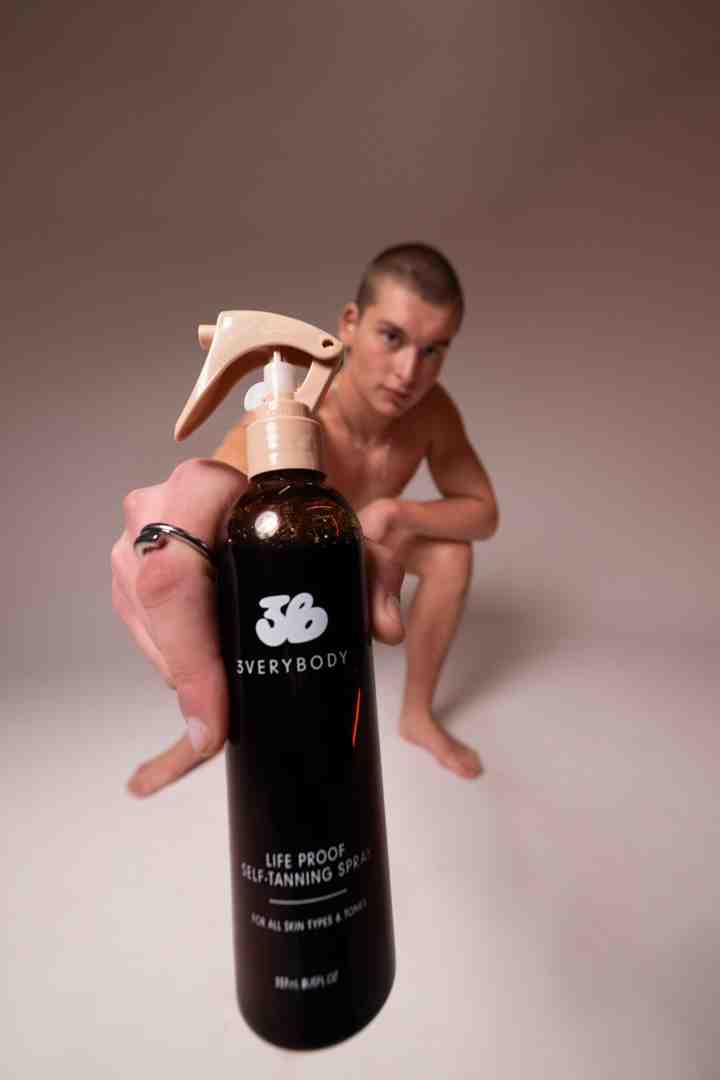
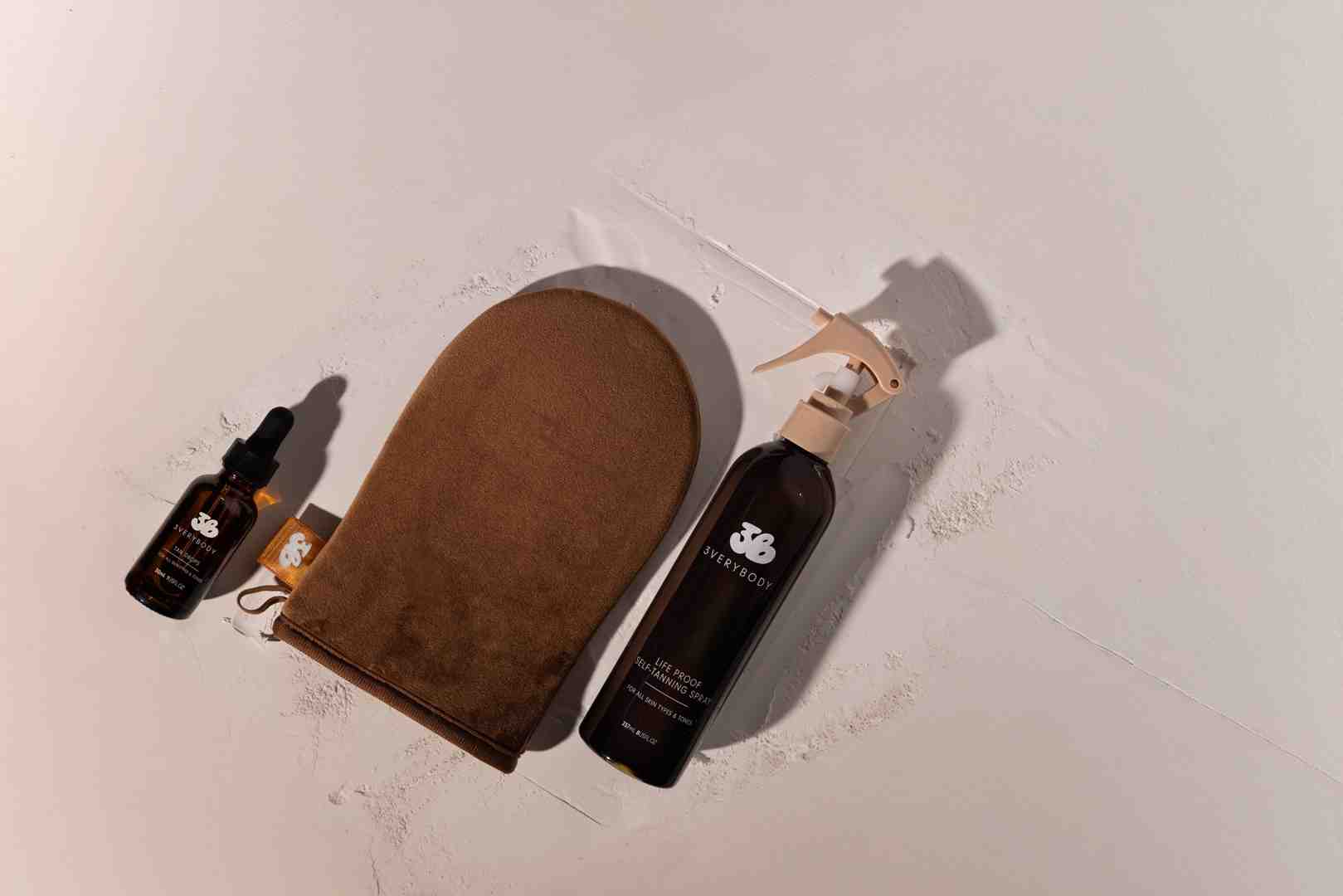
For your body, Life Proof Tan delivers a sweat-resistant, transfer-resistant, quick-drying, non-orange glow. It is enriched with argan oil, cucumber oil, caffeine, and guarana extract, offering a lightweight feel that is 100% vegan, cruelty-free, and paraben-free.
To create custom color for your face, Tanning Drops combine rosehip oil and cucumber extract in a lightweight, quick-drying blend that you can mix directly with your favorite daily bridal moisturizer.
To ensure an even application, The Mitt offers a double-sided, washable design that provides smooth control. If you are starting fresh, The Kit brings everything together for salon-quality results at home.
You can learn more technique fundamentals in our guide on how to self tan for beginners and review our top self tanner application tips. If you have fair features, finding the best self tanner for pale or fair skin and understanding how to choose the right self tanner for your skin tone will help you pick the right depth.
How Do You Select a Bridal Shade That Won’t Turn Orange?
Unnatural orange tones happen from overapplication, dry skin patches, poor prep, or choosing a shade too deep for your starting skin tone.
Selecting a self tanner that won't turn you orange helps you choose balanced undertones that complement your natural complex. Understanding how to achieve a natural looking tan without the sun helps ensure your bronze complements bright white, champagne, or ivory gowns without overwhelming your features.
How Can You Prevent Self-Tan From Transferring Onto Your Wedding Dress?
The secret to avoiding transfer onto your wedding dress comes down to careful post-application timing and smart aftercare.
First, know how long to wait before showering after self tanner. Follow the recommended development window—usually 6 to 8 hours, or overnight—and then take a quick lukewarm rinse without harsh soaps or loofahs to wash away the topical guide color. Giving your skin a full 24 hours after that rinse allows the active color to set, creating a transfer-resistant finish before you step into your dress.
A practical bridal trick: lightly dust a bit of baby powder or translucent setting powder along friction points inside your dress, including underarms, the inner neckline, and corset boning. This absorbs trace moisture and reduces fabric friction.
During the development window, avoid sweating, tight clothing, hot showers, and active skincare ingredients like AHAs, BHAs, or retinoids. If you spot an uneven area later on, you can reference our guide on how to fix patchy tan alongside our tips for avoiding common self tanning mistakes to balance out your skin tone.
For more routine breakdowns, explore our blogs and tips hub or check out our complete guide on how it works.
Frequently Asked Questions About Bridal Self-Tanning
Can I self-tan the night before my wedding?
Tanning the night before your wedding is strongly discouraged. Doing so leaves zero margin to adjust streaks, prevents the DHA from completing its development cycle, and leaves unrinsed guide color that can rub off on your dress. Always keep a 48-to-72-hour window.
Should I self-tan my face for the wedding?
You can tan your face, but it requires a lighter touch. Facial skin sheds faster and absorbs product differently than the body. Mixing 2 to 3 drops of our Tanning Drops into your facial moisturizer gives you subtle, customizable control that blends cleanly with bridal makeup, as detailed in our best self tanner face guide.
How do I make my bridal tan last through the honeymoon?
To help extend your tan through your travels, take short, warm showers instead of hot ones, pat your skin dry with a towel instead of rubbing, and moisturize daily with an oil-free lotion. For step-by-step longevity tips, check out our guide on how to make your self tan last longer to support an even fade that lasts about a week with proper care.
How Can 3VERYBODY Help You Achieve the Ultimate Bridal Glow?
Applying your self-tanner 2 to 3 days before your wedding provides the balance needed for safe development, easy aftercare, and clean wear against white fabric.
Our lineup at 3VERYBODY—from Life Proof Tan and Tanning Drops to The Mitt—is designed to deliver a comfortable, water-light, transfer-resistant glow for every bride. For a complete look at keeping your color radiant through your wedding week and beyond, explore our self tanner duration complete guide to plan your bridal routine with total peace of mind.