Does Self Tanner Make Age Spots Darker?
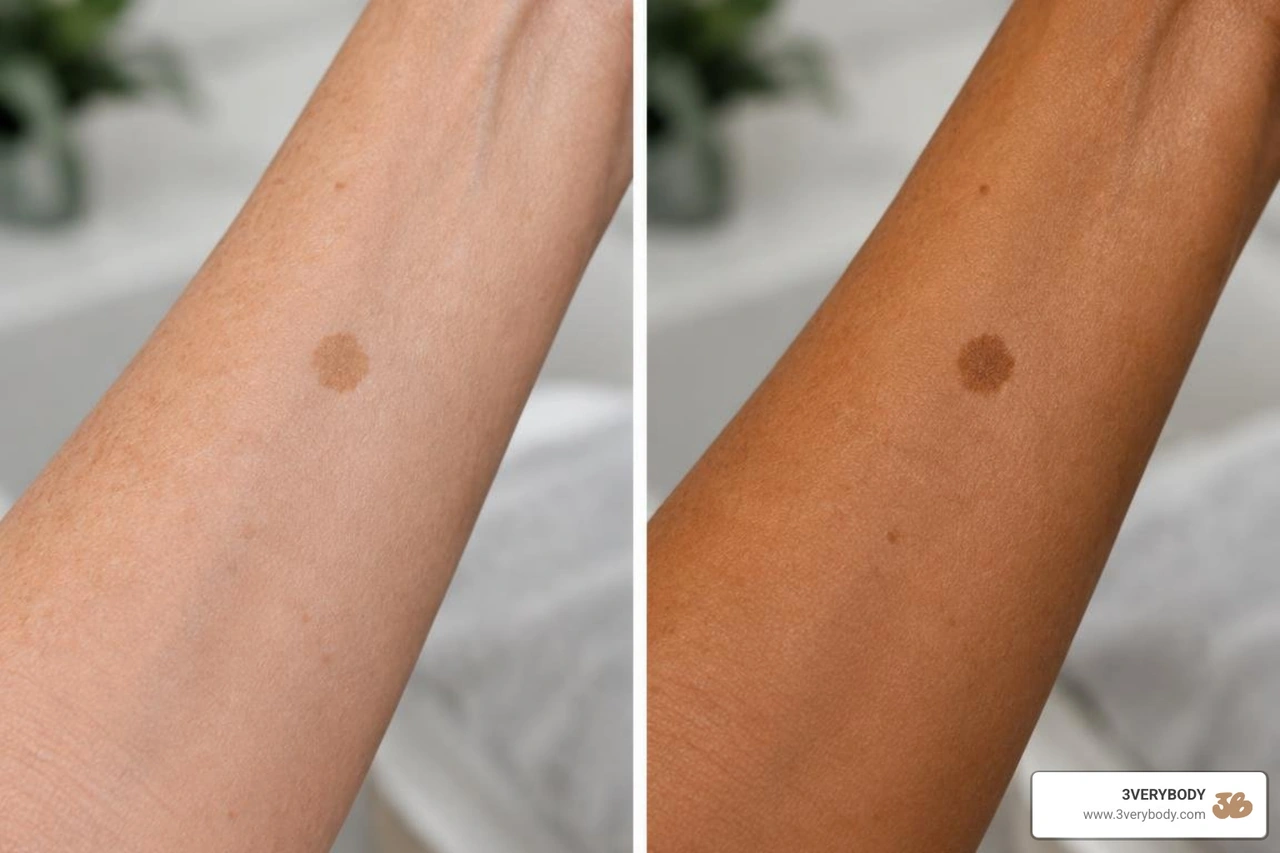
Does self tanner make age spots darker? Sometimes. It colors the top layer of skin, so existing dark spots can look a little deeper until the tan fades. It does not treat or create age spots. A light application can help your overall skin tone look more even, especially if you gently exfoliate and moisturize the day before. Keep wearing sunscreen: a self-tan does not protect your skin from the sun.
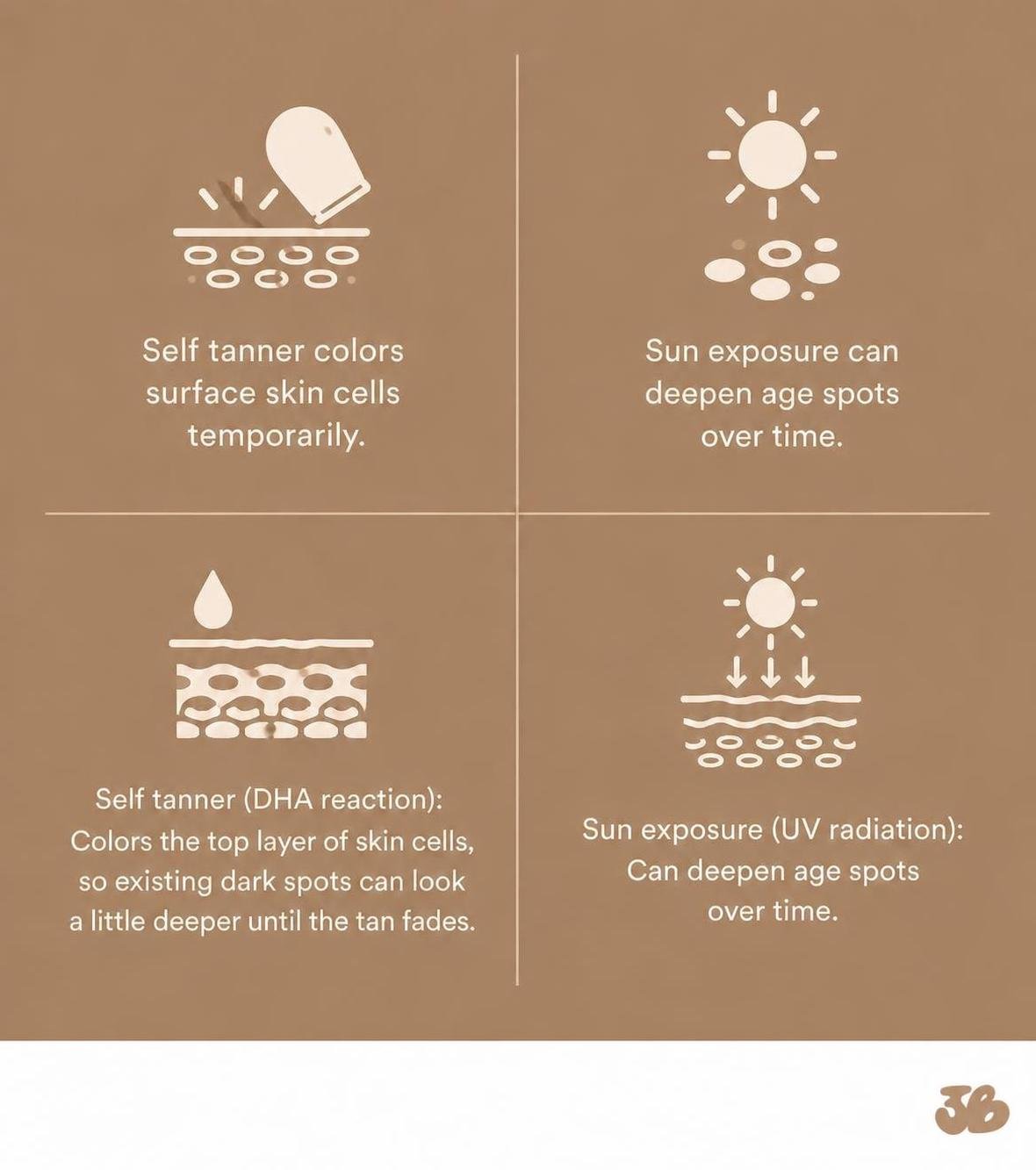
When we apply sunless tanner, it interacts with dead surface cells sitting in the stratum corneum. If you have solar lentigines (the medical term for age spots or sun spots), those areas already carry concentrated pigment.
Because dark spots often have extra layers of dry, compacted skin cells, they can soak up more tanning active than smooth skin nearby. This temporary darkening sits right on top of the skin and does not change your deeper melanin levels. Checking out our best self tanner mature skin guide can help you navigate hydration and tone balancing.
| Feature | Self-Tanner (DHA Reaction) | Sun Exposure (UV Radiation) |
|---|---|---|
| Layer Affected | Outermost stratum corneum | Deeper basal epidermis and dermis |
| Color Source | Maillard reaction with surface proteins | Melanin production from melanocytes |
| Duration | Lasts about a week | Semi permanent to permanent without treatment |
| Skin Health Impact | Surface color only | Cellular damage, photoaging, and spots |
How DHA Reacts and Why Does Self Tanner Make Age Spots Darker?
The active ingredient in sunless tanners is dihydroxyacetone, or DHA. DHA is a simple sugar derivative that reacts with amino acids in dead surface skin cells to create a browned shade.
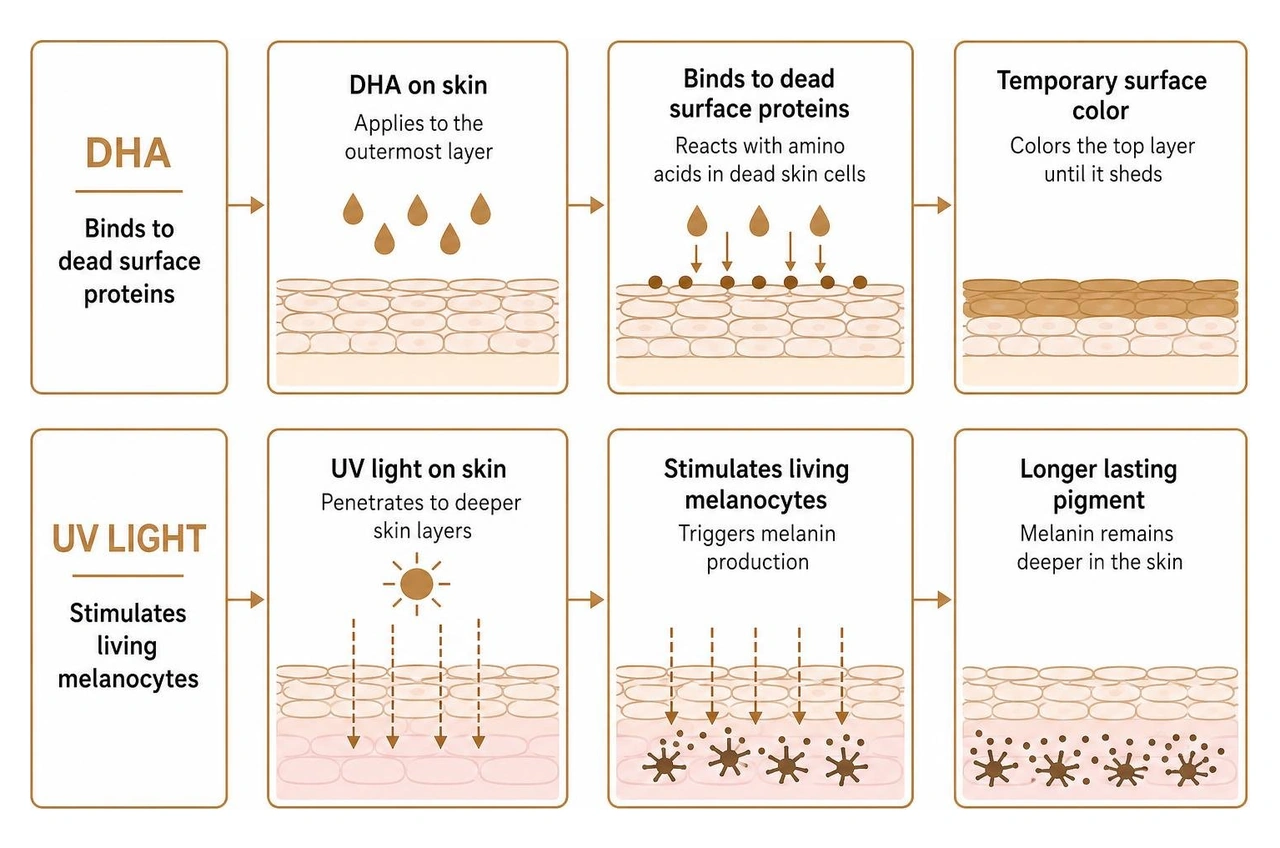
When skin has age spots, the surface texture is often drier and thicker. These patches grab extra DHA solution, leading to a concentrated pool of color. If you already have hyperpigmentation, the spot can look darker simply because it started with more baseline color and absorbed more product.
Is the Darkening of Sun Spots and Hyperpigmentation Permanent?
No, the darkening is completely temporary. Because DHA only stains the dead, outermost skin cells, the added depth disappears as your skin naturally sheds. A 3VERYBODY tan lasts about a week with proper care. Once it fades, the application process starts fresh from square one, leaving your natural pigmentation unchanged. If an uneven application happens elsewhere on your body, you can easily review how to fix patchy tan to balance things out gently.
How to Prep and Apply Tanner Over Dark Spots
Good preparation helps dark spots blend instead of turning patchy. Start with less product than you think you need, then build color gradually. A heavy layer is more likely to catch on dry patches and make darker areas stand out. Let each light layer dry before deciding whether you want to add more color on top. A thinner, water light layer blends cleaner, dries faster, and looks natural from very fair to deep skin.
- Exfoliate with an oil free scrub the day before to buff away loose, dry flakes.
- Avoid lotion immediately before applying tanner. Apply moisturizer the night before or earlier in the day. If needed, use only a very light layer on extra dry spots and let it sink in fully before tanning.
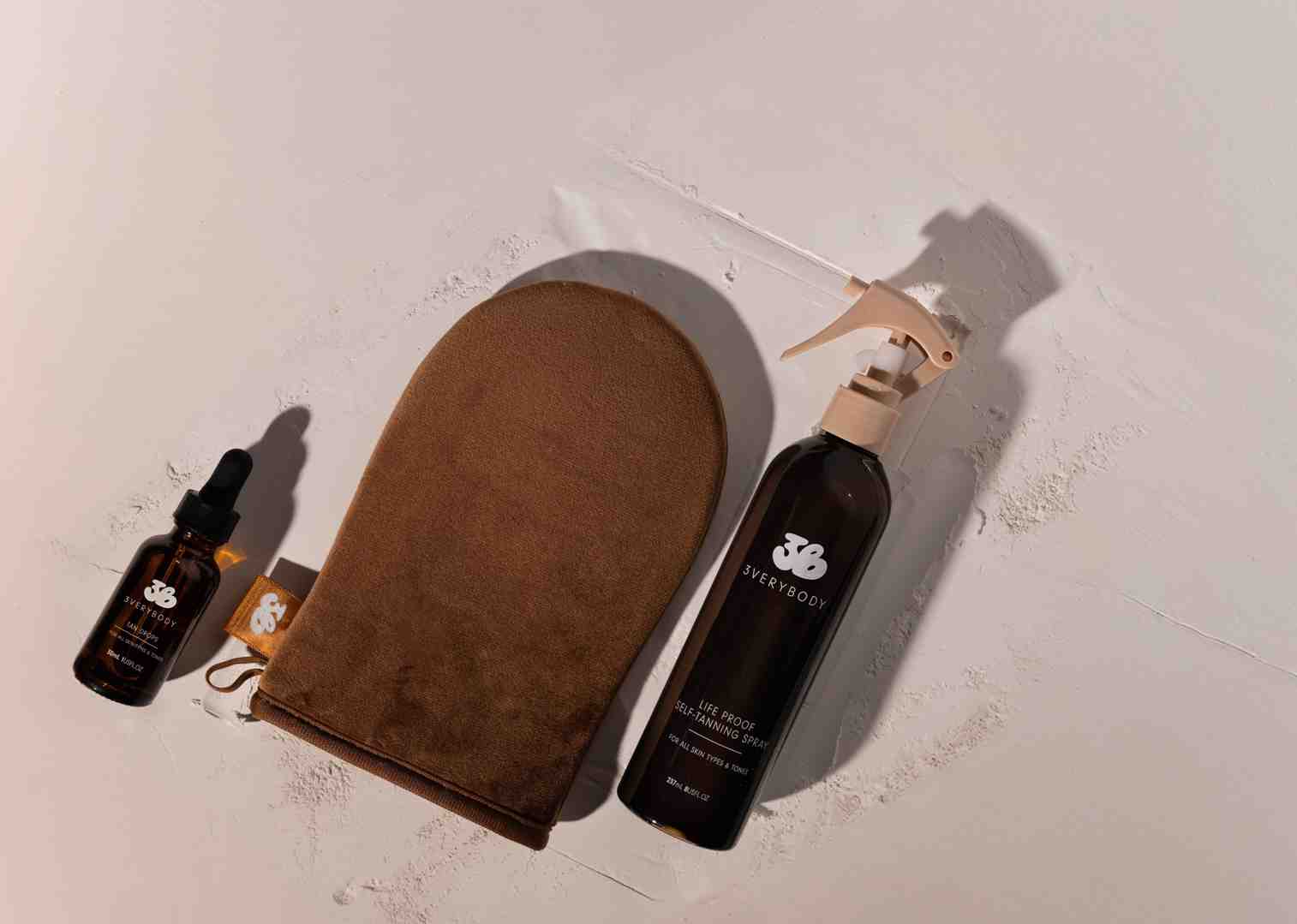
- For all over body color, use Life Proof Tan. It is an eight ounce spray that is sweat resistant, quick drying, and delivers a super dark, natural looking finish without parabens or sulfates.
- Spray Life Proof Tan directly onto Tanning Mitt over a sink, never directly onto skin.
- Apply in circular motions beginning with the legs and moving upward.
- Blend wrists and hands last, using the dry, clean side of the mitt to avoid harsh borders.
Our double sided plush mitt gives you smooth, even control without textured edges that could drag across delicate skin. If you are starting fresh, 3VERYBODY Kit includes Life Proof Tan, Tanning Drops, the mitt, and a premium black drying towel for easy application.
Application Techniques: Does Self Tanner Make Age Spots Darker on Your Face?
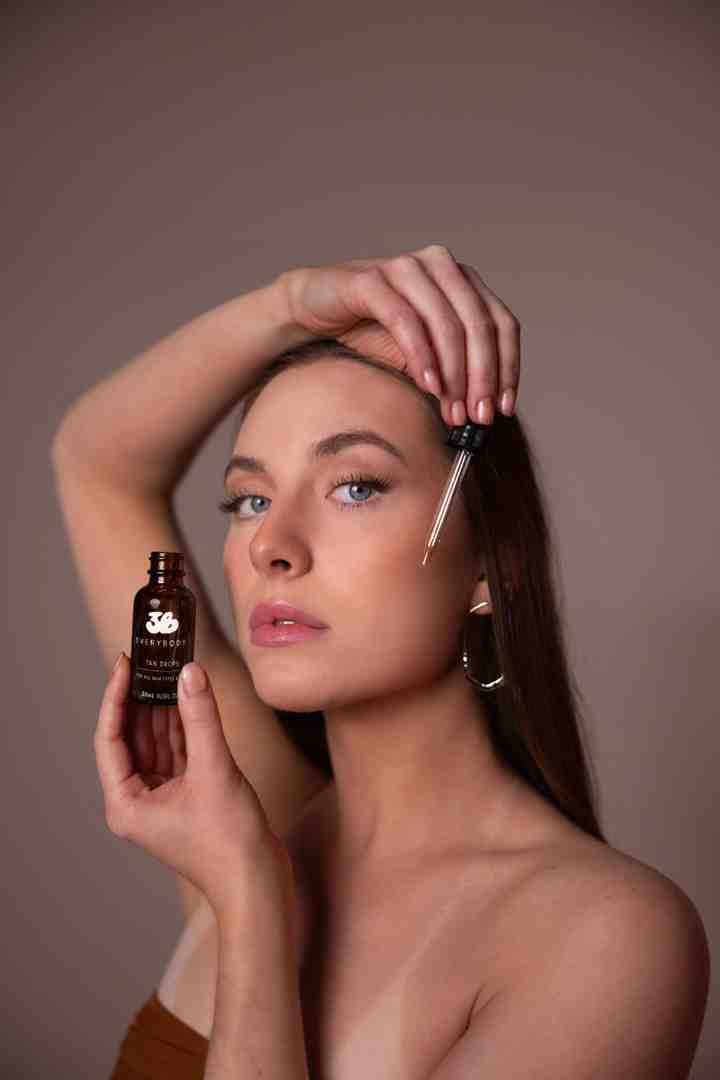
Facial skin is thinner and often carries more sun spots from daily exposure. For gentle, customizable control on the face, chest, or neck, we recommend our Tanning Drops.
To keep age spots from looking over saturated:
- Spot test a tiny area on your jawline first.
- Mix two to four drops for the face into your favorite daily moisturizer, serum, or face oil.
- For individual body parts, use four to six drops mixed into body lotion.
- Smooth the mixture evenly across your face and hairline with your fingers, washing your hands right after.
- Learn more face specific techniques in our best self tanner for face breakdown.
The Cotton Swab Technique for Dark Spots and Freckles
Here is our favorite brand tip: keep a damp cotton swab (Q-tip) handy during your routine.
- Right after applying your self tanner, take a damp Q-tip and lightly dab directly over prominent age spots, freckles, or light colored tattoos.
- This simple step lifts just enough excess product so the spot does not over develop.
- It softens the edges of darker spots so they blend into the skin around them.
Sun Protection and Dermatologist Checks for Mature Skin
A self tan provides gorgeous color, but it does not protect your skin from ultraviolet rays. Keeping up with daily sun protection is necessary to prevent fresh hyperpigmentation.
Why Self Tanner Cannot Replace Daily Broad Spectrum Sunscreen
Self tanner is not sunscreen. Outdoor sunlight delivers UV radiation that triggers melanocytes to produce real, deep melanin. UV exposure is a main cause of sun spots and early signs of aging. You can read more about wearing sunscreen with a self tan and check our safe self tanner guide 2026 for daily habits. The American Academy of Dermatology recommends a broad spectrum sunscreen with SPF 30 or higher.
Signs an Age Spot Needs a Doctor Evaluation
Never use self tanner to conceal a suspicious skin lesion. According to the Mayo Clinic, you should have a doctor or board certified dermatologist examine any spot that shows the ABCDE characteristics:
- Asymmetry: One half of the spot does not match the other.
- Border: The edges are irregular, scalloped, or poorly defined.
- Color: The shade is not uniform and includes tan, brown, black, white, red, or blue patches.
- Diameter: The spot is larger than about 6 millimeters, the size of a pencil eraser.
- Evolving: The spot is changing in size, shape, or color, or begins to itch, crust, or bleed.
Frequently Asked Questions About Self Tanner and Dark Spots
Can self tanner cause new age spots or melasma?
Self tanner works on the dead surface layer of skin, so it doesn't cause age spots or melasma on its own. Sun exposure is what darkens spots over time, so keep wearing sunscreen while you have a tan.
What is the best way to blend tanner over dry patches and spots?
Hydrate thoroughly the day before, avoid heavy lotions right before tanning, and mix Tanning Drops into your regular cream for gradual shade control. Using the clean side of Tanning Mitt to buff borders creates a soft, natural looking finish.
How long does spot darkening last after applying fake tan?
Any extra color on age spots will last about a week. It will fade away naturally as your surface skin cells shed during everyday washing and light towel drying.
Conclusion
Self tanner does not cause age spots or create permanent darkening. While dry patches and hyperpigmentation can temporarily absorb extra color, simple steps like pre tan hydration, using custom Tanning Drops, and cleaning spots with a damp cotton swab keep everything looking smooth and balanced.
Explore more expert application tricks at 3VERYBODY tanning tips and blogs.
This post is general info, not medical advice. If you have a skin condition or you're unsure, talk to your dermatologist or doctor before trying a new product.