The New Mom's Guide to a Safe, Streak-Free Glow
Breastfeeding safe self tanner is something thousands of new moms search for every day — and the short answer is: yes, self-tanner can be used safely while breastfeeding, with a few simple precautions.
Here's what you need to know at a glance:
| Question | Quick Answer |
|---|---|
| Does DHA enter breast milk? | No — it only reacts with the outermost layer of skin |
| Is self-tanner safe while breastfeeding? | Yes, with proper application |
| Should you apply it to your breasts or nipples? | No — always avoid the nipple and areola |
| When can you nurse after applying? | After the product is fully dry and breasts are clean |
| Are spray tans safe? | Use with caution — inhalation risk is a concern |
| Best format for nursing moms? | Tinted tanning water or drops — quick-dry, targeted, no aerosol |
The good news? The active ingredient in most self-tanners — dihydroxyacetone (DHA) — works entirely on the skin's surface. It never reaches your bloodstream, which means it can't reach your breast milk either. That's backed by organizations like La Leche League and the NHS, and confirmed by dermatologists who work with postpartum patients daily.
The real risk isn't what gets into your milk. It's what might transfer directly to your baby's skin — or mouth — during feeding or skin-to-skin contact. A quick scroll through parenting forums will surface plenty of photos of babies with a mysterious "5 o'clock shadow" from a mom who nursed too soon after applying. Funny in hindsight. Avoidable with the right routine.
I'm Emmy Bre, founder of 3VERYBODY and a decade-long self-tanner obsessive who built this brand specifically so moms and everyone else could glow without compromise — our formulas are designed with clean, skin-loving ingredients that make finding a breastfeeding safe self tanner genuinely stress-free. Let's walk through exactly what to look for, what to avoid, and which products actually deliver.
Common breastfeeding safe self tanner vocab:
Is Self-Tanner Safe While Breastfeeding?
When you’re a new mom, every product label feels like a high-stakes exam. We’ve been there. The primary concern with a breastfeeding safe self tanner is whether the active ingredients can migrate from your skin into your milk supply.
The science is reassuring: self-tanners are non-systemic. This means they don't penetrate deep enough to enter your bloodstream. According to the FDA, sunless tanners are intended for external application. When you apply a product like our Life Proof Tan, it stays in the "dead" layer of your skin (the stratum corneum). You can read more about the general safety profile in our guide on is self-tanning safe?.
The magic happens through a skin-deep chemical reaction. The DHA reacts with amino acids on the surface of your skin to create melanoidins—the brown polymers that give you that "just back from vacation" look. Since this reaction is localized to the very top layer of your skin, there is no known pathway for it to reach your baby through your milk.
Understanding DHA and Breast Milk
Dihydroxyacetone, or DHA, is a sugar-derived compound often sourced from sugar cane or sugar beets. It has been used in cosmetics for decades. The MotherSafe guidelines on cosmetic treatments during pregnancy and lactation note that because so little of these chemicals are absorbed through the skin, it is highly unlikely they would ever reach a level that could affect breast milk.
Because DHA is a relatively large molecule, it simply isn't equipped to take a trip through your skin layers, into your capillaries, and eventually into your milk ducts. It’s a topical-only resident. This makes the "internal" risk effectively zero, allowing you to focus on the "external" risk: making sure your baby doesn't accidentally lick or rub against the product before it's developed and rinsed.
Expert Opinions on Breastfeeding Safe Self Tanner
Health authorities globally echo this reassurance. The NHS in the UK states that fake tan creams and lotions are generally considered safe during pregnancy and breastfeeding. Similarly, La Leche League International, a leading authority on breastfeeding support, confirms that self-tanners are compatible with nursing because they do not contaminate the milk.
Dermatologists often point out that self-tanning is actually the healthiest way to glow. Considering that even one tanning bed session can increase melanoma risk by 20%, a sunless glow is the smartest choice for a long, healthy life with your little one. To understand the mechanics better, check out our breakdown of how do self-tanners work?.
Choosing a Breastfeeding Safe Self Tanner: Ingredients to Look For
Not all tans are created equal. When looking for a breastfeeding safe self tanner, you want a formula that prioritizes clean, skin-loving ingredients. At 3VERYBODY, we believe what isn't in the bottle is just as important as what is.
We recommend looking for:
- Vegan and Cruelty-Free Formulas: These are often gentler and skip the harsh animal byproducts. You can find more on this in our article are self-tanners vegan and cruelty-free?.
- Natural Hydrators: Ingredients like Argan Oil and Cucumber Extract soothe the skin, which is vital since postpartum hormones can make your skin feel extra dry or sensitive.
- Erythrulose: Often used alongside DHA, this is another sugar-based tanner that helps the color last longer and fade more evenly.
Check out the benefits of using vegan and cruelty-free self-tanning products to see why these "clean" swaps make such a difference for nursing moms.
Avoiding Harmful Additives in Your Glow
Your skin is your largest organ, and when you're breastfeeding, "clean beauty" takes on a whole new meaning. We suggest avoiding:
- Parabens and Sulfates: These can be irritating to sensitive postpartum skin.
- Synthetic Fragrances: Strong smells can actually interfere with "baby bonding," as newborns rely heavily on their mother's natural scent.
- Phthalates: Often found in "fragrance," these are best avoided during lactation.
For a deeper dive into what to keep off your skin, see our dermatologist-recommended DHA safety tips.
Why Water-Light Formulas Win for New Moms
If you’re juggling a newborn, you don't have time to wait 30 minutes for a thick mousse to dry while standing like a starfish in your bathroom. This is why we pioneered Tinted Tanning Water.
A water-light formula blends cleaner and dries significantly faster than traditional foams. It’s "sheet-safe" and "transfer-resistant," meaning you won't leave a brown silhouette on your nursing pillow.
| Feature | 3VERYBODY Tanning Water | Traditional Tanning Mousse |
|---|---|---|
| Texture | Water-light & weightless | Heavy & thick |
| Dry Time | 2-5 minutes | 15-20 minutes |
| Stickiness | Zero | Often high |
| Transfer | Minimal/Sweat-resistant | High risk of staining clothes |
| Pore Clogging | Non-comedogenic | Can feel "suffocating" on skin |
Top Rated 3VERYBODY Products for Nursing Mothers
We built 3VERYBODY to be the gold standard for at-home tanning. Our products are woman-owned, inclusivity-first, and have even been approved by creators like HopeScope. We focus on natural-looking, non-orange results that work for every skin tone.
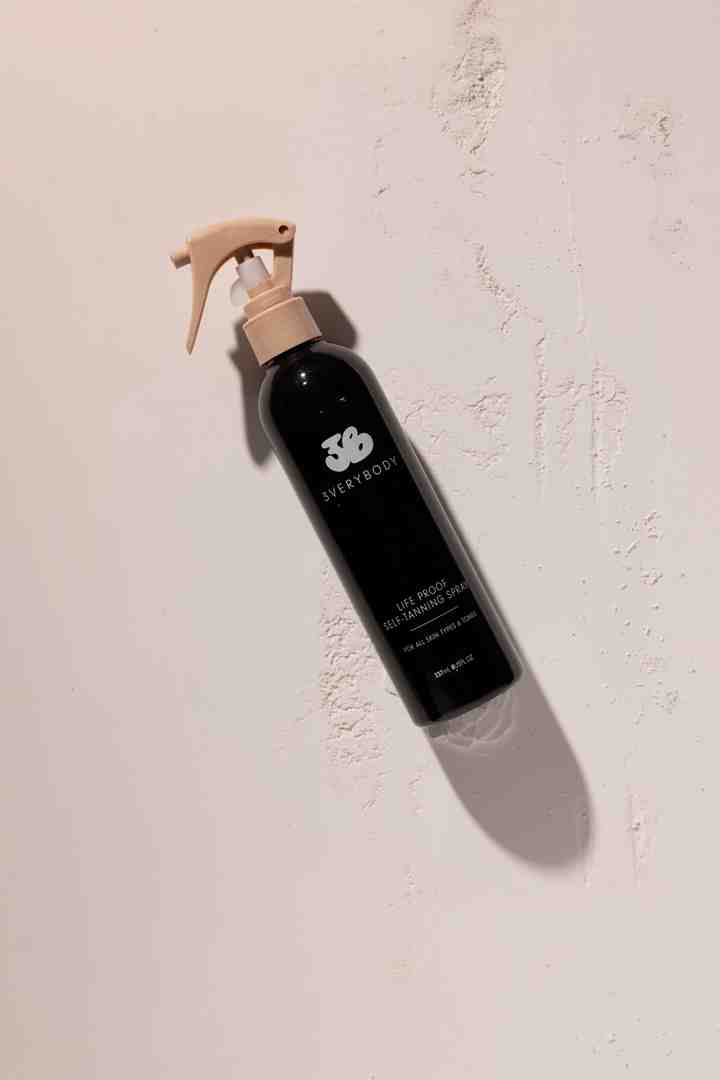
Life Proof Tan: The Ultimate Breastfeeding Safe Self Tanner
Our Life Proof Tan (Tinted Tanning Water) is the hero product for moms. It’s enriched with:
- Argan Oil: For deep hydration.
- Cucumber Oil: To soothe and cool.
- Caffeine & Guarana Extract: To help firm and brighten the skin's appearance.
It is 100% vegan, cruelty-free, and free from parabens and sulfates. Because it’s a mist, you can target exactly where you want the glow and avoid "no-go zones" like the chest and nipples with ease. It dries in minutes, so you can get back to mom-life without the sticky "fake tan" feeling.
Customizable Glow with Tanning Drops
For the mom who wants to "micro-dose" her glow, our Tanning Drops are a game-changer. You simply mix a few drops into your favorite postpartum-safe moisturizer or serum.
Featuring Rosehip Oil and Cucumber Extract, these drops allow you to control the intensity. Want a subtle "I slept 8 hours" look? Use 2 drops. Want a "just got back from Cabo" bronze? Use 6. They are non-comedogenic and perfect for both face and body, ensuring you never have to choose between clear skin and a tan.
How to Apply Self-Tanner Safely While Nursing
Applying a breastfeeding safe self tanner is all about strategy. You want to look like a bronzed goddess without giving your baby a "tan" by proxy.
The 3VERYBODY Method for Moms:
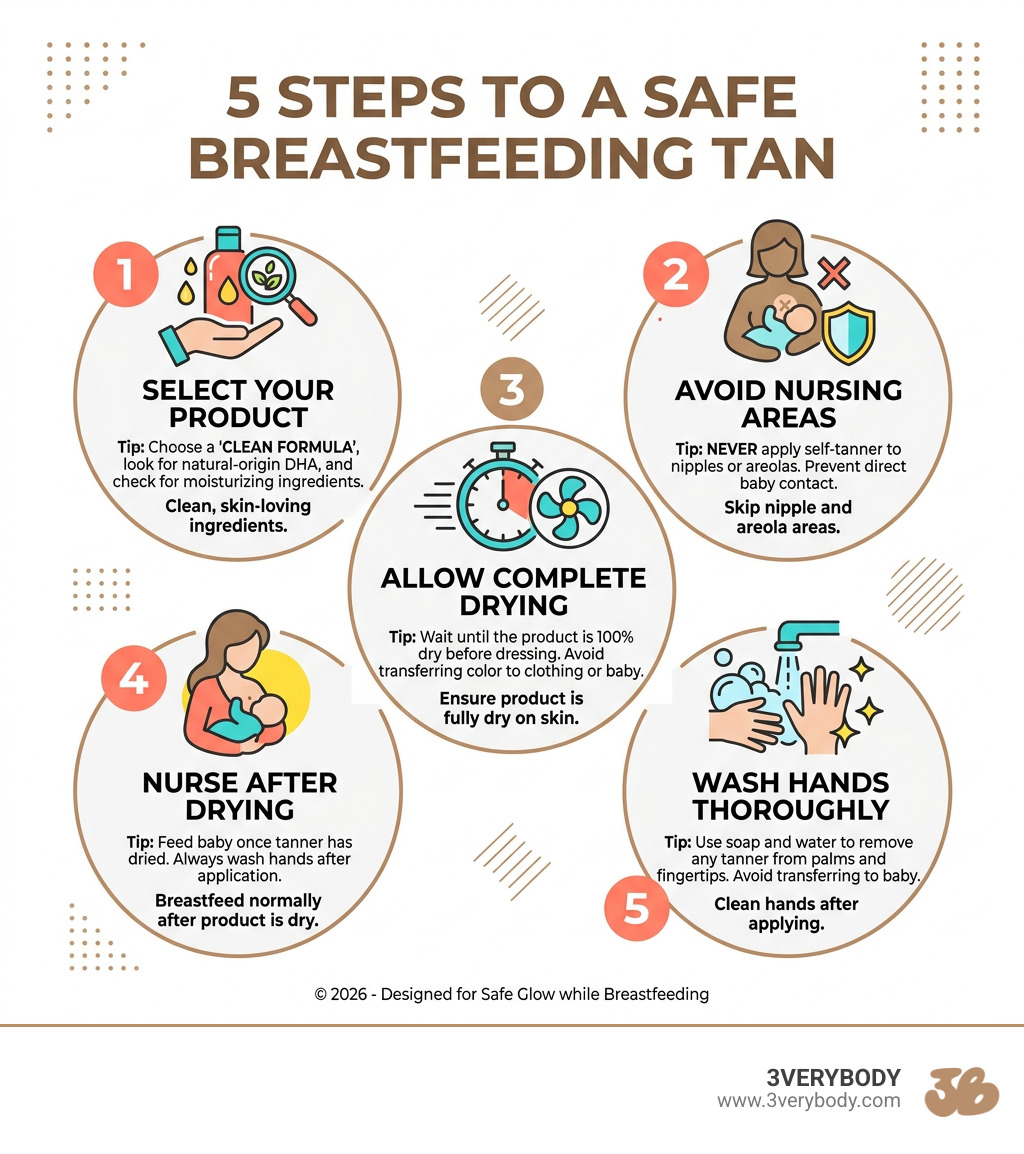
- Prep: Exfoliate 24 hours before.
- Protect: Apply a barrier cream (like a thick nipple balm or Vaseline) to your nipples and areolas. This ensures no product can settle there.
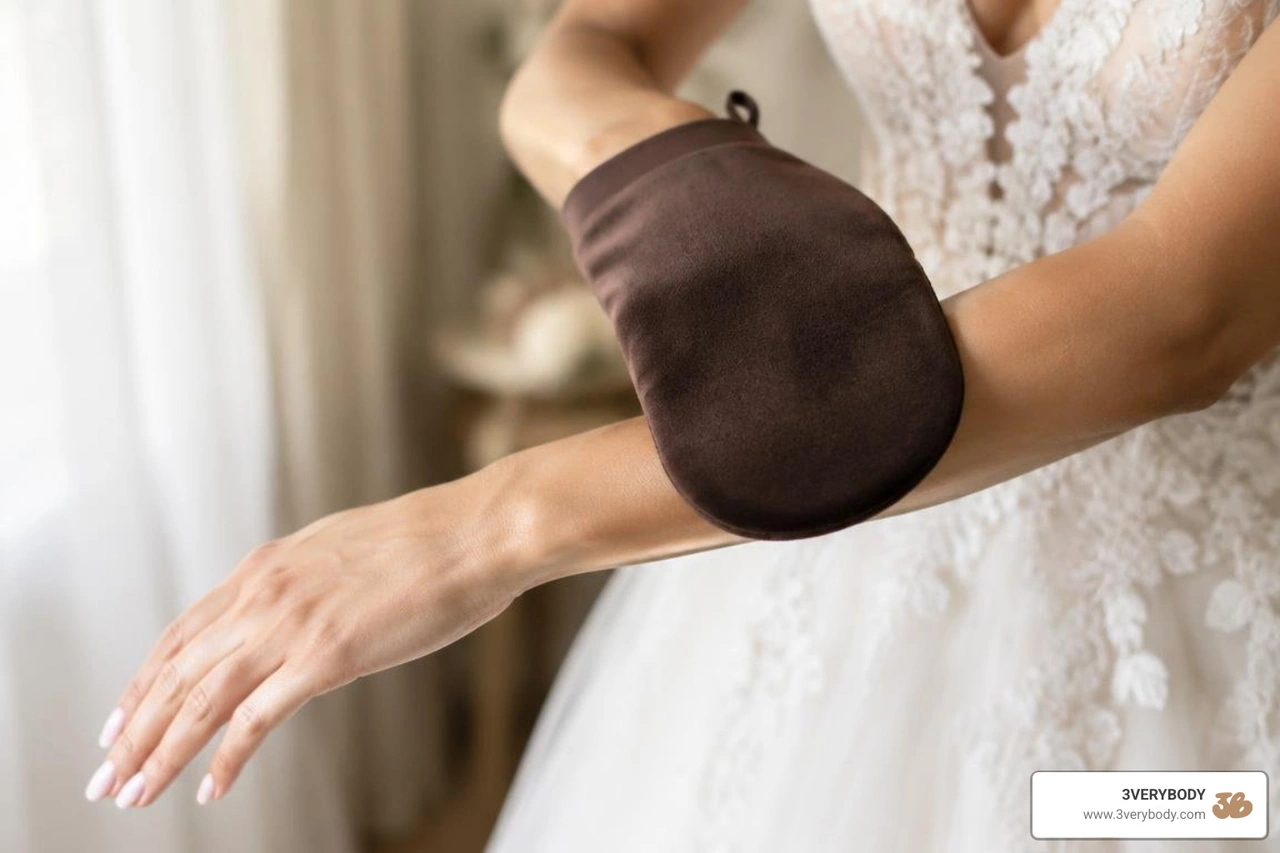
- Apply: Spritz our Tinted Tanning Water onto your 3VERYBODY Tanning Mitt. Smooth onto your skin in long strokes and gentle circles.
- The "No-Tan Zone": Many moms choose to skip the breasts entirely. If you do tan your chest, stop at the base of the breast or use a bandeau bra as a physical barrier.
- Dry: Wait at least 5 minutes before putting on loose, dark clothes.
- Rinse: After 4-8 hours, do a quick lukewarm rinse (no soap on the tanned areas) to remove the guide color.
Protecting the Nipple and Areola Area
The number one rule of tanning while nursing: Keep the "kitchen" clean. Your baby’s mouth should never come into contact with self-tanner. While DHA is non-toxic, it isn't food.
Using breast pads inside a nursing bra immediately after application can provide an extra layer of protection. If you accidentally get product on the nipple area, simply wash it off thoroughly with warm water and mild soap before your next feeding.
Managing Transfer and Skin-to-Skin Contact
Newborns spend a lot of time against your skin. To prevent transfer:
- Wait for the dry: Ensure you are 100% dry (usually about 5 minutes with our water-light formula) before holding your baby.
- The 45-Minute Rule: Some experts suggest waiting at least 45 minutes for the product to fully "set" before prolonged skin-to-skin contact.
- Wear Barriers: A long-sleeved nursing top or a high-neck nursing tank is your best friend during the development phase.
- The Pre-Feed Wash: Even if you didn't tan your breasts, it’s a good habit to wipe your chest area with a damp cloth before nursing if you are still in the development phase.
Frequently Asked Questions About Tanning While Nursing
Does DHA enter the breast milk?
No. As highlighted by MotherToBaby, topical skin treatments are very unlikely to enter the bloodstream in any significant amount. DHA’s molecular weight is too high to penetrate the dermis. It stays in the "dead" skin cells of the epidermis. Because it doesn't reach your blood, it cannot be transported into your milk supply.
How long should I wait to nurse after applying a breastfeeding safe self tanner?
Ideally, you should time your application immediately after a long feed or when the baby goes down for their "long" stretch of sleep. If you use a quick-dry water like our Life Proof Tan, you are physically dry in minutes. However, for maximum safety, we recommend waiting until the tan has fully developed (4-8 hours) and you have rinsed off the guide color before letting the baby have direct skin contact with the tanned areas.
Are spray tans safer than tanning waters?
Actually, tanning waters and drops are often safer for nursing moms than salon spray tans. The NHS notes that the risks of inhaling the mist in a spray tan booth are not fully known. When you use an at-home mist or drops, you have much more control over the application and can avoid creating a "cloud" of product that you (or your baby nearby) might inhale.
Conclusion
Being a mom is hard work, and sometimes a little "me-time" in the form of a 10-minute tanning routine is exactly what the doctor ordered for a confidence boost. By choosing a breastfeeding safe self tanner like our Tinted Tanning Water or customizable Drops, you can achieve a flawless, non-orange glow without worrying about your little one.
At 3VERYBODY, we’re proud to be a woman-owned brand that puts safety and inclusivity first. Whether you’re a first-time mom or a seasoned pro, you deserve to feel glowing and confident.
Ready to start your glow? Check out our FAQs for more tips, or grab the 3VERYBODY Kit to get everything you need for a salon-quality tan right at home. No streaks, no stickiness, just a beautiful you.