Your Guide to a Safe, Sun-Kissed Glow
Dermatologist recommended self tanner dihydroxyacetone DHA safety tips are essential for getting a beautiful tan without the risks of UV exposure. Here’s what you need to know:
Top Safety Tips:
- External use only – DHA is FDA-approved for skin, not for inhaling or use near mucous membranes.
- Patch test first – Apply a small amount 24 hours before full use to check for reactions.
- Avoid inhalation – Use water-light sprays like ours in well-ventilated spaces.
- Wear SPF daily – Self-tanners provide zero sun protection.
- Exfoliate before – Prep clean, dry skin 24 hours ahead for even, streak-free color.
- Moisturize after – Keep skin hydrated to extend your tan and prevent patchiness.
- Choose clean formulas – Look for vegan, paraben-free options that work on all skin tones.
With nearly 420,000 skin cancer cases in the U.S. linked to indoor tanning each year, dermatologists agree: sunless tanners are the only safe way to get a tan. The active ingredient, Dihydroxyacetone (DHA), is a plant-based sugar that reacts only with the dead cells on your skin's surface. It never enters your bloodstream and gives you a natural glow without any skin damage.
But not all self-tanners are the same. You need a formula that's non-orange, streak-free, and sweat-resistant. That's where water-light formulas like 3VERYBODY's Life Proof Tan come in. Our tinted tanning water is quick-dry, sheet-safe, sweat/transfer-resistant, and enriched with skin-loving ingredients.
I'm Emmy Bre, founder of 3VERYBODY. After watching my mom and grandma battle skin cancer, I knew a safer way to tan had to exist. I spent a decade testing nearly every self-tanner before creating a formula that delivers on safety and results. In this guide, I'll show you exactly how DHA works and how to get a flawless tan at home.
What is DHA and How Does It Actually Work?
Dihydroxyacetone, or DHA, is the star ingredient in every self-tanner. But what is it, and how does it give you a sun-kissed glow without any sun? Let's break it down.
DHA is a simple carbohydrate derived from plant sources like sugar beets and sugar cane. Its skin-darkening effect was finded by accident and later approved by the FDA for cosmetic use in the 1970s.
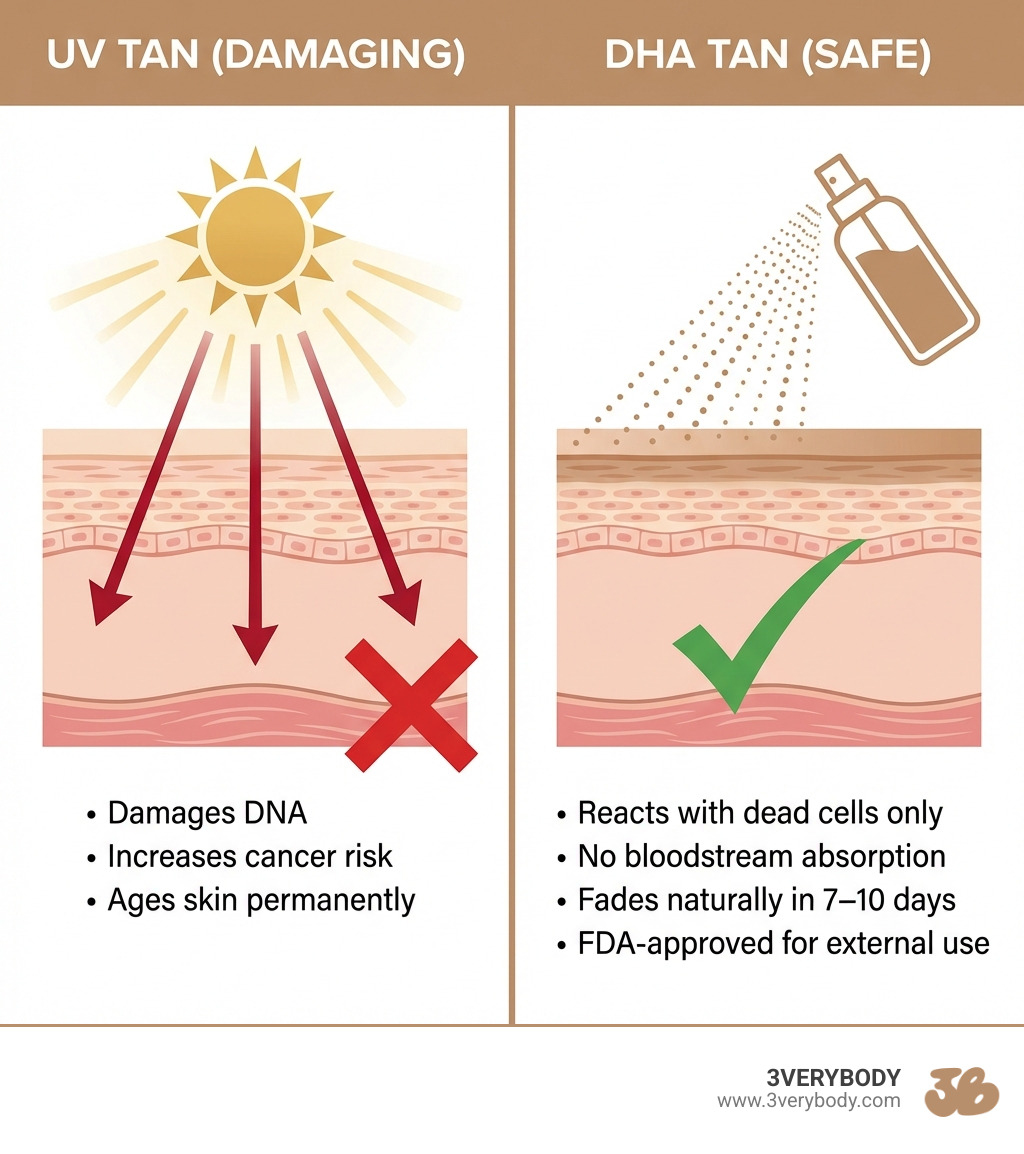
So, how does this sugar create a tan? It’s all thanks to a chemical process called the Maillard reaction—the same reaction that browns toast. When you apply DHA, it reacts with the amino acids in the dead skin cells on the outermost layer of your skin (the stratum corneum). This reaction produces brown-colored compounds called melanoidins, which temporarily stain your skin and create a tan that looks just like the real thing.
The beauty of DHA is that this reaction happens only on the surface. It doesn't penetrate deeper, living layers of skin, and it doesn't enter your bloodstream. This means you get a cosmetic tan without any internal absorption, making it a safe alternative to harmful UV rays.
The color starts to develop within an hour, with the full tan appearing after 8 to 24 hours. Because the reaction occurs on dead skin cells, your tan fades naturally over 3 to 10 days as your skin exfoliates. This allows you to reapply and refresh your glow whenever you like.
At 3VERYBODY, we use DHA in our water-light formulas, like our Tinted Tanning Water, to deliver a natural-looking, non-orange glow that works for every skin tone.
For a deeper dive into the science, you can explore A scientific review of Dihydroxyacetone.
The Big Question: Is DHA Safe? Here’s What Dermatologists Say
When it comes to your skin, safety is everything. So, is DHA truly safe? The short answer from dermatologists and health organizations is yes—when used correctly, it's a safe and effective way to get a tan.
The U.S. Food and Drug Administration (FDA) approved DHA for external use in the 1970s, and the American Academy of Dermatology (AAD) consistently recommends DHA-based self-tanners as a far safer alternative to UV tanning. Why? Because any tan from the sun or a tanning bed is a sign of skin damage, increasing your risk of premature aging and skin cancer. Sunless tanners give you a bronze glow without exposing your skin to harmful UV rays.
DHA's safety comes from its mechanism: it only reacts with the dead skin cells on the surface. It doesn't penetrate to living cells or enter your bloodstream. Lab models show that less than 1% of topically applied DHA is absorbed, which is why dermatologists endorse it.
However, the FDA's approval is for external use only. It does not cover inhalation or ingestion. The FDA explicitly states that DHA should not be inhaled or used near the eyes, lips, or inside the nose.
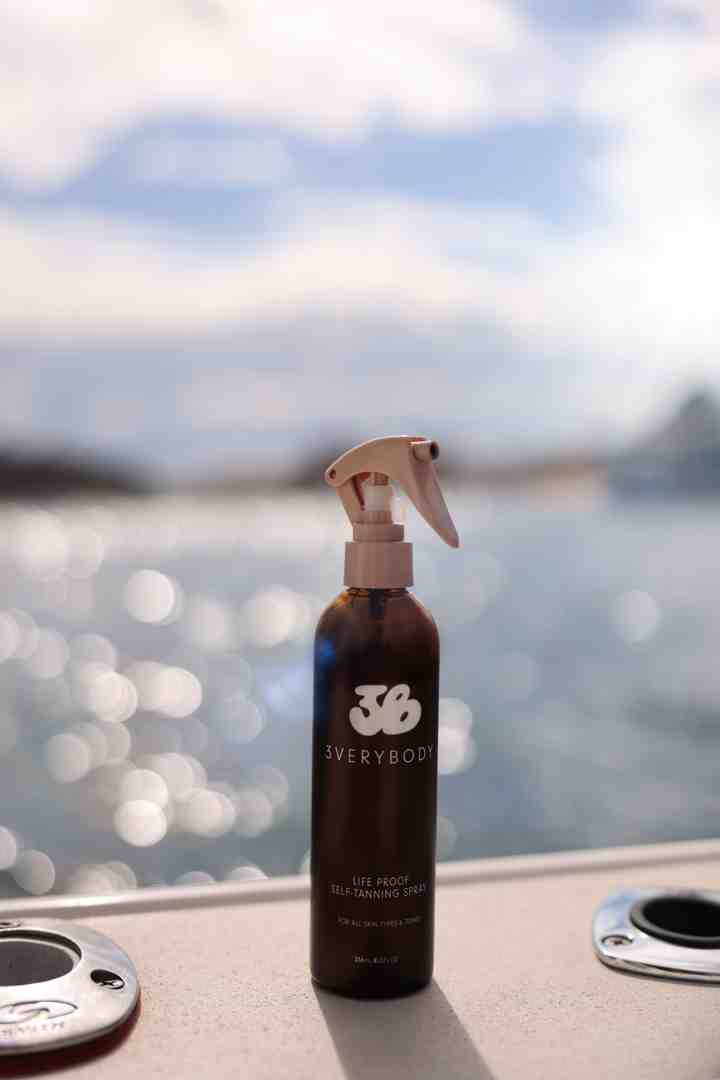
This is exactly why we created at-home products like 3VERYBODY's Life Proof Tan. Our water-light tinted tanning water is designed for safe, controlled application at home. Instead of relying on heavy aerosol environments, our fine mist is easy to manage in a well-ventilated space, giving you a streak-free tan without unnecessary risks. A thinner, water-light layer blends cleaner, dries faster, and looks natural from very fair to deep skin.
While some research suggests DHA can increase free radicals on the skin's surface, this effect is limited to dead cells. To help counter this, our 3VERYBODY formulas are enriched with antioxidants and nourishing ingredients. For those with sensitive skin, irritation is rare and often caused by other ingredients like fragrances, which is why patch testing is so important.
In short, when applied topically as directed, DHA is a safe, dermatologist-approved way to get a beautiful tan.
For more on self-tanning safety, check out our insights on More info about self-tanning safety and the official FDA information on sunless tanners.
Your Complete Guide to Dermatologist Recommended Self Tanner DHA Safety Tips
Getting a flawless, natural-looking tan at home is all about following the right steps. These Dermatologist recommended self tanner dihydroxyacetone DHA safety tips will ensure you get beautiful results while keeping your skin healthy.
Tip #1: Always Patch Test, Especially if You Have Sensitive Skin
Even with gentle formulas, it's smart to do a patch test 24 hours before your first full application, especially if you have sensitive skin or conditions like rosacea or eczema. Our 3VERYBODY formulas are vegan, cruelty-free, and made without common irritants like parabens and sulfates, but a quick test is your best safety net.
How to patch test: Spritz a small amount of our Tinted Tanning Water onto a discreet area, like your inner arm. Wait 24 hours and check for any irritation. If your skin reacts, it's best to avoid the product.
For more insights, explore Learn about self-tanning with sensitive skin.
Tip #2: Prep Your Skin for a Flawless (and Safe) Application
A streak-free tan starts with a smooth canvas. Proper prep ensures even color and a longer-lasting glow.
First, exfoliate your skin 24 hours before applying self-tanner. Use an oil-free scrub or an exfoliating mitt to remove dead, flaky skin. This creates a fresh surface for the DHA to react with, preventing patchiness. Avoid oil-based scrubs, as the residue can block the tanner from working properly.
Next, apply the tanner to clean, completely dry skin. Lotions or oils can interfere with the DHA and cause streaks. For extra-dry areas like elbows, knees, and ankles, apply a very thin layer of oil-free moisturizer before tanning to prevent them from getting too dark.
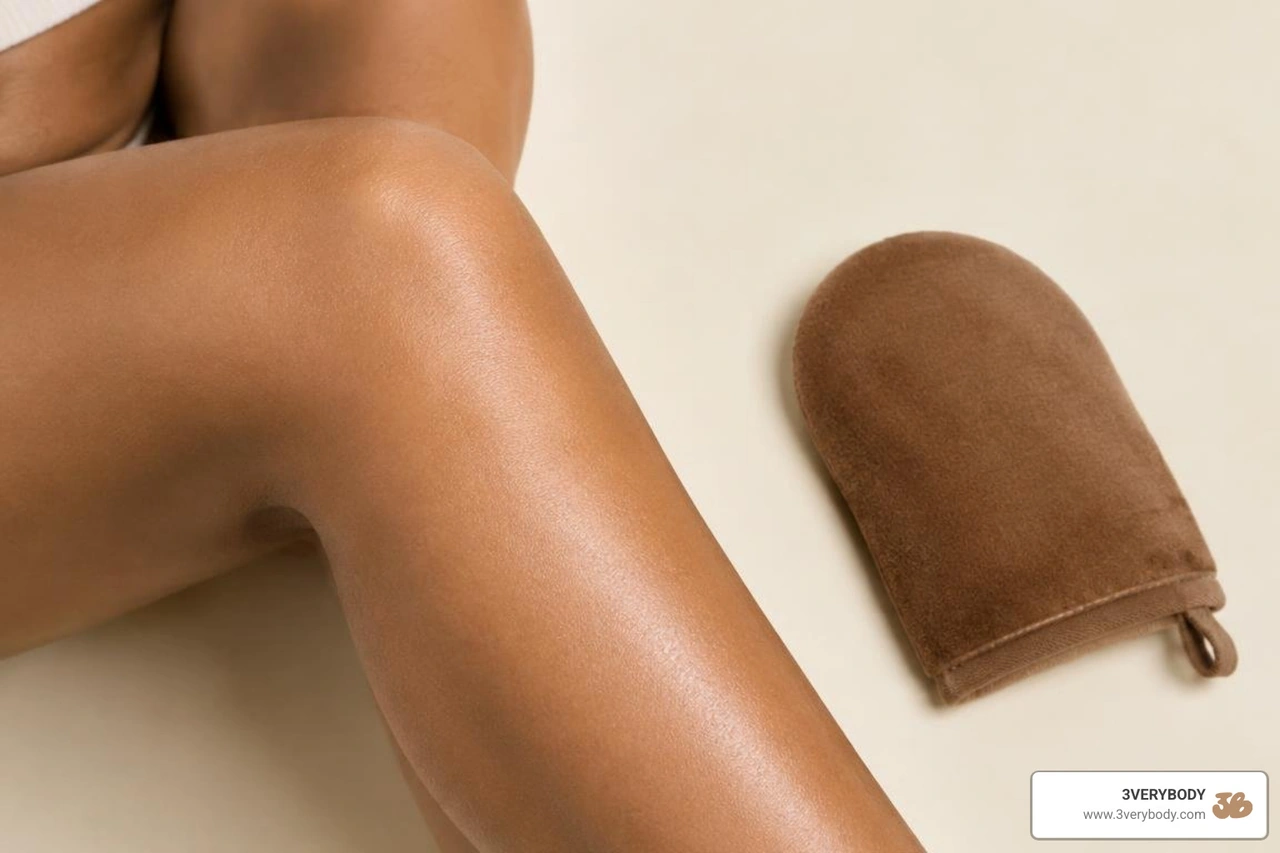
When you are ready to tan, spritz our Tinted Tanning Water onto the 3VERYBODY Mitt, then smooth it over your skin in long strokes with gentle circles. Leave hands and feet for last and blend with the clean side of the Mitt. Let it dry for a few minutes, slip into loose clothing, then do a quick lukewarm rinse later and moisturize daily to keep your glow even.
For more pro tips, the American Academy of Dermatology offers a great guide: How to apply self-tanner like a pro.
Tip #3: Protect Your Lungs: The Truth About Inhalation
The FDA is clear: DHA is approved for your skin, but it should not be inhaled or applied to mucous membranes (eyes, lips, inside the nose). This is a critical safety point, especially with spray formulas.
Our Tinted Tanning Water is designed for safe at-home use. The water-light spray creates a fine, controllable mist, not a heavy aerosol cloud. Still, always apply it in a well-ventilated space, like a bathroom with the fan on. When spraying your face, you can briefly hold your breath to minimize inhalation and avoid direct spray to the eyes, nose, and mouth.
To learn more about our formula, check out Why our water-based formula is different.
Tip #4: A Fake Tan Isn't a Base Tan—SPF is Still Your BFF
This is one of the most important Dermatologist recommended self tanner dihydroxyacetone DHA safety tips: a self-tan offers almost no protection from the sun. Many people mistakenly believe a self-tan acts as a "base tan," but this is false.
A self-tan provides an SPF of 3 to 4 at most. The American Academy of Dermatology recommends a broad-spectrum sunscreen with an SPF of 30 or higher for adequate protection. Any tan from UV exposure is a sign of skin damage, leading to premature aging and increasing your risk of skin cancer.
Therefore, even with your beautiful 3VERYBODY glow, you must use broad-spectrum SPF 30+ every single day. Apply it generously after your self-tanner has fully developed, and reapply every two hours when outdoors. Your daily sunscreen is your skin's ultimate protector.
Tip #5: Don't Let Your Tan Stain Your Style (or Your Sheets!)
Worried about self-tanner staining your clothes or sheets? The color that transfers is usually the temporary "guide color," not the DHA tan itself. Once you rinse off the guide color, the risk of transfer is minimal.
To prevent stains:
- Let it dry: Our quick-dry formula absorbs fast, but give it a few minutes before dressing.
- Wear loose, dark clothing: While your tan develops, opt for dark, loose-fitting clothes to minimize friction and hide any transfer.
- Protect your bed: Our sheet-safe formula is designed to minimize transfer, but sleeping on dark sheets is always a good idea.
- Rinse off: After your tan develops, a quick, lukewarm rinse will wash away the guide color.
If a stain happens, act fast. For fabrics, blot the stain, pre-treat with a stain remover, and wash in cold water. For hard surfaces, wipe immediately with a mild cleaner. By following these steps, you can enjoy your Life-Proof Tan without a trace.
Frequently Asked Questions About DHA Safety
What are the long-term effects of using DHA self-tanners?
Because DHA works on the outermost layer of dead skin cells, it's considered safe for long-term topical use. Unlike UV rays that cause deep DNA damage, DHA's action is superficial.
Some studies suggest the tanning reaction can generate free radicals, which contribute to oxidative stress. However, this happens mainly in the dead skin layer, so the impact on living skin where aging occurs is considered minimal.
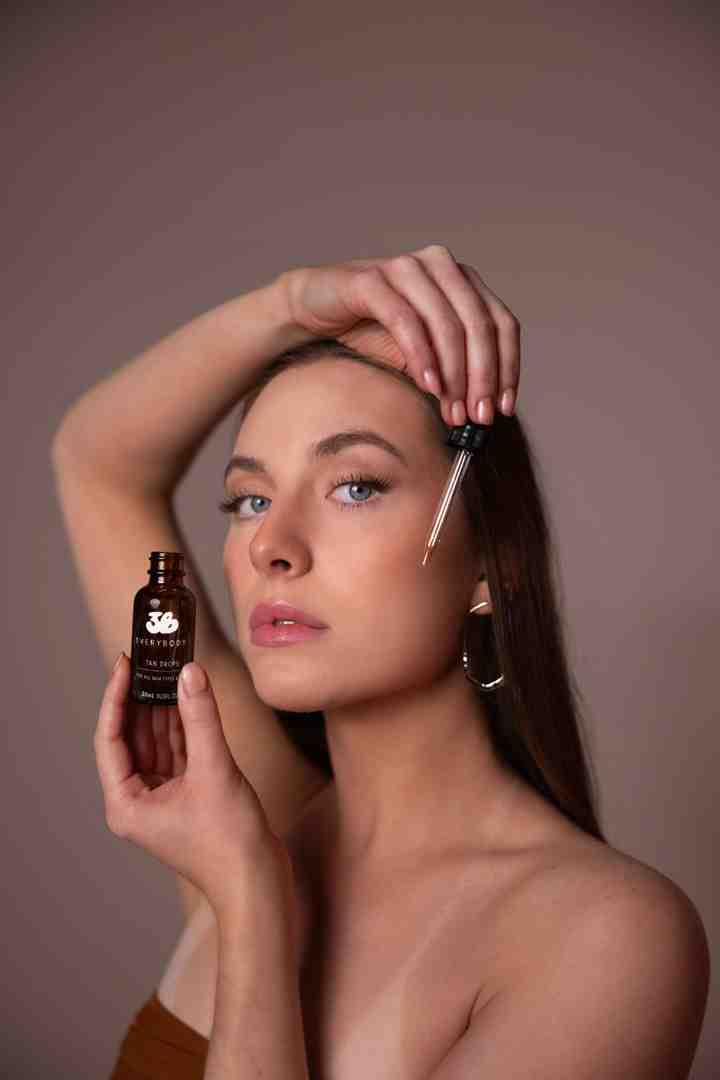
To be extra safe, our 3VERYBODY formulas are enriched with powerful antioxidants. Our Life Proof Tan contains argan oil, cucumber oil, caffeine, and guarana extract, while our Tanning Drops feature rosehip oil and cucumber extract. These ingredients help nourish your skin and combat oxidative stress, keeping your skin healthy and hydrated.
In short, the benefits of using a DHA self-tanner far outweigh the proven long-term damage of UV tanning.
Is it safe to use self-tanner with DHA while pregnant?
This is a common and important question. According to the American Pregnancy Association and current research, topical DHA self-tanners are generally considered safe during pregnancy. This is because the formula reacts with the surface of the skin, and less than 1% is absorbed into the body, meaning a negligible amount, if any, could reach a developing baby.
However, we always recommend taking extra precautions:
- Consult Your Doctor: Always check with your healthcare provider before using any new product during pregnancy or while breastfeeding.
- Avoid Inhalation: As with all users, avoid inhaling the mist. Use our Tinted Tanning Water in a well-ventilated area. Professional spray booths are generally discouraged during pregnancy.
- Patch Test: Pregnancy can make your skin more sensitive, so a patch test is a must.
- Breastfeeding: If breastfeeding, avoid applying the product to the breast area.
For more detailed information, we recommend the fact sheet from MotherToBaby: Information on sunless tanners and pregnancy.
How do I choose the best dermatologist recommended self tanner with DHA for safety and results?
Choosing the right self-tanner is simple when you know what to look for. Here’s what we recommend at 3VERYBODY:
- Prioritize At-Home Application: Dermatologists prefer lotions, drops, and water-light sprays over salon booths due to inhalation concerns. Our Tinted Tanning Water is designed for easy, controlled application at home.
- Look for Clean, Nourishing Ingredients: Opt for formulas free from irritants like parabens and sulfates. Our Life Proof Tan is vegan and enriched with argan oil and cucumber oil. Our Tanning Drops are also vegan and feature rosehip oil and cucumber extract.
- Ensure a Natural, Non-Orange Hue: Our formulas are developed to work on every skin tone, from very fair to deep, for a natural-looking, never-orange tan.
- Use the Right Tools: A quality mitt is key for a streak-free finish. Our Tanning Mitt is double-sided and washable for precise control.
- Seek Convenience and Performance: You want a tan that fits your life. Our Life Proof Tan is quick-dry, non-sticky, and sweat/transfer-resistant, making your routine effortless.
For more help, check out our guide: Find the best self-tanner for your skin.
Conclusion: Get Your Safest, Most Natural-Looking Glow at Home
We've covered a lot, but the takeaway is simple: when used correctly, DHA is the only safe way to get a tan without the damaging effects of UV radiation. Following Dermatologist recommended self tanner dihydroxyacetone DHA safety tips is an essential part of your skincare routine.
The key is topical application (safe and FDA-approved), avoiding inhalation, and never skipping your daily broad-spectrum SPF. A self-tan is not a substitute for sun protection.
At 3VERYBODY, we've built these safety principles into our brand. We believe everyone deserves a flawless, natural-looking tan that is non-orange, non-sticky, and streak-free. Our water-light, quick-dry, and sweat/transfer-resistant formulas work for every skin tone and type. As a woman-owned, inclusivity-first brand that's creator-approved by HopeScope, we're dedicated to delivering a self-tanning experience you can trust.
Ready to get your safest, most natural-looking glow?