Why Your Tan Should Be as Unique as You Are
Inclusive Skin Tone & Skin Type Tans are self-tanning products specifically formulated to deliver natural, streak-free results across the full spectrum of human skin—from the fairest porcelain to the deepest ebony—while respecting different skin types like dry, oily, sensitive, and acne-prone.
Quick Answer: What Makes a Tan Truly Inclusive?
- Works on all skin tones – Fair, medium, olive, and deep complexions all achieve a believable glow
- Adapts to your undertone – No orange cast, whether you're cool, warm, or neutral
- Respects your skin type – Non-comedogenic for acne-prone skin, gentle for sensitive skin, hydrating for dry skin
- Clean, buildable formulas – Water-light layers you control, enriched with skin-loving ingredients like argan oil and cucumber extract
- Sweat and transfer-resistant – Your glow stays on you, not your sheets or clothes
For decades, self-tanning was built around a single standard: light skin that burns easily. The Fitzpatrick scale, created in 1975, classified skin into six types—but four of those categories described lighter tones, leaving the majority of the world's skin colors crammed into just two bins. Dark skin was treated as an afterthought. The original scale didn't even include classifications for deeper tones; types V and VI were added later, almost as a footnote.
That's not just outdated—it's exclusionary. And it shaped an entire industry. Walk into most drugstores, and you'll still see self-tanners marketed primarily to fair skin, with shade names like "Light" or "Medium" that tell you nothing about whether the formula will turn ashy, orange, or muddy on your unique complexion.
The beauty industry is finally catching up. Newer systems like the Monk Skin Tone Scale (10 categories, with six dedicated to darker tones) and the Pantone® SkinTone™ Guide (138 spectrally matched shades, including a wider array of darker tones and yellow undertones) are rewriting the rules. Cosmetic providers and product developers are adopting these tools to create formulas that actually see everyone.
But here's the thing: inclusive tanning isn't just about shade range. It's about formulas that respect different skin types—dry patches that drink up product unevenly, oily zones that can look streaky, sensitive skin that reacts to harsh ingredients, and acne-prone skin that needs non-comedogenic care. A truly inclusive tan works with your skin's natural behavior, not against it.
That means ditching sticky, heavy formulas that sit on top of the skin and oxidize into orange streaks. It means choosing water-light sprays that absorb fast, dry in minutes, and layer cleanly for a buildable, customizable glow. It means formulas enriched with argan oil, cucumber extract, rosehip oil, caffeine, and guarana—ingredients that hydrate, soothe, and support your skin while the DHA (dihydroxyacetone) reacts gently with your top layer of skin cells to create that golden color.
And it means you get to control the result. Mix a few drops into your moisturizer for a hint of warmth, or spritz a full application for a deep, sun-kissed finish. Either way, it should look like you—just glowier.
I'm Emmy Bre, founder of 3VERYBODY, and I spent a decade testing nearly every self-tanner on the market before creating formulas that deliver Inclusive Skin Tone & Skin Type Tans for everyone—non-orange, streak-free, and sweat-resistant, whether you're porcelain-fair or deep ebony. After watching my mom and grandma both battle skin cancer, I knew safer tanning had to work for every body, so I built it myself.
Beyond the Basics: Understanding Your True Skin Tone & Type
For far too long, the beauty industry relied on a limited understanding of human skin. The primary tool, the Fitzpatrick scale, while foundational for understanding UV response, has significant limitations, especially in representing the beautiful diversity of global skin tones.
The Problem with Old-School Skin Typing: Fitzpatrick Scale Limitations
The Fitzpatrick scale was developed in 1975 to classify skin based on its tendency to burn or tan when exposed to the sun. It categorizes skin into six types, from Type I (always burns, never tans) to Type VI (never burns, deeply pigmented). While useful for assessing sun sensitivity and skin cancer risk, it has been widely criticized for its Eurocentric bias.
Here's why it falls short:
- Limited representation: The original version of the scale did not contain classifications for darker skin tones, initially including only types I to IV and considered “Anglo-Irish centric.” Types V and VI were added later, almost as an afterthought. This means that out of six categories, only two were meant to encompass the vast spectrum of darker skin. Dark skin is truly underrepresented, leaving many groups invisible in research, medical applications, and technology.
- Eurocentric bias: Studies show that European populations have a narrower range of skin color variation compared to groups categorized as 'brown' or 'black,' which exhibit a much wider spectrum. The Fitzpatrick scale's narrow focus fails to capture this global diversity.
- Subjectivity and misuse: The scale relies on self-reporting of "burning" and "tanning" tendencies, which can be unreliable. Research from 2019 found that many participants struggled to classify themselves due to the scale's limitations. Moreover, some professionals may misuse the Fitzpatrick scale, particularly those who do not identify as People of Color, potentially leading to inaccurate advice on skin cancer risk. This contributes to healthcare disparities, as skin cancer affects approximately 4.5 million People of Color in the United States each year, challenging the misconception that darker skin is immune.
- Inadequate for diverse skin: The Fitzpatrick scale struggles to account for the variance in skin color among People of Color and mixed-race individuals, leading to inaccurate assessments. For a deeper dive into these limitations, you can explore research on The constraints of racialization in research.
Newer, Better Visual Guides: Embracing Inclusivity
Thankfully, the beauty and tech industries are evolving. We're seeing a shift towards more inclusive and accurate skin tone classification systems:
- The Monk Skin Tone Scale: Developed in collaboration with Google and Dr. Ellis Monk, this scale offers 10 categories, a significant improvement over Fitzpatrick's six. It provides a better representation of true skin coloration, especially for darker skin tones, where it dedicates six categories. This inclusivity is crucial for accurate skin analysis, particularly in cosmetic procedures like laser surgery, where choosing the correct wavelength based on precise skin tone classification reduces the risk of adverse effects like hyperpigmentation.
- Pantone® SkinTone™ Guide: For over a decade, the Pantone® SkinTone™ Guide has helped industries represent diverse and inclusive skin tones. The 2023 expansion includes 28 new shades, bringing the total to 138, with a wider array of darker tones and yellow undertones. This guide is used across fashion, beauty, and product design to ensure accurate and representative color matching.
These advancements are vital because they ensure that products and services are developed with all skin tones in mind. Obagi, for example, was one of the first professional skincare companies to specifically design clinical research protocols to include all six Fitzpatrick skin types, setting a precedent for inclusive research.
Determining Your Skin Type and Finding Your Undertone
Beyond just your skin tone, understanding your skin type (dry, oily, sensitive, combination) and undertone is crucial for choosing the right tanning products. This helps us ensure a natural, flawless result that doesn't clash with your natural complexion.
Understanding Your Skin Type:
- Dry Skin: Often feels tight, can be flaky, and may show fine lines easily. It needs hydrating formulas.
- Oily Skin: Appears shiny, prone to breakouts, and may have larger pores. It benefits from non-comedogenic, quick-drying formulas.
- Sensitive Skin: Reacts easily to products, redness, itching, or irritation. Requires gentle, hypoallergenic ingredients.
- Combination Skin: A mix of oily and dry areas. Often needs a balanced approach.
Finding Your Undertone:Your undertone is the color beneath the surface of your skin. It doesn't change with sun exposure or tanning. Knowing it is key to avoiding an "orange" or "ashy" tan.
- Cool Undertones: Your skin has pink, red, or bluish hues. You might burn easily in the sun.
- Warm Undertones: Your skin has golden, peachy, or yellow hues. You tend to tan easily.
- Neutral Undertones: Your skin has a mix of both cool and warm tones.
Here are two easy tests to find your undertone:
- The Vein Test: Look at the veins on the inside of your wrist in natural light.
- If they look blue or purple, you likely have cool undertones.
- If they look green, you likely have warm undertones.
- If you can't tell if they're blue or green, or they appear a mix, you probably have neutral undertones.
- The Jewelry Test: Think about whether gold or silver jewelry looks better on you.
- Silver usually complements cool undertones.
- Gold typically complements warm undertones.
- Both look good on neutral undertones.
Understanding your skin tone, type, and undertone is the first step to truly inclusive tanning. It empowers you to make informed choices for a beautiful, natural-looking glow. For more guidance on this, check out our guide on How to Choose the Right Self-Tanner for Your Skin Tone.
The Ultimate Guide to Inclusive Skin Tone & Skin Type Tans
This is your roadmap to a perfect at-home tan, no matter your starting point. We’ll break down the best approach for your specific skin tone and type, so you get flawless, non-orange results every single time. Our water-light, quick-dry, sweat/transfer-resistant, non-sticky, and vegan/cruelty-free formulas are designed to work on every skin tone and type, ensuring your Inclusive Skin Tone & Skin Type Tans are always on point.
For the Fairest Skin: Building a Believable, Non-Orange Glow
If you have fair or pale skin, you know the struggle: a too-dark formula can quickly turn orange or streaky. But with the right approach and product, you can achieve a beautiful, subtle glow that looks like you just spent a week on a dreamy vacation, not like you wrestled with a bottle of self-tanner.
Fair skin (Fitzpatrick Type I-II, Monk Skin Tone Scale 1-3) typically has pinkish undertones or freckles, and tends to burn easily with minimal to no tanning. The key here is to build your tan gradually and choose formulas designed for your skin's unique melanin levels. DHA percentages of 6-8% are often recommended for fair skin, which is exactly what our water-light formulas provide in a customizable way.
Our Approach for Fair Skin:
- Avoid the orange effect: Orange tones often come from low-quality DHA or a shade that clashes with your undertone. Our formulas are carefully crafted to adapt to your skin's natural chemistry, ensuring a natural, golden brown, not an artificial orange.
- Start with a light, buildable layer: For first-time users or those seeking a subtle look, gradual application is your best friend. Our Tinted Tanning Water allows for this perfectly.
- Tanning Drops for customization: For ultimate control, our Tanning Drops are a game-changer. Mix 2-12 drops into your favorite moisturizer, serum, or oil to create a customized glow that perfectly suits your desired depth. These drops are enriched with nourishing rosehip oil and cucumber extract, and they are vegan, paraben-free, palm oil-free, and sulfate-free—making them gentle and effective for even the palest skin.
- Water-light formulas for a clean finish: Unlike heavy, thick formulas that can over-deposit color, our water-light Tinted Tanning Water sprays on evenly and absorbs quickly, preventing streaks and patchy results common on fair skin. It's designed to deliver a smooth, natural finish every time.
We've got you covered for the best self-tanners for best self tanner for pale or fair skin that absolutely what self tanner wont turn me orange.
Key Ingredients for Fair Skin:
- Rosehip oil: Known for its hydrating and skin-repairing properties, helping to ensure an even fade.
- Cucumber extract: Soothes and calms the skin, reducing any potential irritation.
- Argan oil: Provides deep hydration, preventing dry patches that can lead to uneven color.
For Medium to Olive Skin: Enhancing Your Natural Warmth
Medium to olive skin tones (Fitzpatrick Type III-IV, Monk Skin Tone Scale 4-6) are wonderfully versatile. You might tan easily in the sun, sometimes with a mild sunburn, and often have warm or olive undertones. Our goal here is to deepen your existing color, add a radiant warmth, and create a flawless, streak-free finish that improves your natural beauty.
Our Approach for Medium to Olive Skin:
- Deepen your color without streaks: Our water-light Tinted Tanning Water is perfect for achieving a richer, more intense tan without the worry of uneven application. The fine mist ensures smooth coverage, and its quick-dry nature means no sticky residue.
- Why a water-light spray is better than sticky, thick formulas: Traditional tanners can be thick and difficult to blend perfectly, especially on areas that already have some natural color. Our water-light spray creates a thinner, more blendable layer that seamlessly integrates with your skin, drying faster and looking natural. This avoids the common issue of product sitting on the skin's surface, which can lead to streaks or an unnatural appearance.
- Achieve a rich, even complexion: Our Tinted Tanning Water is formulated with argan oil, cucumber oil, caffeine, and guarana extract, which not only nourish your skin but also help ensure a uniform, gorgeous tan.
- Our Tinted Tanning Water provides a perfect guide color for foolproof application: The subtle tint allows you to see exactly where you've applied the product, making it incredibly easy to achieve an even, natural-looking tan, even on medium or olive tones. This ensures your natural fake tan looks professionally done.
For Deep Skin Tones: Achieving an Even, Radiant Finish
Let's bust a persistent myth: deep skin tones (Fitzpatrick Type V-VI, Monk Skin Tone Scale 7-10) absolutely can and do benefit from self-tanning! While darker skin has increased melanin, offering more natural protection against UV radiation, it's not immune to sun damage or skin cancer. Moreover, self-tanning for deep skin isn't about changing your color; it's about perfecting it.
Our Approach for Deep Skin Tones:
- Bust the myth that deep skin doesn't need tanner: Many believe that because darker skin doesn't burn easily or already has a rich color, self-tanner isn't necessary. This couldn't be further from the truth. Just like any skin tone, deep skin can benefit from an improved glow, an even complexion, and a radiant finish. As one beauty professional noted, "Especially in winter, we’re pale under all those layers, and fake tanning helps to boost our confidence and make us feel amazing."
- Even out skin tone: Darker skin tones can experience hyperpigmentation, uneven patches, or dullness. Our Tinted Tanning Water can help visibly even out your skin tone, creating a smoother, more uniform canvas.
- Add a luminous, radiant glow: Our formulas are designed to improve your natural depth, adding a beautiful, healthy radiance that makes your skin appear airbrushed and luminous. For an extra brightening bronze boost, consider pairing with our Tanning Drops.
- Conceal minor imperfections: A well-applied tan can subtly camouflage minor imperfections, giving your skin a flawless finish.
- A transfer-resistant formula ensures your glow stays on you, not your clothes: Our Tinted Tanning Water is sweat/transfer-resistant and quick-dry, so you don't have to worry about your beautiful tan ending up on your sheets or clothes. This means your best self tanner dark guide is always ready to shine.
For Sensitive or Acne-Prone Skin: The Best Inclusive Skin Tone & Skin Type Tans
If your skin tends to react to everything, finding a self-tanner that doesn't cause irritation or breakouts can feel impossible. We understand. That's why we prioritize skin-loving ingredients and gentle, non-comedogenic formulas, ensuring that everyone, including those with sensitive or acne-prone skin, can achieve a beautiful glow.
Our Approach for Sensitive or Acne-Prone Skin:
- Focus on skin-loving formulas: Our Tinted Tanning Water is vegan and cruelty-free, free from parabens and sulfates—common irritants found in many beauty products. It's enriched with argan oil and cucumber oil for hydration and soothing benefits.
- Non-comedogenic ingredients: We carefully select ingredients that won't clog pores, making our products suitable for acne-prone skin. This helps mitigate potential risks like breakouts or irritation.
- Hypoallergenic self-tanners: Our gentle formulations are designed to minimize the risk of allergic reactions, providing a safer option for sensitive skin. You can find more about our approach to self tan sensitive skin and hypoallergenic self tan in our other guides.
- Tanning Drops let you mix your tan into your favorite safe-for-you moisturizer: This is a game-changer for sensitive or acne-prone skin. Instead of applying a new product directly, you can simply add our Tanning Drops to your trusted, non-irritating moisturizer, serum, or oil. This allows you to control the ingredients that touch your skin, minimizing any potential for reaction. Our Tanning Drops feature rosehip oil and cucumber extract for added skin benefits, and are vegan, paraben-free, palm oil-free, and sulfate-free. For more detail, read about are tanning drops safe for acne-prone skin.
Your At-Home Ritual for a Flawless, Transfer-Proof Tan
Achieving a professional-looking, streak-free tan at home is easier than you think, especially with our water-light formulas and user-friendly tools. Here’s our simple, step-by-step ritual for a radiant, life-proof glow.
- Prep is key: For the smoothest application, exfoliate your skin thoroughly 24 hours before you plan to tan. This removes dead skin cells and creates an even canvas.
- Moisturize dry spots: Pay extra attention to traditionally dry areas like knees, elbows, ankles, and hands. Apply a light, oil-free moisturizer to these spots just before tanning to prevent over-absorption and dark patches.
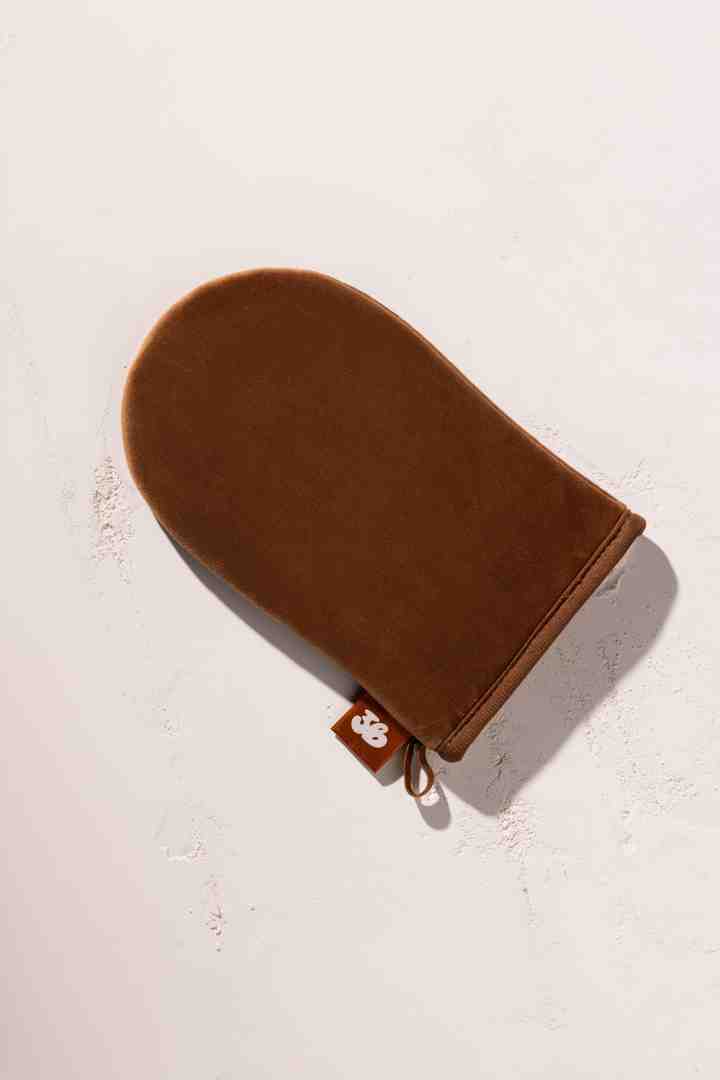
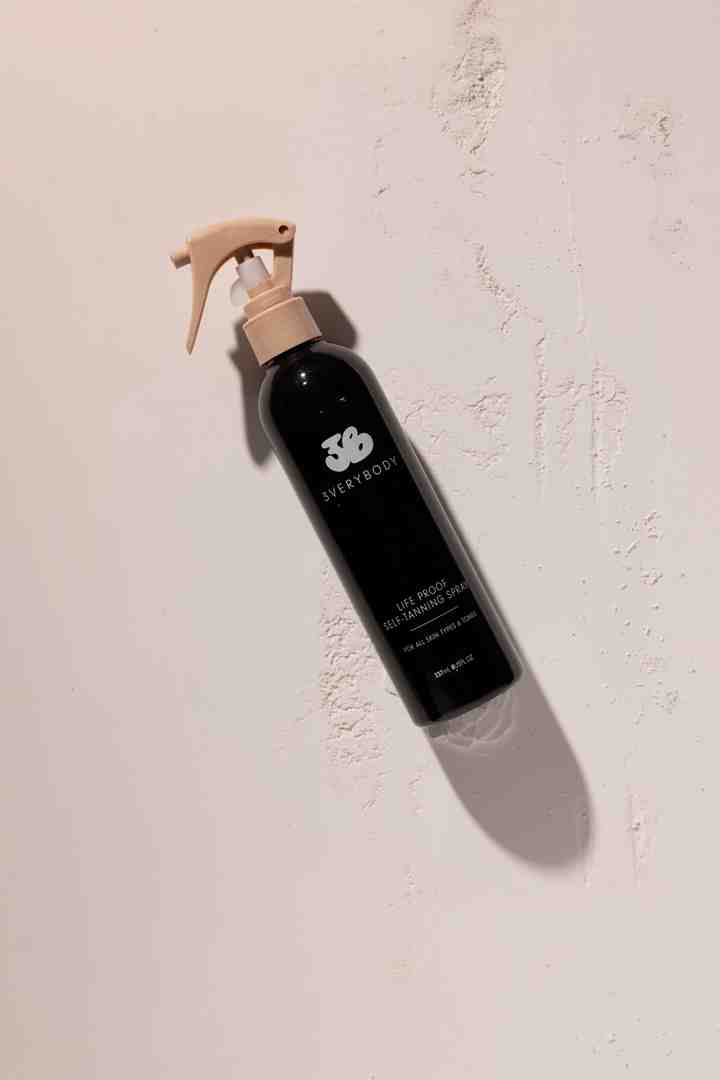
- Spritz onto the Mitt: Don't spray directly onto your skin! Spritz our Tinted Tanning Water directly onto our double-sided Tanning Mitt. This ensures even distribution and protects your palms from staining. Our Mitt is designed for even control and is washable, so it's ready for your next glow session.
- Apply in long, smooth strokes: Starting from your legs and working your way up, apply the tinted tanning water to your body in long, smooth, sweeping motions. Use gentle circles to ensure full coverage. The guide color in our Tinted Tanning Water lets you see exactly where you've applied, so no spots are missed.
- Hands and feet last: For a natural look, save your hands and feet for last. Use the clean side of your Tanning Mitt (or just the residual product) and blend carefully. Less is more here!
- Let it quick-dry: Our Tinted Tanning Water is quick-dry, so you'll only need to wait a few minutes for it to fully absorb.
- Wear loose clothes: Once dry, slip into some loose, dark clothing to avoid any friction or marks while your tan develops. Our formula is sweat/transfer-resistant, so you can go about your day without worry.
- Quick, lukewarm rinse: After a few hours (check product instructions for specific development times), take a quick, lukewarm rinse in the shower. Avoid harsh soaps or scrubbing. Pat your skin dry.
- Moisturize daily: To extend the life of your gorgeous glow and ensure an even fade, moisturize your skin daily. Hydrated skin holds a tan better.
This ritual ensures a flawless, natural-looking tan every time, making our Tinted Tanning Water the best body self tanner for an inclusive glow.
Frequently Asked Questions About Inclusive Tanning
Will self-tanner make me look orange?
No, not with the right formula. The dreaded "orange" tan is a relic of outdated formulas with low-quality DHA or an incorrect shade choice that clashes with your skin's natural undertone. Our water-light formulas are carefully crafted to adapt to your skin's natural chemistry, ensuring a natural, golden finish on everyone, from the fairest to the deepest tones. We spent years perfecting a formula that delivers a believable, sun-kissed glow, never a fake orange tint.
Can I use self-tanner if I have a deep skin tone?
Absolutely. Self-tanner is incredible for deep skin tones. It’s not about changing your color, but perfecting it—evening out your complexion, adding a beautiful radiance, and giving your skin a flawless, airbrushed look. Many individuals with deeper skin tones use self-tanner to address uneven pigmentation, improve their natural glow, or simply achieve a uniform, luminous finish. It’s a fantastic tool for skin confidence and a healthy radiance, without any UV exposure.
What’s the difference between tanning water and other self-tanners?
Tanning water is a game-changer, and it's what we specialize in at 3VERYBODY. Unlike traditional sticky, heavy formulas that can sit on top of the skin and feel heavy, our water-light spray absorbs quickly, dries in minutes, and feels like nothing. This innovative formula creates a thinner, more blendable layer for a truly natural look that’s sweat and transfer-resistant. Other tanners can often be tricky to apply evenly, can leave a sticky residue, and tend to develop into a less natural finish. Our tinted tanning water is designed for clean application, quick-dry comfort, and a flawless, believable tan that works on every skin tone and type.
The Future is Inclusive: Get Your Perfect Glow Today
Finding your perfect tan shouldn’t be guesswork. It’s about understanding your unique skin and choosing modern, inclusive formulas that work with you, not against you. The beauty industry has evolved, moving past the limitations of scales like Fitzpatrick to accept systems like Monk and Pantone that truly see all skin tones. This evolution means more thoughtful product development, offering solutions that cater to diverse needs and preferences. While professional consultations play a vital role in selecting appropriate shades and formulas for diverse clients in salon settings, our mission at 3VERYBODY is to bring that professional-quality, inclusive experience right into your home.
As a woman-owned brand, 3VERYBODY was built to give everyone access to a flawless, non-sticky, and life-proof tan at home. Our Tinted Tanning Water, customizable Tanning Drops, and streak-free Mitt are HopeScope-approved and designed for every skin tone and type. We believe that everyone deserves to feel confident and radiant in their skin, and our Inclusive Skin Tone & Skin Type Tans make that possible. Ready for a tan that finally gets you?
Start your flawless tan journey with the complete 3VERYBODY Kit.