Why Camera Lighting Changes Everything About Your Self Tan
If you're a creator, you already know the problem. You look great in the mirror. Then you flip on your ring light, hit record — and your skin looks completely washed out.
Self tanner for creators isn't just about looking bronzed. It's about choosing a formula that holds up under HD cameras, studio lighting, and a full shoot day without transferring onto your clothes or fading into nothing.
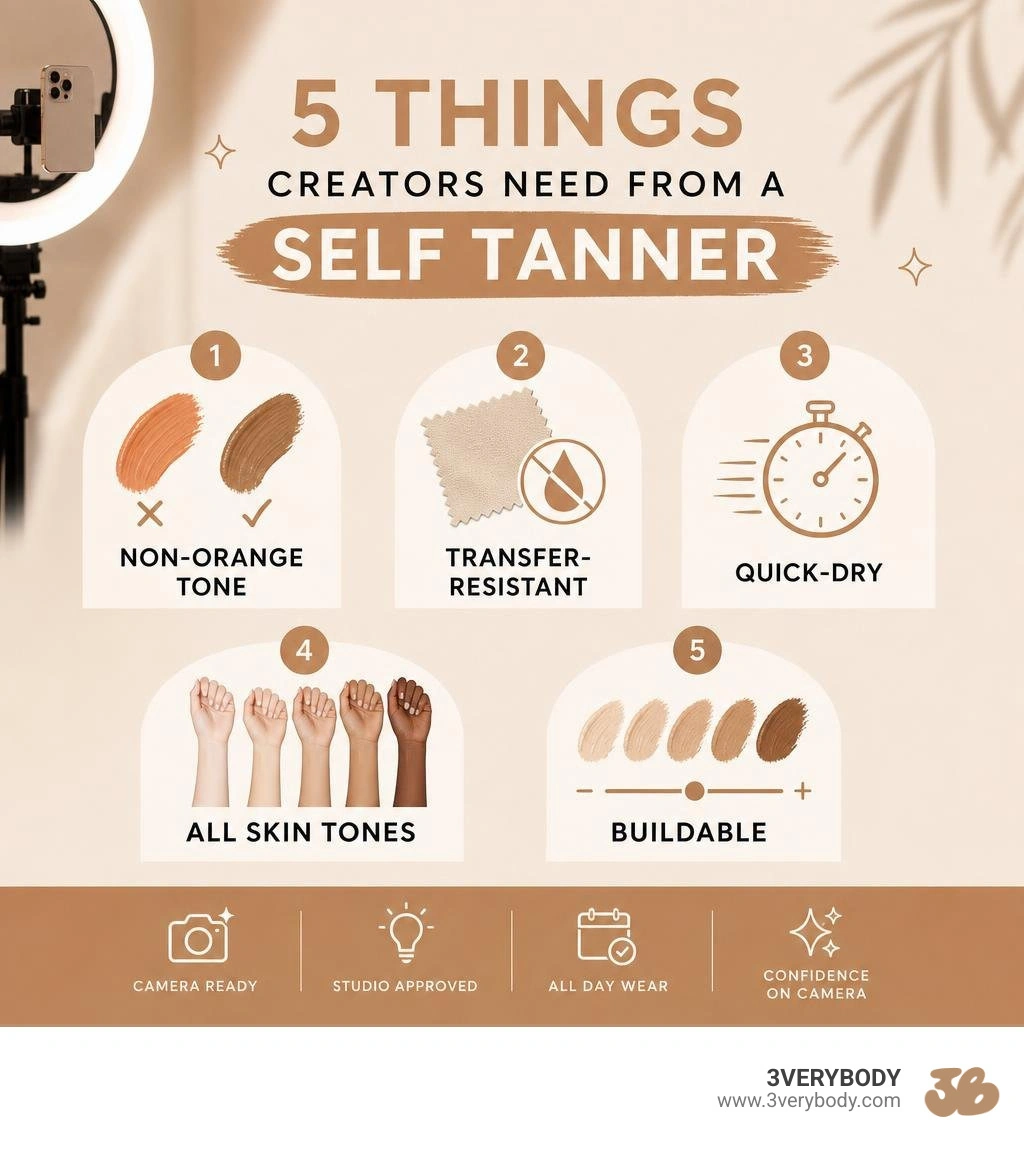
Here's a quick breakdown of what actually matters when you're picking a self tanner for on-camera work:
| What Matters | Why It Matters for Creators |
|---|---|
| Non-orange tone | Ring lights and daylight bulbs amplify warm tones — the wrong formula reads orange on camera |
| Transfer-resistant wear | Leaning on props, wearing mic packs, sitting in chairs — transfer is a real issue |
| Quick-drying formula | No time to wait around between filming and getting dressed |
| Works on all skin tones | Camera color correction doesn't fix a mismatched tan |
| Buildable color | Some days you want a glow; other days you need full coverage definition |
Most self-tanners are designed for the beach, not the studio. Heavier creams and thick lotions can feel heavier, take longer to dry, and be more likely to transfer under direct light. A thinner, water-light layer blends cleaner, dries quickly, and adapts more naturally across skin tones — from very fair to deep.
That's exactly the gap 3VERYBODY was built to fill.
I'm Emmy Bre, founder of 3VERYBODY — I spent a decade testing nearly every self-tanner on the market before developing our formulas specifically to work on every skin tone while helping to reduce the orange tones, stickiness, or transfer that makes self tanner for creators such a frustrating search. Everything I've learned from that process — and from building a brand with zero paid ads, just real results — is in this guide.
Why Finding the Right Self Tanner for Creators Matters Under Studio Lights
When you step in front of a camera, studio lighting and high-definition lenses change how your skin looks. Bright studio lights can overexpose your natural skin tone, making you look washed out or highlighting uneven patches you wouldn't notice in normal room lighting.
To compensate for this camera exposure, many beauty and lifestyle creators turn to sunless tanning. However, standard products often fall short under the lens. Many traditional formulas can look muddy or turn an unnatural shade under cool-toned ring lights.
If you are looking for the Best Self Tanner for Creators, you need a formula that is transfer-resistant and designed with non-orange tones in mind. When you are changing outfits during a lookbook shoot or wearing a mic pack for a vlog, the last thing you want is brown streaks on your wardrobe.
This is why we focus on water-light formulas. A thinner, water-light layer blends cleaner, dries quickly, and looks natural from very fair to deep skin compared to heavier alternatives that can feel heavier, take longer to dry, or be more likely to transfer under direct studio lights.
How Sunless Tanning Works and Choosing Your Formula
At its core, self-tanner works through a simple chemical reaction. The active ingredient, dihydroxyacetone (DHA), reacts with the amino acids in the dead cells on your skin's surface to temporarily darken the skin. This process mimics a natural tan but happens entirely on the surface, making it a much safer alternative to UV exposure.
Because the reaction happens in the outermost layer of your skin, your tan will naturally fade as your skin cells shed. To understand how to keep your products fresh for the best reaction, you can check out our Self Tanner Shelf Life Guide.
When choosing a formula, look for options that prioritize skin health. Using a product with a Natural Ingredients Self Tanner base helps support your skin barrier, keeping your skin hydrated so the tan fades evenly instead of peeling off in patches.
For creators, we recommend two main formats:
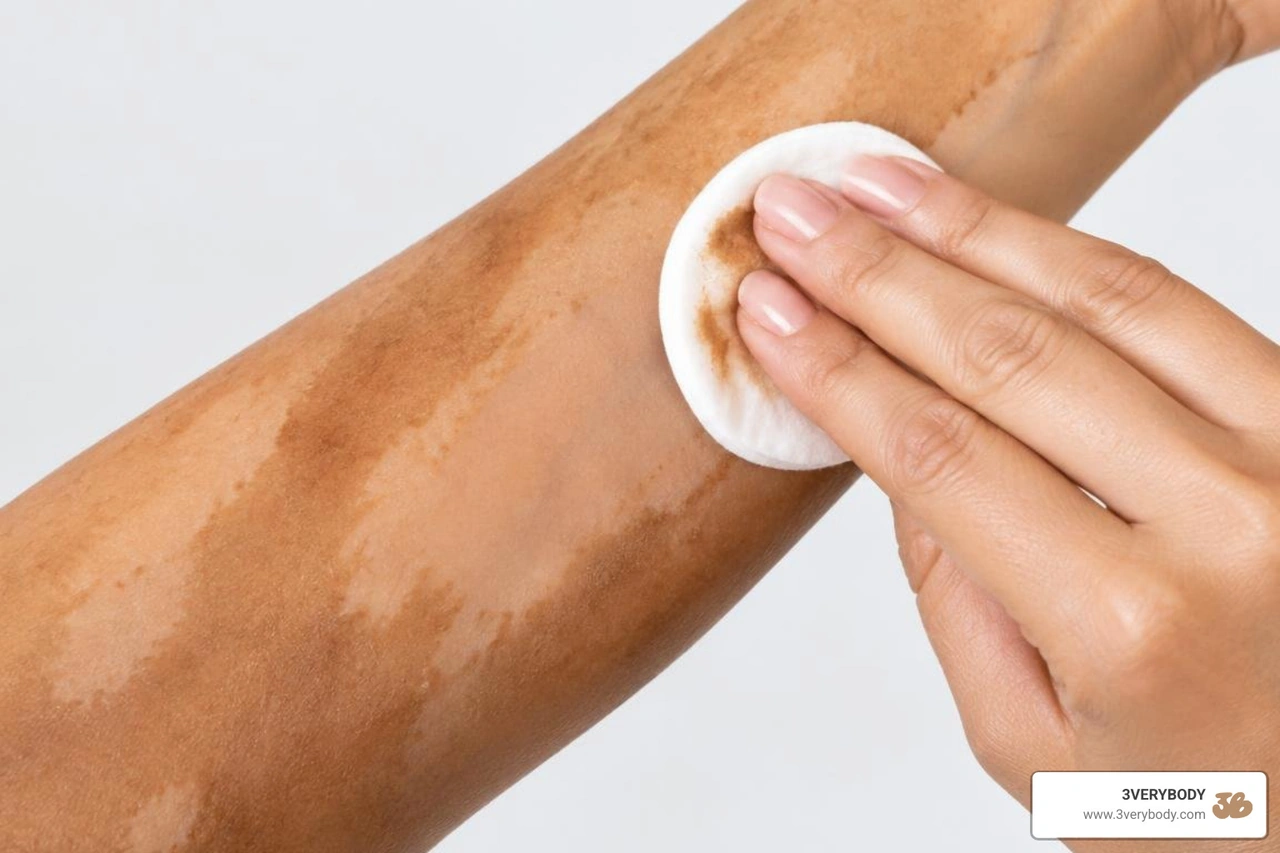
- Tinted Tanning Water: A water-light spray that goes on with a light, temporary guide color. It is quick-drying and helps reduce transfer.
- Customizable Tanning Drops: Highly concentrated drops that you mix directly into your favorite daily moisturizer, allowing you to control the depth of your glow.
Finding the Best Self Tanner for Creators Based on Skin Tone and Undertones
Choosing the right shade depends entirely on your starting skin tone and natural undertones. A common mistake is choosing a shade that is far too dark for your natural complexion, which often results in an unnatural finish under bright video lights.
Water-light formulas are designed to adapt to your natural undertones, working with your skin's unique chemistry rather than masking it. This ensures that whether you have cool, warm, or neutral undertones, the developed color looks authentic on camera. For a deeper look at matching your complexion, read our Best Self Tanner Guide 2026.
Key Ingredients to Look For (and Avoid) for Sensitive Skin
If you are filming close-ups or high-definition beauty tutorials, you'll want a lightweight formula that feels gentle on your skin.
Look for nourishing, lightweight ingredients that support a healthy-looking complexion:
- Hyaluronic Acid & Squalane: Provide a hydrating feel.
- Argan Oil & Rosehip Oil: Rich in antioxidants to help smooth and soften the skin.
- Cucumber Extract: Soothes and cools the skin during application.
You should avoid harsh sulfates and parabens, which can dry out your skin and cause your tan to fade unevenly. Additionally, look for formulas designed to help reduce that classic chemical sunless tan odor. For tips on finding a pleasant formula, check out our Self Tanner No Smell Guide.
The Step-by-Step Routine for a Streak-Free Camera Glow
Achieving an even, camera-ready tan is 50% preparation and 50% application. If you skip the prep, even the best formula can look patchy under studio lights.

Always start with oil-free exfoliation and shaving at least 3 hours before tanning. This gives your pores time to close and ensures you are applying the product to a smooth, clean canvas. Avoid using heavy body washes or moisturizers right before application, as these can create a barrier that prevents the tanning water or drops from absorbing evenly. For more preparation tips, see How to Apply Self Tanner and our guide on achieving a Non Streaky Self Tanner.
Application Techniques with a Self Tanner for Creators
Using the right tools is essential for a streak-free finish. We always recommend using a high-quality, double-sided mitt to protect your palms and ensure even distribution.
- Spritz and Sweep: Spritz your Tinted Tanning Water directly onto your mitt or skin, then smooth it over your body in long, sweeping strokes, finishing with gentle circular motions to blend.
- Blend the Details: Leave your hands, feet, and face for last. Use the clean, leftover residue on the mitt to lightly glide over these areas.
- Use the Clean Side: Use the clean side of your mitt to buff out harsh lines around your wrists, ankles, and elbows.
- Target Dry Areas: Apply the product very lightly to naturally dry areas like knees and elbows, as these spots absorb DHA more quickly.
For a breakdown of the best tools for the job, take a look at our Tanning Mitt Guide 2026.
Development, Rinse Timing, and Maintenance
Once applied, let the tan develop. Avoid sweat, water, and tight clothing during the development window (usually 4 to 8 hours). If you need to film or move around, applying a light dusting of baby powder to high-friction, high-sweat areas like the inner elbows and underarms can help absorb moisture and reduce rubbing.
After your tan has developed, do a quick lukewarm rinse without using harsh soaps or rough washcloths.
To maintain your camera glow:
- Moisturize daily to keep the skin hydrated and support an even fade.
- Avoid heavy scrubbing, hot showers, and drying cleansers.
- To learn more about what to expect, read How Long Does Fake Tan Last on Skin.
Why At-Home Sunless Tanning Beats Sun Exposure
As a creator, your skin is your canvas. While a natural sun tan might seem appealing, the reality of UV radiation includes a high risk of skin cancer and premature aging, such as fine lines and dark spots that become highly visible under HD camera lenses.
At-home sunless tanning offers a convenient, controlled way to get a bronze glow without the UV damage. With water-light formulas, you can customize your color safely in your own home, ensuring you look healthy and glowing for your next shoot without compromising your long-term skin health.
Many lifestyle creators and beauty experts agree that sunless options are the best path forward. For more perspectives on choosing at-home products, you can read The Best At-Home Self Tanners - Living in Yellow or see what others recommend in Ask Julia: What is the best self tanner? .
Frequently Asked Questions About Camera-Ready Tanning
What are the most common mistakes that cause orange or patchy results?
Orange or patchy results are rarely the fault of the tanning ingredient itself. Instead, they usually happen due to:
- Overapplication: Applying too much product at once.
- Dry Skin: DHA clinging to dry patches, making them look darker and muddy.
- Poor Prep: Not exfoliating or shaving early enough, leaving skin uneven.
- Wrong Shade Choice: Choosing a shade that is too deep for your starting skin tone.
Are self-tanners safe for sensitive skin and beginners?
Yes, especially water-light formulas and customizable tanning drops. Because you can mix drops into your own trusted daily moisturizer, you can easily control your glow. For beginners, we strongly recommend starting with The Kit by 3VERYBODY. It includes both our signature formula and the essential application tools to help you get an even, streak-free application. Check out our Best Self Tanner Kit Guide to find the right setup.
How do you prevent self-tanner from transferring onto clothes during a shoot?
To keep your wardrobe clean during a shoot, look for quick-drying formulas that offer a touch-dry finish in a few minutes. Once your tan has fully developed, make sure to wash off the temporary guide color during your first rinse. Wearing loose, dark clothing during the development phase also helps prevent any accidental transfer.
Conclusion
Finding a self tanner for creators doesn't have to mean dealing with sticky formulas, stained sheets, or orange undertones. By choosing water-light, skin-loving products, you can achieve an even, camera-ready glow that holds up under the brightest studio lights.
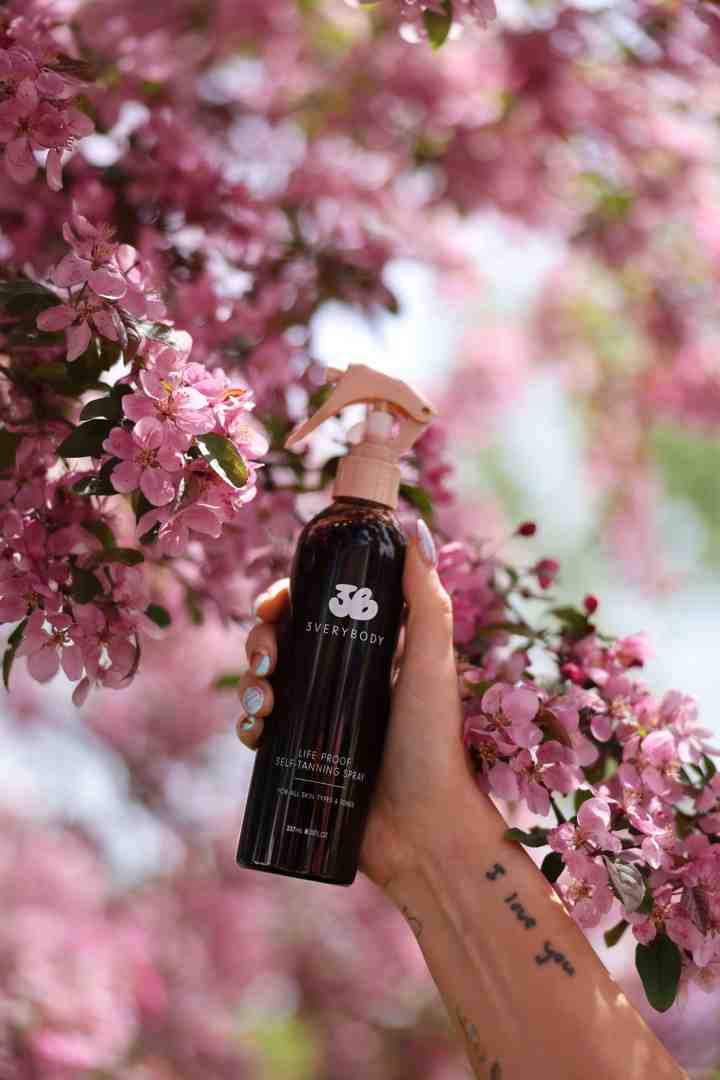
At 3VERYBODY, we designed our range to support every skin tone and type. Whether you choose our sweat-resistant Life Proof Tan (tinted tanning water), our customizable Tanning Drops, or use The Mitt to blend everything seamlessly, our HopeScope-approved, woman-owned formulas are built to keep you looking your best on and off camera.
Ready to upgrade your on-camera glow? Get the Life Proof Tan today and see the difference a water-light formula makes under the lights.