Why Tanning Drops for Sensitive Skin Are Your New Best Friend
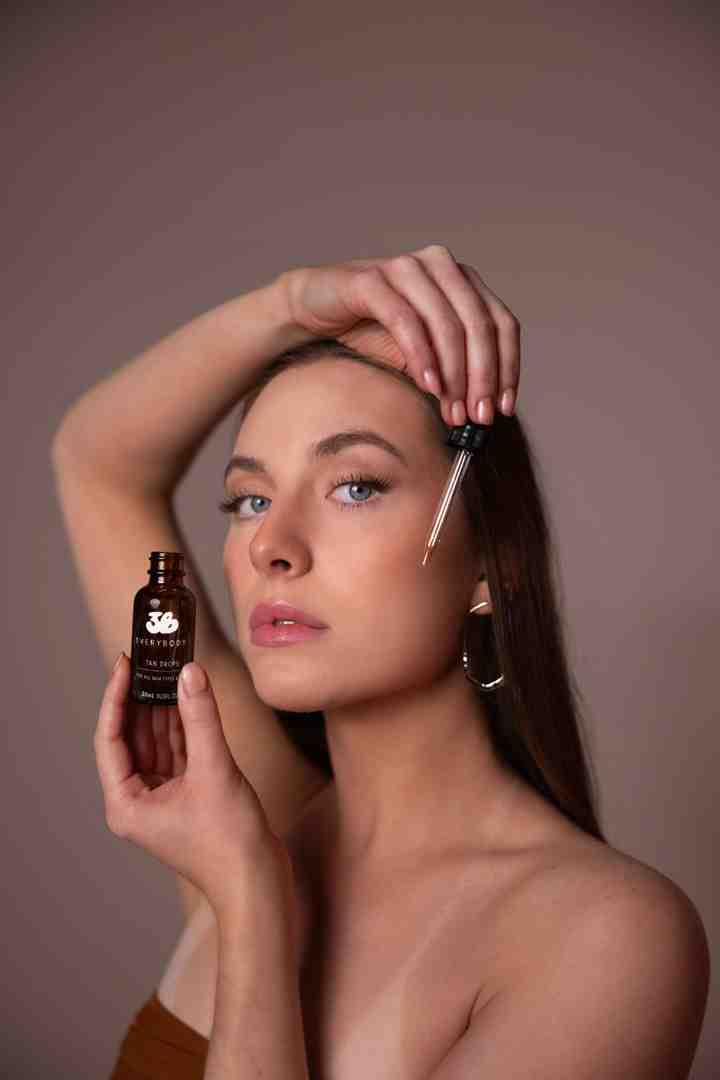
Tanning drops for sensitive skin give you a sun-kissed glow without the redness, irritation, or breakouts that traditional self-tanners often cause. Here's what makes them different:
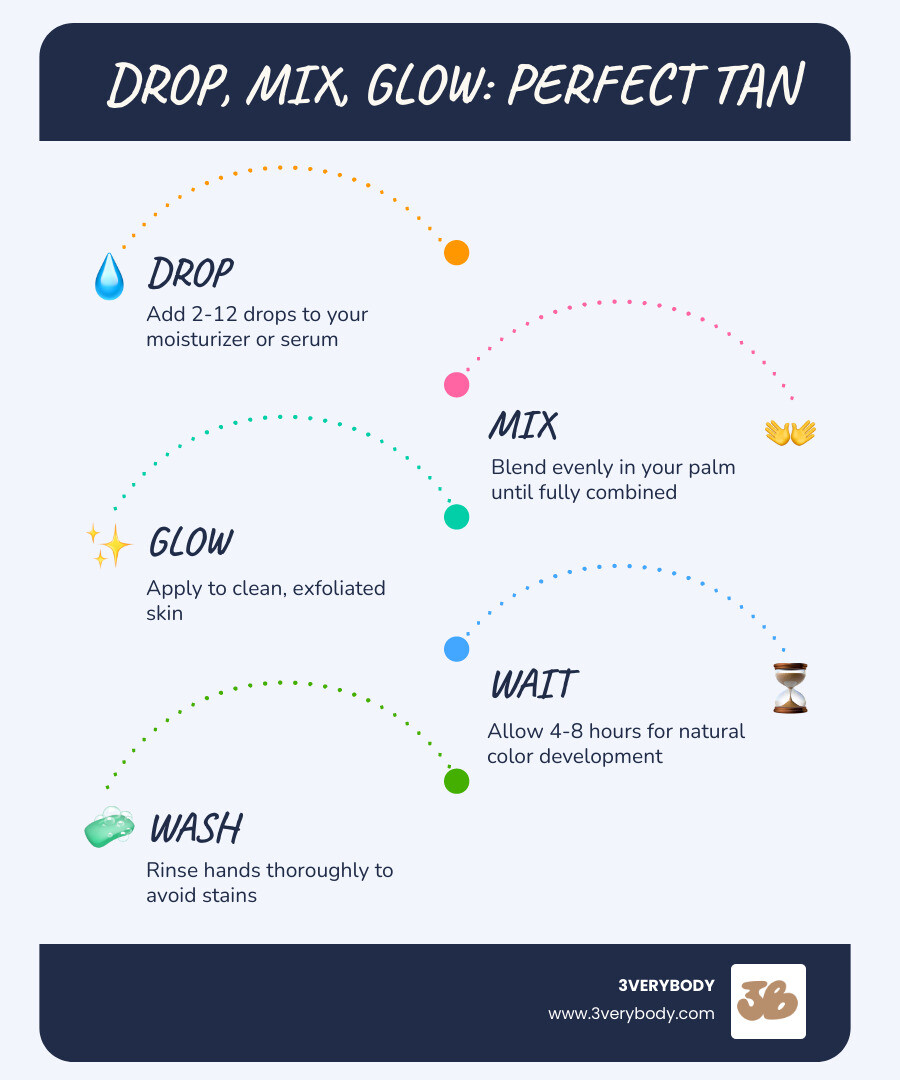
| What They Are | Concentrated self-tan formulas you mix into your own moisturizer or serum || Why They Work for Sensitive Skin | You control the strength, avoid harsh ingredients, and use products your skin already trusts || Key Ingredients to Look For | Natural DHA, hyaluronic acid, rosehip oil, cucumber extract, aloe vera || Application | Mix 2–12 drops with your moisturizer, blend evenly, wash hands, wait 4–8 hours || Longevity | 3–7 days depending on product and skin care routine |
If you've ever dealt with itchy patches, clogged pores, or that dreaded orange-and-blotchy look after using self-tanner, you're not alone. Regular self-tanners often contain synthetic DHA, added fragrances, and dyes that irritate sensitive skin—causing dehydration, breakouts, and inflammation. Tanning drops solve this by letting you customize the formula strength and pair it with skincare your skin already loves.
The best tanning drops for sensitive skin are fragrance-free, non-comedogenic, and dermatologist-tested. They're built around gentler ingredients like organic DHA (which triggers a natural tanning reaction without harsh synthetics), hyaluronic acid for hydration, and soothing botanicals like cucumber and aloe. Some brands even run 96-hour patch tests instead of the industry-standard 24 hours, and 93% of eczema users reported less irritation when switching to properly formulated drops.
I'm Emmy Bre, founder of 3VERYBODY, and I've spent over a decade testing nearly every self-tanner on the market—especially for sensitive skin—before creating our own line of vegan, cruelty-free tanning drops and Tinted Tanning Water for sensitive skin that blend seamlessly with your routine. After watching my mom and grandma battle skin cancer, I knew safer glow options had to exist.
Related content about tanning drops for sensitive skin:
Why Tanning Drops for Sensitive Skin are a Game Changer
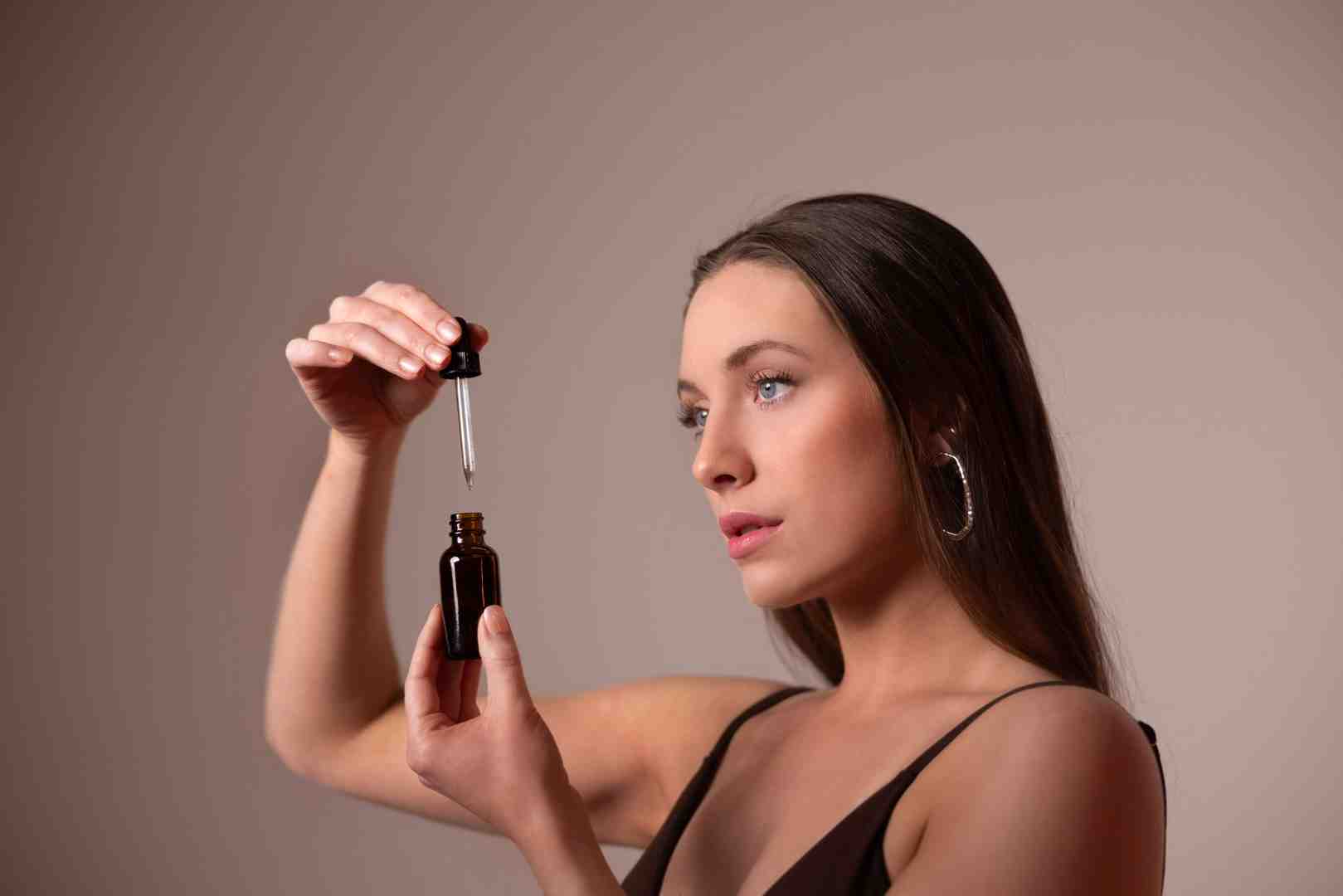
For those of us with reactive skin, traditional tanning products can feel like a gamble. Will I wake up with a glow, or will I wake up with a breakout? This is where tanning drops for sensitive skin completely change the rules.
Unlike traditional mousses or foams—which we honestly avoid because they can be heavy, sticky, and full of drying alcohols—tanning drops are concentrated serums. Because you mix them directly into your favorite, dermatologist-approved moisturizer, you aren't introducing a brand-new, potentially irritating base to your face or body. You’re simply "supercharging" the skincare you already know works.
Customizable DHA Levels
The active ingredient in almost all self-tanners is Dihydroxyacetone (DHA). In traditional products, the DHA percentage is fixed. If it’s too high for your skin, you end up with "tanner's itch" or an orange hue. With drops, you are the chemist. You can start with just 2 drops for a barely-there radiance and work your way up. This controlled introduction is much kinder to a sensitive skin barrier.
Skincare Integration
We believe tanning should be an extension of your skincare, not a replacement for it. By using drops, you keep the benefits of your daily serums. Whether you’re using a barrier-repair cream or a simple hyaluronic acid serum, the drops play nice. This is why many experts agree that self-tan for sensitive skin is best achieved through a water-light drop format.
Better for Pores
Many sensitive skin types are also acne-prone. Traditional tanners often use heavy waxes or oils to create that "mousse" texture, which can lead to clogged pores (comedones). Tanning drops are typically water-based and non-comedogenic. They sink in quickly and don't leave a film, making them a safer bet for anyone worried about "maskne" or body breakouts. To dive deeper into the mechanics, check out our guide on how do tanning drops work.
Soothing Ingredients Your Skin Will Love
When you’re shopping for tanning drops for sensitive skin, the ingredient list is your roadmap. You want to see "skin-loving" actives that calm inflammation while the DHA does its work.
Organic and Natural DHA
DHA works through the Maillard reaction—a process where it reacts with the amino acids in the surface layer of your skin to create a brown pigment. While this process is safe, synthetic DHA can sometimes carry a "biscuit" smell or cause mild dehydration. Look for biotechnology-derived DHA (often sourced from sugar beets or glycerin). It tends to be more stable and less irritating for those with reactive skin. You can read more about the scientific research on the skin's natural tanning process to see how these ingredients interact with your biology.
The Hydration Heroes
- Hyaluronic Acid: This is a must-have. It can hold up to 1,000 times its weight in water, ensuring that the tanning process doesn't leave your skin feeling tight or flaky. Some clinical studies show that high-quality drops can provide up to 8 hours of continuous hydration.
- Rosehip Oil: Featured in our 3VERYBODY drops, rosehip oil is packed with vitamins A and C. It helps to brighten the skin and support the moisture barrier, which is often compromised in sensitive skin types.
- Cucumber Extract: Known for its cooling properties, cucumber extract soothes the skin on contact. It’s the perfect "buffer" for the tanning process.
What to Avoid
If you have sensitive skin, steer clear of:
- Added Fragrances: The #1 cause of contact dermatitis in beauty products.
- Alcohol Denat: Often used to make products dry faster, but it’s incredibly stripping.
- Sulfates and Parabens: These can disrupt your skin’s natural microbiome.
For a curated list of the cleanest options, see our post on the best natural tanning drops.
Top-Rated Tanning Drops for Sensitive Skin
Finding the right bottle can be overwhelming, so we’ve narrowed it down to the formulas that consistently perform well in testing for irritation, color payoff, and skin health.
| Product | Key Sensitive Skin Features | Best For |
|---|---|---|
| 3VERYBODY Drops | Rosehip oil, cucumber, vegan, sulfate-free | All-in-one face & body |
| Bondi Sands Pure | Fragrance-free, dye-free, Australian botanicals | Budget-friendly basics |
| Pai Impossible Tan | Organic DHA, 96-hour patch tested | Eczema & hyper-reactive skin |
| L'Oreal Sublime Bronze | Fragrance-free, hyaluronic acid | Drugstore accessibility |
3VERYBODY Tanning Drops for Sensitive Skin
We might be biased, but we built these because we couldn't find a drop that checked every box. Our drops are water-light and enriched with rosehip oil and cucumber extract. We made sure they are 100% vegan, cruelty-free, and free from palm oil, sulfates, and parabens. They’re designed to work on every skin tone, from very fair to deep, without that dreaded orange tint. If you want a glow that’s creator-approved (shoutout to HopeScope!), this is it. Check out why we're rated among the best self-tanning drops 2026.
Bondi Sands Pure Self Tanning Drops
Bondi Sands hit the mark with their "Pure" line. It's specifically formulated to be a hypoallergenic self-tan option. It’s completely fragrance-free and dye-free, which is great for people who find that "guide colors" (the dark tint in some tanners) make them itchy. It uses Australian botanicals to provide a bit of extra nourishment.
Pai The Impossible Tan
Pai is a brand built entirely for sensitive skin, so it makes sense that their tanning drops are a gold standard. They use a bioengineered organic DHA and put their formula through a rigorous 96-hour patch test—way beyond the standard 24 hours. If you’ve asked yourself, "What is the best self-tanner for sensitive or eczema-prone skin?", Pai is usually at the top of the list for clinical-level safety.
Best Tanning Drops for Sensitive Skin Application Tips
How you apply your drops is just as important as the formula you choose. For sensitive skin, "slow and steady" wins the race.
- The 24-Hour Rule: Always exfoliate 24 hours before you plan to tan. Using a gentle buffing cream or our double-sided Mitt helps remove dead skin cells so the tan develops evenly. Doing it a day early gives your skin barrier time to settle back down before you apply the DHA.
- The Patch Test: This is non-negotiable for sensitive skin. Apply a small amount of your mixed moisturizer/drop combo to your inner arm or behind your ear. Wait 24–48 hours to ensure no redness or itching occurs.
- The Mixing Ratio:
- 2–4 drops: A subtle, "I just spent the morning outside" glow.
- 4–8 drops: A golden, "long weekend" tan.
- 8–12 drops: A deep, bronzed "vacation" look.
- Application Technique: Mix the drops in your palm with your moisturizer until the color is uniform. Apply in long, sweeping strokes. If you're doing your face, don't forget to blend into your hairline and down your neck! For more specific face advice, see our best tanning drops face tips.
- Wash Your Hands: DHA loves the thick skin on your palms. Wash them immediately with soap after application to avoid orange hands.
For a full breakdown of the process, visit our guide on how to apply self-tanning drops.
Avoiding Irritation During Application
The biggest mistake people make with tanning drops for sensitive skin is mixing them with the wrong products.
- Avoid Retinol and AHAs/BHAs: Do not mix your drops with products containing retinol, glycolic acid, or salicylic acid. These ingredients are designed to "turn over" skin cells, which will make your tan fade patchily and can increase irritation.
- Oil Compatibility: While you can mix drops with oils, some heavy oils can interfere with how the DHA develops. We recommend a simple, hydrating water-based moisturizer for the most even results.
- Acne Concerns: If you’re worried about breakouts, stick to oil-free, non-comedogenic moisturizers. If you're currently dealing with active flares, read our expert answer on: Are tanning drops safe for acne-prone skin?
Frequently Asked Questions about Sensitive Skin Tanning
Can I use tanning drops on my face and body?
Absolutely! Most high-quality tanning drops are formulated to be gentle enough for the face but effective enough for the body. However, because the skin on your face is thinner and more sensitive, you might want to use fewer drops for your face than you do for your legs. For a full body routine, check out our best body tanning drops guide.
How long does the tan last on sensitive skin?
Typically, a tan from drops will last between 3 to 7 days. Because sensitive skin can sometimes be drier, it might "shed" the tan faster. The secret to longevity is hydration! Moisturize daily (using a tan-safe lotion) to keep the glow locked in. Avoid long, hot showers and harsh scrubbing, which can lift the color prematurely.
Are tanning drops safe for eczema or psoriasis?
While everyone's skin is different, many people with eczema find tanning drops to be the only way they can tan. In fact, research shows that 93% of eczema users felt less irritation and inflammation when using properly formulated drops compared to traditional mousses. The key is to ensure the product is dermatologist-tested and to never apply tanner to "broken" or weeping skin. If you are in the middle of a flare-up, wait for it to calm down before tanning.
Conclusion
At 3VERYBODY, we believe that everyone deserves a confident, bronzed glow—regardless of how "finicky" their skin might be. We are a woman-owned, inclusivity-first brand that prioritizes water-light, quick-dry formulas that actually work. No stickiness, no "biscuit" smell, and definitely no orange streaks.
Our products are creator-approved and designed for the real world—where you need a tan that is sweat-resistant, transfer-proof, and sheet-safe. Whether you're starting with our customizable drops or looking for the full salon-at-home experience with our Life Proof Tinted Tanning Water, we've got you covered.
Ready to ditch the irritation and embrace the glow? Experience the full 3VERYBODY Kit and see why our water-light approach is the future of sunless tanning. Stay glowing!